The Speed-and-Cost Arms Race: Why Google’s May 19 Move Changes the Game
On May 19, Google used its annual I/O event to announce AI models built specifically for high-speed, low-cost operations — a deliberate signal that the company is repositioning its competitive strategy around deployability rather than raw capability. CEO Sundar Pichai made the product focus explicit in post-I/O interviews, acknowledging that Google’s priority is getting AI into the hands of users and enterprises at scale, not simply winning benchmark competitions.
This shift targets OpenAI and Anthropic at their most exposed flank. Both startups have built their reputations on frontier model performance, but enterprise buyers and developers making real procurement decisions weight price-performance ratios heavily. A model that scores marginally lower on capability tests but runs faster and costs less per API call wins contracts. Google knows this, and its May 19 moves reflect that calculation directly.
The infrastructure math compounds Google’s advantage. The company’s AI capital expenditure ranks among the largest in the world, funding custom tensor processing units, global data center networks, and proprietary silicon that takes years and tens of billions of dollars to build. OpenAI depends heavily on Microsoft’s Azure infrastructure. Anthropic relies on Amazon Web Services. Neither startup owns its compute layer. Google does — and that ownership converts into pricing power, latency advantages, and margin control that pure-play AI companies cannot replicate by writing a check.
The strategic logic is straightforward: the company that makes AI cheapest and fastest to run captures the developer ecosystem, and the developer ecosystem determines which models become the default layer inside enterprise software, consumer products, and government systems. Google is not abandoning frontier research, but it is betting that the race’s next phase rewards distribution and cost efficiency over headline model scores. For OpenAI and Anthropic, both burning through capital while preparing for high-stakes IPOs, that bet creates a pressure point that no amount of benchmark improvement easily resolves.
The Startup Trillion-Dollar Illusion: OpenAI vs Anthropic’s IPO Race
OpenAI and Anthropic are barreling toward what could become the most consequential IPO race in tech history, with both companies chasing valuations that analysts place in the trillion-dollar range. The financial pressure that comes with that target is already reshaping both organizations in ways that model benchmarks and research papers will never capture.
Most coverage of the OpenAI-Anthropic rivalry obsesses over which company’s model scores higher on reasoning tests or generates cleaner code. That framing misses the real story. IPO readiness demands revenue growth, enterprise contracts, and user retention at scale — not safety publications or alignment research. Both companies are now operating under the same commercial imperatives that define every publicly traded tech firm, and their strategic decisions increasingly reflect that reality.
The irony runs deep for Anthropic. Claude’s creator was founded in 2021 by former OpenAI researchers, including Dario and Daniela Amodei, who left specifically because they believed OpenAI was moving too fast without adequate safety guardrails. That founding identity — safety-first, research-driven — is now colliding head-on with the growth-at-scale demands of a company pushing toward a trillion-dollar valuation. Anthropic cannot simultaneously prioritize long-horizon safety research and satisfy investors expecting aggressive commercial expansion. The tension between those two goals is not theoretical. It is structural.
Regulation is about to force that tension into the open. The Illinois House passed SB 315, requiring frontier AI labs — OpenAI, Anthropic, and Google DeepMind named explicitly — to submit their safety practices to third-party audits. Governor JB Pritzker announced plans to sign the bill. With Congress still producing no meaningful federal AI legislation, state-level mandates are filling the vacuum, and they create compliance costs and disclosure requirements that complicate the clean growth narratives both companies need ahead of any public offering.
The trillion-dollar illusion is this: markets are pricing these companies as if model quality alone determines the winner. The actual competition is about who can monetize infrastructure, lock in enterprise distribution, and navigate regulatory exposure without letting safety commitments become a liability on the balance sheet.
The Metric Problem: Why ‘Leading the AI Race’ Depends Entirely on How You Keep Score
Benchmark leaderboards crown a new winner almost every month, but those rankings measure one thing: raw model performance on standardized tests. They say nothing about who owns the pipes that deliver AI to billions of people, who controls the chips that run the models, or who has locked in the enterprise contracts that generate actual revenue.
Google holds structural advantages that no benchmark captures. Its TPU infrastructure, Search distribution, and Android ecosystem give it direct access to more users than OpenAI and Anthropic combined. When Google embedded Gemini into Workspace, it didn’t need to win a benchmark — it needed Sundar Pichai to flip a switch. That is a different kind of lead, and it doesn’t show up in any leaderboard.
OpenAI owns consumer brand recognition in a way that neither rival has matched. ChatGPT crossed 100 million users faster than any consumer application in history, and OpenAI’s API has become the default integration point for thousands of developers building AI-powered products. That developer ecosystem creates compounding distribution advantages that are harder to displace than any single model improvement.
Anthropic competes on a third axis entirely. Its Claude models have built a reputation for reliability and safety that resonates specifically with regulated industries — healthcare, legal, finance — where the cost of a hallucination is measured in liability, not user frustration. That trust is a moat, and it is not the same moat OpenAI or Google is building.
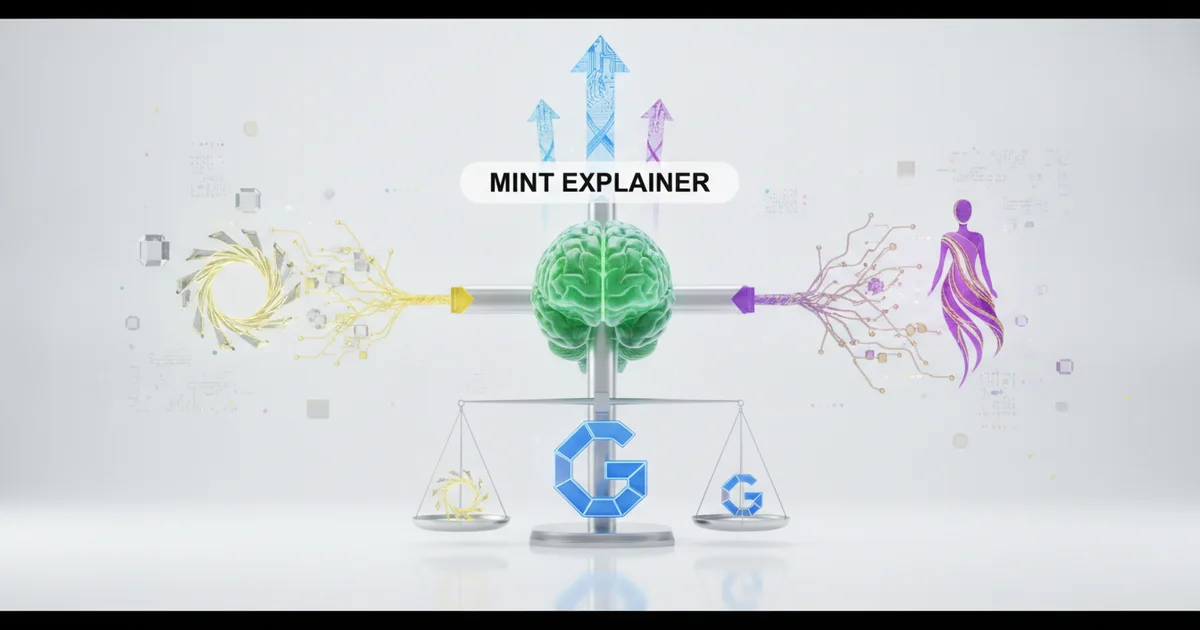
The mistake most coverage makes is treating these three trajectories as a single race with one finish line. Google leads on infrastructure and distribution reach. OpenAI leads on consumer adoption and developer ecosystem depth. Anthropic leads on enterprise trust in high-stakes verticals. All three leads are real, all three are durable in their respective submarkets, and none of them cancels out the others. The question of who is “winning” only has a coherent answer once you specify what game you are scoring.
Regulation Is About to Redraw the Map — Starting in Illinois
Illinois just moved faster than Congress. The state House passed SB 315, requiring frontier AI labs — specifically naming OpenAI, Anthropic, and Google DeepMind — to submit their safety practices to mandatory third-party audits. Governor JB Pritzker signaled on social media that he will sign the bill, making Illinois home to the first binding state-level check on the most powerful AI companies operating in the United States.
Congress has spent years producing noise on AI regulation and no enforceable law. Illinois filled that vacuum. When Pritzker signs SB 315, the three dominant players in the frontier AI race will face audit obligations they cannot ignore, route around, or delay through federal lobbying.
The compliance burden lands unevenly. Google DeepMind sits inside Alphabet, a company that has navigated antitrust litigation, GDPR enforcement, and decades of regulatory scrutiny across dozens of jurisdictions. Alphabet employs armies of lawyers, compliance officers, and government affairs staff who treat regulatory overhead as a standard operating cost. OpenAI and Anthropic do not have that infrastructure. Both companies are still in the phase of building products and raising capital. Mandatory third-party audits require documentation systems, internal audit trails, and legal coordination that take years and significant money to build properly.
This is the structural advantage that almost no AI race coverage accounts for. The competition is routinely framed as a contest between model benchmarks — who scores higher on reasoning tests, who ships a faster inference engine. SB 315 introduces a different variable. Regulatory compliance capacity becomes a competitive moat. A company that can absorb audit costs without operational disruption moves faster than one that has to divert engineering and leadership attention to satisfy state regulators.
Illinois is one state. But Pritzker’s signing will give other state legislatures a working template and political cover to follow. The map of where frontier AI companies can operate freely is about to get more complicated — and Google is the only named company in SB 315 that arrives with the institutional machinery already in place to handle it.
The Real Wildcard: Safety as Strategy, Not Just Ethics
Safety has become the most strategically loaded word in the AI industry — and Illinois just turned it into a legal liability.
When Anthropic was founded, its core pitch to investors and the public rested on a single claim: that it built AI more responsibly than its competitors. That self-certification worked as long as no one was checking. Illinois SB 315 changes the equation. Mandatory third-party audits mean Anthropic’s safety arguments now face external verification. If the audits confirm its practices, Anthropic gains a rare independent credential. If they expose gaps, the company’s entire founding premise collapses in public. No other major AI lab has more riding on which outcome that produces.
OpenAI enters this new auditing regime already wounded. The company’s internal governance crisis — which saw CEO Sam Altman briefly ousted by his own board over concerns about candor and safety culture — left a credibility deficit that executive reshuffles and rebranding have not fully repaired. Enterprise customers, particularly in regulated industries like finance and healthcare, have quietly flagged governance instability as a procurement risk. External audits hand OpenAI a path to rebuild that trust, but they also create a structured process for surfacing exactly the kind of safety culture failures its board originally cited. The outcome is binary: validation or confirmation of the worst suspicions.
Google DeepMind’s position carries a different kind of exposure. Google has spent years cultivating a narrative as the responsible adult in the room — the incumbent with the research pedigree, the safety teams, the institutional credibility that scrappy startups lack. Illinois SB 315 lists Google DeepMind alongside OpenAI and Anthropic as a frontier risk actor requiring the same oversight. Regulators drew no distinction between the established tech giant and the five-year-old startups. That equivalence directly undermines Google’s preferred positioning and signals that regulators treat scale and capability as the risk variable, not corporate age or reputation.
Governor JB Pritzker has stated his intention to sign the bill. When he does, safety stops being a marketing differentiator any company can define for itself.
What ‘Winning’ Actually Looks Like by 2026
By 2026, the AI company that emerges dominant will not be the one that wins a benchmark competition. It will be the one that clears regulatory audits without operational disruption, converts enterprise infrastructure relationships into multi-year lock-in contracts, and survives the financial pressure that comes with public market scrutiny.
Illinois just passed the strongest AI safety legislation in the United States, SB 315, requiring frontier labs — OpenAI, Anthropic, and Google DeepMind — to submit to third-party safety audits. Governor JB Pritzker has committed to signing it. This is not an isolated move. It signals the direction of travel at the state level while Congress remains inactive. Companies that have invested in compliance infrastructure absorb this. Companies that have not face operational drag at the worst possible moment.
Google sits in the strongest position on the metrics that actually determine long-term market control. It has capital depth that neither OpenAI nor Anthropic can match, a cloud infrastructure already embedded in enterprise contracts, and consumer distribution through products used by billions of people daily. At Google I/O in May, Sundar Pichai made the strategic priority explicit: AI products, not just AI models. That distinction matters enormously when regulatory costs and infrastructure spending are both rising sharply.
OpenAI and Anthropic face a harder version of the same problem. Both are racing toward what looks like a trillion-dollar IPO cycle, and both carry genuine model quality advantages. The question is whether those advantages generate revenue fast enough to fund what comes next — compliance teams, audit processes, expanded data centre capacity, and the enterprise sales infrastructure that large contract wins require. Model quality does not automatically translate into any of those things.
The 2026 winner looks less like a research lab and more like a regulated utility with a software margin. Google already resembles that structure. OpenAI and Anthropic are building toward it under time pressure. That gap is the real race.