The acquisition in plain English: what Stainless actually does
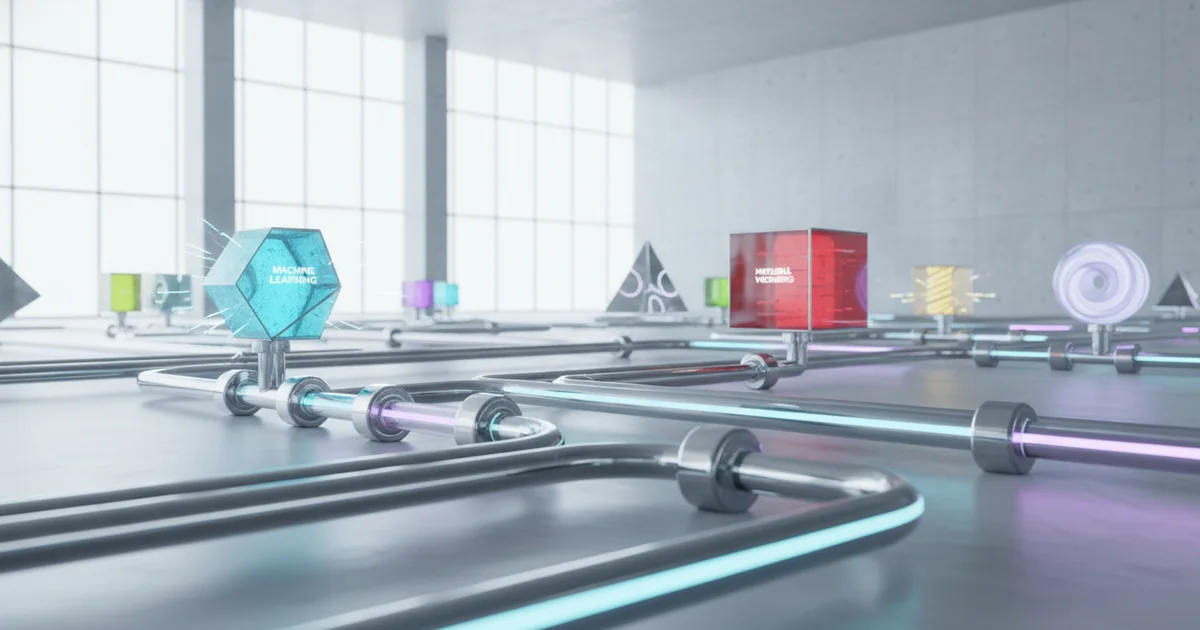
Stainless is a three-year-old company with one very specific, very unglamorous superpower: it takes an API specification and automatically generates the software development kits, command-line interfaces, and MCP servers that developers need to actually use that API. Without those tools, every developer who wants to connect their application to an external service has to write mountains of repetitive boilerplate code by hand — authentication logic, error handling, data serialization, language-specific quirks — across every programming language they support. Stainless eliminates that grind entirely.
The output isn’t generic scaffolding either. Stainless produces SDKs in TypeScript, Python, Go, Java, and other major languages, with each library built to feel native to that language rather than like a mechanical translation. That distinction matters to developers, because a clunky SDK slows adoption and generates support headaches. A clean one gets out of the way.
Here’s the detail that reframes the entire acquisition: Stainless has already been generating every official Anthropic SDK since Anthropic first launched its API. This isn’t Anthropic buying a promising stranger. It’s Anthropic buying infrastructure it already runs on — infrastructure that has been quietly shaping how every developer who builds with Claude actually experiences the product.
Hundreds of other companies also depend on Stainless to handle their own SDK generation. That client roster means Anthropic isn’t just acquiring a tool; it’s acquiring the team that built and maintains a platform sitting at the connection point between APIs and the developers who consume them. The talent and institutional knowledge embedded in that team represent the real long-term asset here, particularly as Anthropic pushes deeper into agentic AI — systems where automated agents need to reach out and interact with dozens of external services simultaneously, cleanly, and without human intervention to patch broken integrations.
The acquisition is, in short, Anthropic deciding that the pipes connecting its AI to the rest of the software world are too strategically important to rent from someone else.
The missing context: why SDKs and MCP servers are suddenly strategic assets
Most tech coverage treats SDKs — software development kits — as unglamorous plumbing: the libraries developers drop into a project and promptly forget about. That framing made sense when AI was primarily a question-and-answer interface. It breaks down completely once AI starts acting.
In an agentic world, an AI system is only as capable as the external tools and services it can reliably reach. SDKs are the mechanism that makes that reach possible. Stainless, founded in 2022, built its business around this reality: it takes an API specification and generates production-quality SDKs across TypeScript, Python, Go, Java, and other languages, each one tuned to feel native in its target environment. Hundreds of companies depend on Stainless-generated tooling today. Every official Anthropic SDK has been Stainless-built since the Claude API launched.
The deeper strategic layer is MCP — Model Context Protocol. MCP servers are the emerging standard for how AI agents discover and invoke external capabilities. Where an SDK lets a developer call an API, an MCP server lets an autonomous agent do the same thing without a human in the loop. That distinction matters enormously at scale. Whoever shapes the tooling that generates and governs MCP servers shapes the operational logic of how agents function across the entire ecosystem — which services they can access, how reliably they connect, and how quickly new integrations become available.
Controlling SDK generation gives Anthropic a compounding structural advantage. When a new API or service comes to market, Claude-based agents can gain first-class, frictionless access faster than competitors whose integration tooling is slower or less standardized. Each new connection in that network increases the gap. The race in AI infrastructure is not about which model scores highest on a benchmark — it is about which AI system can reach the most of the world, with the least friction, on the shortest timeline. Stainless is how Anthropic intends to win that race.
The strategic signal: Anthropic is betting the agentic future is won at the integration layer
Anthropic didn’t bury the strategic logic of this acquisition — it opened with it. “Agents are only as capable as the systems they can reach.” That single line signals a deliberate shift in how Anthropic defines competitive advantage. Raw model capability, the obsession that has dominated AI coverage for the past three years, is no longer the only moat worth building. The new battleground is integration infrastructure: the SDKs, MCP servers, and developer tooling that determine whether an AI agent can actually do something in the real world.
This playbook has precedent. AWS didn’t win cloud by having the fastest servers — it won by making those servers effortless to use through a sprawling ecosystem of developer tools that competitors couldn’t replicate overnight. Stripe turned payment processing into a category-defining business not on transaction speed but on API design so clean that developers chose it by default. Twilio owned business communications by making complex telephony infrastructure disappear behind a few lines of code. In each case, the integration layer became the lock-in mechanism, not the underlying technology.
Anthropic is making the same calculated bet for the agentic AI era. Stainless, founded in 2022, already powered every official Anthropic SDK and serves hundreds of companies building their own SDKs, CLIs, and MCP servers across TypeScript, Python, Go, Java, and more. That relationship existed at arm’s length — Anthropic as customer, Stainless as vendor. Bringing Stainless in-house eliminates that coordination gap entirely.
The practical consequence is speed and coherence. As Claude’s agentic capabilities evolve — new tool use patterns, expanded context, tighter multi-agent coordination — the SDK and MCP tooling can evolve in lockstep, developed by the same team, on the same timeline, against the same roadmap. No negotiating feature priorities with an external partner. No lag between what Claude can do and what developers can access. That tightened feedback loop is the real prize here, and it’s one that competitors running on third-party tooling infrastructure simply cannot match.
What most coverage is missing: the competitive implications for OpenAI, Google, and the wider developer ecosystem
Most coverage of this acquisition frames it as Anthropic investing in developer tooling. That framing undersells what actually happened competitively.
Stainless was not an Anthropic shop. Hundreds of companies used its SDK generation platform before this deal closed. Those customers now send their API specifications to infrastructure owned by a direct competitor. Anthropic has not publicly committed to maintaining Stainless as a neutral, independent service. That silence matters. Companies that built their developer experience on Stainless tooling face a real question: does the vendor relationship continue on the same terms, get quietly deprioritized, or — worst case — become a window into how rivals structure their APIs?
OpenAI and Google DeepMind have both invested heavily in developer experience, but neither has moved to own SDK generation infrastructure at the source. OpenAI maintains its own SDKs and has poured resources into the developer platform, but that work sits on top of the same kind of tooling layer Anthropic just acquired. Google brings massive internal engineering capacity to developer tooling across Gemini and Vertex AI. Neither company has recognized — or at least acted on the recognition — that owning the SDK generation layer is a durable structural advantage. Anthropic just claimed that ground.
The governance concern runs deeper than competitor dynamics. Anthropic created the Model Context Protocol, and MCP is rapidly becoming the connective tissue for agentic AI — the standard that lets AI systems talk to external tools, services, and data sources. Stainless builds MCP server tooling. One company now controls both the protocol and the primary commercial infrastructure for implementing it. If MCP achieves the kind of adoption its early momentum suggests, the developer ecosystem will be building on a stack where the standard-setter and the tooling vendor are the same entity. That is a concentration of influence that open-source alternatives and competing labs have not yet organized a credible response to. The window to establish a neutral alternative is open, but it will not stay open indefinitely.
The bigger picture: infrastructure acquisitions as the new AI arms race
Anthropic’s acquisition of Stainless is not an isolated event — it is one move in a coordinated land grab that every major AI lab is now executing across the same playbook. The target is no longer just better models. The target is the full stack of infrastructure that makes those models useful at scale: compute, memory, retrieval, orchestration, and now the connectivity layer that lets agents reach external systems and act on them.
The pattern is visible across the industry. OpenAI has pursued data center capacity through its partnership with Microsoft and its involvement in the Stargate infrastructure initiative. Google deepened its vertical integration through TPU development and cloud AI tooling. Anthropic, with fewer hardware assets, is taking a different path — locking up the developer tooling and protocol infrastructure that determines how Claude-based agents connect to the rest of the software world.
This matters because the shift from models that answer to agents that act changes the entire reliability calculus for AI products. A chatbot that returns a wrong answer is an inconvenience. An agent that books the wrong flight, submits a bad code commit, or misroutes a customer request causes real damage. That gap forces companies building serious agent products to demand infrastructure that is fast, deterministic, and maintainable — precisely what Stainless was already delivering for hundreds of companies through its SDK and MCP server generation tooling.
For investors and analysts, the Stainless deal is a leading indicator of where AI M&A goes next. The glamorous bets — foundation model startups, frontier lab equity rounds — are already crowded and expensive. The next wave of acquisitions will target the unglamorous load-bearing layers most observers have never heard of: agent memory systems, evaluation frameworks, sandboxed execution environments, authentication infrastructure for multi-agent workflows. These are not exciting product categories. They are, however, the categories that determine whether agent-based AI products actually work in production — and therefore the categories that the major labs will move to own before anyone else can charge them a toll to use them.