What ‘Skills’ Actually Are (And Why They’re Not Just Prompts)
When most developers hear “AI customization,” they think prompts — a block of text telling the model how to behave. Skills are a different animal entirely.
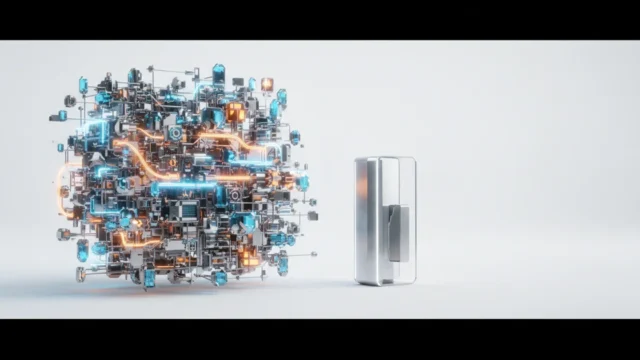
Anthropic defines skills as structured folders containing instructions, scripts, and resources that Claude loads dynamically at runtime. That combination is the critical detail. A skill isn’t guidance; it’s executable logic packaged alongside the context needed to apply it. The difference is the gap between telling someone how to bake bread and handing them a recipe, the right tools, and pre-measured ingredients.
This architecture means the same base Claude model can behave like a specialized operator depending on which skill it loads for a given task. A skill for financial report generation carries the company’s specific formatting rules, calculation scripts, and data-access logic. A skill for customer support carries escalation workflows, tone guidelines, and lookup resources. Claude doesn’t need to be retrained or fine-tuned — it pulls the relevant skill and performs like a domain specialist.
The contrast with traditional prompt engineering matters for anyone building production systems. Prompts are fragile: they drift across model updates, get copy-pasted inconsistently across teams, and offer no versioning or quality controls. Skills are portable, repeatable, and version-controlled. A skill built by one team can be audited, updated, and deployed across an entire organization without anyone rewriting a system prompt. Anthropic has published the implementation through its public GitHub repository and points to a broader Agent Skills standard at agentskills.io, signaling that this isn’t an internal experiment — it’s infrastructure meant to be shared and built upon.
The practical use cases Anthropic highlights are deliberately mundane: creating documents that follow brand guidelines, running data analysis against organizational workflows, automating recurring personal tasks. That specificity is intentional. Skills aren’t positioned as a research breakthrough. They’re positioned as the layer that makes AI agents reliable enough to deploy in real work environments — where repeatability and consistency matter more than raw capability.
The Open Standard Play: Why Anthropic Published This on GitHub
Anthropic didn’t just ship a new Claude feature — it published the anthropics/skills repository on GitHub and pointed it directly at agentskills.io, a dedicated domain for an open interoperability standard. That separation is deliberate. The GitHub repo houses Anthropic’s own implementation; the agentskills.io domain signals that the underlying standard is meant to exist beyond any single vendor’s control.
Putting the repository on GitHub does specific work. It invites enterprise developers to inspect the structure, fork the codebase, and contribute skills without waiting for Anthropic’s permission or a paid partnership agreement. Skills themselves are folders containing instructions, scripts, and resources that Claude loads dynamically — meaning any developer who understands the format can build one. That low barrier to entry is the point. The more skills that exist in the ecosystem, the harder it becomes for a competing standard to gain traction.
This is a well-worn playbook. Kubernetes beat Mesos and Docker Swarm not because Google had more engineers, but because it became the open default before competitors could consolidate the market. Android beat Windows Mobile because manufacturers could adopt it without licensing friction. Anthropic is running the same strategy with Agent Skills: publish openly, build the reference implementation, and let adoption velocity do the competitive work.
The agentskills.io pointer is the most consequential detail in the repository. It tells enterprise buyers that they are not building on a proprietary Claude-only feature that Anthropic can deprecate or lock behind a pricing tier. They are adopting a standard. That framing reduces procurement risk and accelerates enterprise commitment — exactly the conditions Anthropic needs to make Claude the default runtime for AI agents before OpenAI, Google, or an open-source alternative establishes its own skills format as the industry baseline.
The Enterprise Use Case Hidden in Plain Sight
Most businesses using AI today repeat themselves constantly. Every new session requires fresh context: here’s our tone of voice, here’s how we structure reports, here’s the formula we use for churn analysis. Skills eliminate that tax entirely.
Anthropic’s skills system lets companies encode brand guidelines directly into a reusable folder of instructions, scripts, and resources that Claude loads dynamically at runtime. A marketing team can build a skill that carries every style rule, approved vocabulary list, and formatting standard the company uses — and Claude produces on-brand documents from the first prompt, every time, without a single line of setup. The institutional knowledge lives in the skill, not in someone’s muscle memory or a 40-page onboarding document.
The same logic applies to data work. A finance team that analyzes revenue using a proprietary attribution model doesn’t need to explain that model to Claude before every analysis. They bake the workflow into a skill. Claude then runs their specific methodology, not a generic statistical approach that requires correction afterward. The output matches what the company actually does, not what a general-purpose AI assumes it does.
This is the enterprise use case hiding in plain sight. What Anthropic has built isn’t just a convenience feature — it’s a mechanism for turning one-off AI experiments into scalable internal tools. A company that builds a skill for proposal writing, compliance review, or competitor analysis can deploy that skill across every relevant team and every future session. The knowledge compounds instead of evaporating at the end of each conversation.
That shift — from AI as a session-based assistant to AI as a system that carries codified organizational behavior — is what separates pilots from infrastructure. Businesses that recognize this distinction will stop asking whether Claude can help them and start asking what institutional knowledge they haven’t encoded yet.
What Most Coverage Is Missing: The ‘Skills Economy’ Implication
Most coverage of Claude’s agent capabilities focuses on benchmark scores and API pricing. That framing misses the structural shift Anthropic is engineering underneath the surface.
The Agent Skills standard, documented at agentskills.io and implemented in Anthropic’s public GitHub repository, treats skills as discrete, portable units of agent behavior — folders of instructions, scripts, and resources that Claude loads dynamically at runtime. That architecture is not a technical curiosity. It is the foundation for a marketplace.
When behaviors are modular and standardized, third-party distribution becomes inevitable. The app store analogy is direct: just as iOS’s sandboxed app model created a $1 trillion developer economy around Apple hardware, a standardized skills layer creates the preconditions for buying, selling, and licensing agent capabilities as standalone commercial products. A compliance firm could package its regulatory analysis workflow as a licensable skill. A design agency could sell brand-enforcement skills to enterprise clients. A consultancy could build its entire revenue model around a proprietary skills library rather than billable hours.
This rewrites the competitive logic for every business deploying AI. Right now, companies treat model selection as the primary strategic decision — Claude versus GPT-4o versus Gemini. That question becomes secondary fast. The organizations that accumulate deep, proprietary skills libraries will run circles around competitors using the same underlying model, because the skill encodes the institutional knowledge, the workflow, the edge cases. The model is the engine; the skill is the driver who knows every shortcut on the route.
Anthropic’s public repository already demonstrates the range — skills span document creation with company-specific brand guidelines to organizational data analysis workflows to personal task automation. Each example signals a different commercial vertical waiting to be built. The businesses that recognize skills as intellectual property worth building and protecting will hold durable advantages. Everyone else will be licensing someone else’s institutional knowledge to compete against them.
The Standardization Risk Nobody Is Talking About
Anthropic controls the agentskills.io standard. That single fact carries enormous consequences that the AI industry has not yet reckoned with.
When one company defines what a “skill” can and cannot do — what fields it exposes, what execution model it assumes, what safety constraints it encodes — that company shapes the entire capabilities surface of an emerging ecosystem. Anthropic’s public GitHub repository frames skills as portable, open folders of instructions and scripts. But open format does not mean neutral governance. The organization writing the spec decides which workflows are expressible and which are not.
The lock-in risk is disguised by the openness. Businesses that build a library of skills — brand-specific document generators, proprietary data analysis workflows, automated compliance routines — invest significant engineering effort into the agentskills format. If a competitor AI model cannot consume that format natively, switching providers means rebuilding every skill from scratch. The switching cost becomes a structural moat, dressed up as interoperability.
The community has not yet answered three foundational questions. First, who governs the standard when Anthropic’s commercial interests and the broader developer ecosystem’s interests diverge? Second, who audits published skills for safety before organizations deploy them at scale? A skill that encodes a flawed workflow — biased hiring criteria, a broken compliance checklist, a misconfigured data handling process — executes that flaw repeatedly across every agent that loads it. Third, what is the remediation process when a widely distributed skill is found to cause harm?
These are not hypothetical edge cases. They are the normal failure modes of any dominant infrastructure standard, from file formats to API protocols. The difference here is that skills sit one layer above the model and one layer below the business process. Errors compound in both directions. Anthropic has built something genuinely useful. The governance architecture around it needs to catch up before enterprise adoption makes these questions too expensive to answer honestly.
What to Watch Next: Signals That This Is Bigger Than It Looks
Three metrics will determine whether Anthropic’s Agent Skills initiative becomes the backbone of enterprise AI deployment or remains a niche developer tool.
First, watch OpenAI and Google DeepMind. Anthropic has published the Agent Skills standard at agentskills.io as an open specification, not a proprietary lock-in. If competing labs adopt it, fork it, or release counter-specifications within the next two quarters, that confirms the standard hit a nerve. Silence from competitors is the worst signal — it means the market isn’t taking it seriously yet.
Second, track enterprise IT behavior. The skills architecture lets organizations build internal repositories of reusable task packages — brand guidelines baked into document creation, proprietary data workflows embedded into analysis routines. If Fortune 500 IT teams start treating skills repositories the way they treat internal software libraries, procurement cycles and budget approvals will follow fast. That internal adoption is the flywheel: each approved skill reduces the marginal cost of the next deployment, compounding organizational buy-in.
Third, monitor the GitHub contributor graph for the anthropics/skills repository. Right now, Anthropic controls the submitted skills and sets the pace of development. The transition from product feature to genuine platform happens the moment external developers — not Anthropic employees — begin submitting skills at scale. Open-source ecosystems follow a recognizable pattern: a slow accumulation of outside contributors reaches a tipping point where the platform owner no longer controls the roadmap. Watch for that inflection.
The architecture already points toward platform ambitions. Skills are portable folders of instructions, scripts, and resources that Claude loads dynamically. That portability means a skill built for one organization’s workflow can, in principle, be shared, sold, or standardized across an industry. Legal document review. Financial data normalization. Compliance audits. Each of those becomes a discrete, tradeable unit of AI capability.
The infrastructure is in place. The question is velocity.