The Launch: What Actually Shipped and Where
OpenAI didn’t ship a single model. It shipped three.
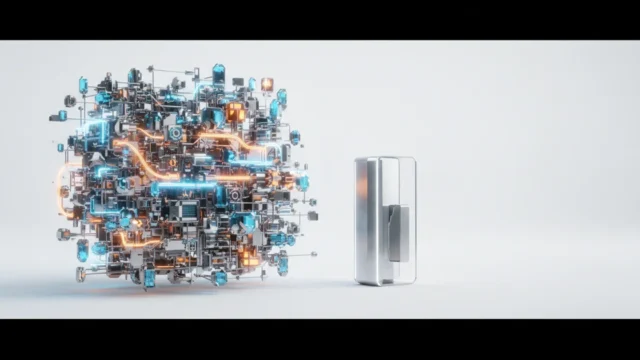
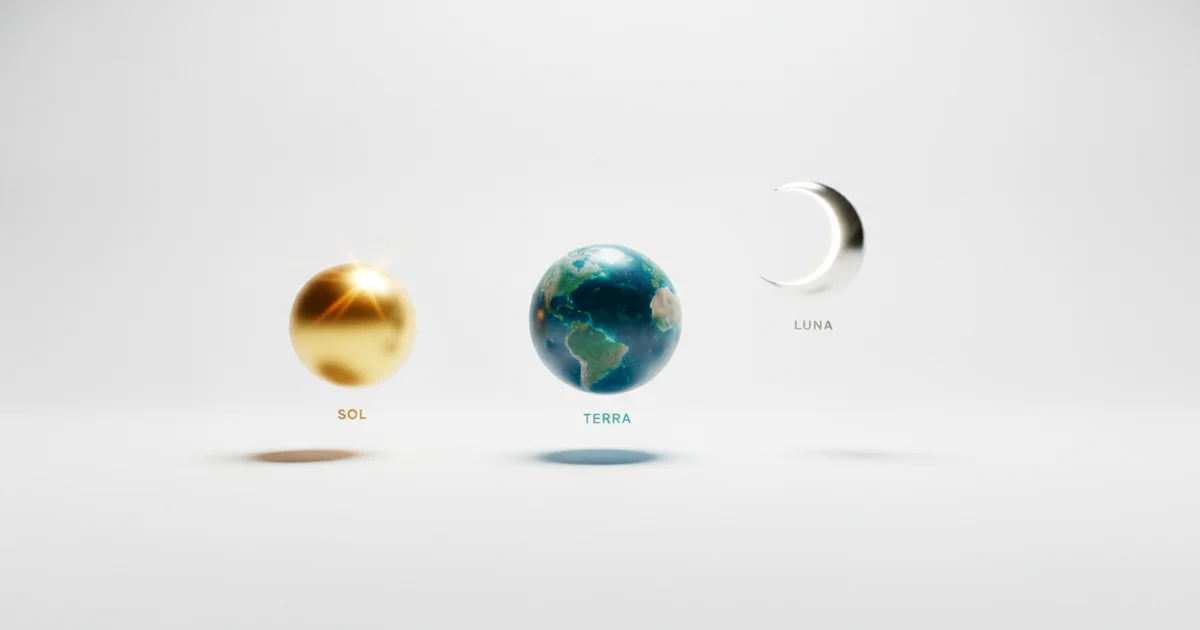
ChatGPT-5.6 is a family of variants — Sol, Terra, and Luna — each carrying a distinct name that signals differentiated tuning rather than a one-size-fits-all release. Most headlines skipped past this detail, treating the launch as a straightforward upgrade. It isn’t. The three-model architecture reflects a deliberate product strategy: different workloads, different compute profiles, different use cases baked in from the start.
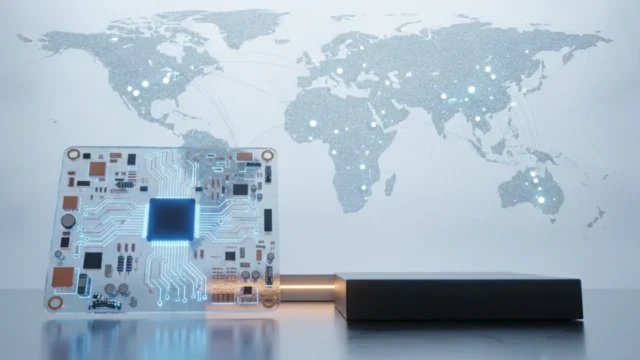
The rollout hit ChatGPT, Codex, and the OpenAI API simultaneously. That simultaneous deployment across consumer and developer surfaces is the tell. This isn’t a chatbot refresh — it’s an infrastructure-level release targeting the engineers and product teams who build on top of OpenAI’s models as much as the everyday users who prompt them directly. Developers accessing the API get the same generation of intelligence as someone chatting through the consumer app, which closes a gap that has frustrated builders waiting on parity.
OpenAI announced the ChatGPT-5.6 family on June 26, then executed a deliberate teaser cadence before the actual drop — a pattern borrowed straight from consumer tech playbooks that Apple and Google have refined over decades. The pre-release drumbeat generated coverage cycles before a single user could access the models, extending the launch window without extending the wait. The global rollout was staged, with full availability promised within 24 hours of the initial release notice.
That sequencing matters beyond marketing optics. OpenAI has faced criticism for chaotic releases and uneven capability rollouts. A named announcement date followed by a teased launch window followed by a staged global deployment signals a maturing product operation — one built to handle scale without the infrastructure stumbles that plagued earlier releases. For users, the practical result is that the ChatGPT-5.6 model family arrived with fewer surprises than previous launches. For OpenAI’s competitive position against Google Gemini and Anthropic Claude, a cleaner launch cadence reinforces the narrative that the company running the most-used AI assistant also runs the most predictable one.
The Missing Context: Why Three Variants Instead of One
OpenAI released ChatGPT-5.6 as three distinct variants — Sol, Terra, and Luna — not as a single model. That structural choice is the detail most coverage glossed over, and it deserves a harder look.
The celestial naming scheme signals a tiered architecture almost certainly built around the same tradeoffs that define every multi-model AI portfolio: speed, cost, and raw capability. But OpenAI has not publicly specified what each variant optimizes for. Users and developers are left to infer the hierarchy from the names alone, which is an unusual gap for a company that typically publishes detailed system cards and benchmark comparisons at launch.
That gap looks less unusual when you zoom out. Anthropic structures its Claude lineup into Haiku, Sonnet, and Opus — fast-and-cheap to slow-and-powerful. Google does the same with Gemini Flash, Pro, and Ultra. Both companies use three tiers. OpenAI now uses three tiers. The pattern is not coincidental. Competitive pressure from Anthropic and Google is shaping how AI products get packaged and deployed, independent of whatever technical architecture sits underneath.
This is the part of the ChatGPT-5.6 story that matters most for anyone building on or with AI systems. A single flagship model is a product. A three-model family is a portfolio strategy. It lets OpenAI capture enterprise customers who need maximum capability through one variant, developers who need low-latency API responses through another, and cost-sensitive deployments through a third. The same intelligence gets monetized three times across three different customer segments.
Most early coverage treated the release as an incremental capability upgrade — a newer ChatGPT that does things better. The more accurate framing is that OpenAI is restructuring how its large language model technology reaches users, building a deployment architecture that mirrors its two main competitors while giving developers finer control over the cost-performance tradeoff. What OpenAI still owes the public is a clear technical explanation of what Sol, Terra, and Luna each actually do differently.
What This Means for Regular ChatGPT Users
OpenAI confirmed the ChatGPT-5.6 model family will reach all users globally within 24 hours of launch — a rollout pace that applies to both free-tier accounts and paid subscribers. That speed matters, but it sidesteps a more pressing question: which of the three variants — Sol, Terra, or Luna — each user type actually gets access to.
For most people who open ChatGPT to draft an email, summarize a document, or get a quick answer, the version number change from 5 to 5.6 will register as background noise. The real shift is structural. A three-model architecture means OpenAI can route different requests — or different users — to different underlying systems without changing anything visible on the interface. Someone on a free plan asking a straightforward question may get Luna. A Plus subscriber running a complex coding task may get Sol. The user sees “ChatGPT.” The model doing the work is a different story.
OpenAI has not publicly specified which subscription tiers unlock which variants. That ambiguity creates a real trust gap. If the AI a free user interacts with on Monday is meaningfully less capable than what a Pro subscriber gets on the same question, users deserve to know that — and right now, no clear disclosure mechanism exists.
This is not a hypothetical UX problem. When AI systems silently serve different model tiers based on subscription level, users lose the ability to calibrate their expectations or evaluate the quality of what they’re receiving. A student relying on ChatGPT-5.6 for research help and a developer stress-testing the same interface for production use may both believe they’re talking to the same system. They likely are not.
OpenAI’s multi-model deployment strategy is efficient from an infrastructure standpoint. For everyday ChatGPT users, it introduces a layer of opacity that the company has not yet committed to addressing.
The Developer Angle: Codex and API Access Change the Equation
OpenAI shipped ChatGPT-5.6 Sol, Terra, and Luna directly to the OpenAI API and Codex on launch day — the same day consumer access began rolling out globally. That simultaneous release eliminates the weeks-long gap that has historically separated public product launches from developer availability, letting engineering teams start building integrations immediately rather than waiting for a staged rollout.
The Codex inclusion carries a specific signal. Codex is OpenAI’s platform for autonomous coding agents, and routing the ChatGPT-5.6 family through it confirms that at least one variant — almost certainly Sol or Terra, given their positioning in the family’s capability hierarchy — is optimized for multi-step, agentic workflows rather than simple prompt-response interactions. Developers building AI coding assistants, automated testing pipelines, or software agents now have access to models explicitly designed for that kind of sustained, task-oriented reasoning.
The three-variant structure creates a new architectural decision for any business building on OpenAI’s infrastructure. Previously, enterprises picked a model tier and built around it. Now they have to evaluate whether their product needs Sol’s top-tier reasoning, Terra’s mid-range balance of speed and capability, or Luna’s efficiency for high-volume, lower-complexity tasks. Each choice carries different API pricing, latency profiles, and infrastructure costs — and the wrong call at the design stage means expensive rework later.
For startups and enterprises already embedded in the OpenAI ecosystem, this is both an opportunity and a genuine complication. The ability to mix variants across different functions inside a single product — say, Luna handling customer-facing chat while Sol powers back-end document analysis — unlocks more efficient cost structures. But it also demands a sharper understanding of each model’s performance envelope before committing to a production architecture. Teams that treat all three variants as interchangeable will overpay, underperform, or both.
Four Years In: How This Release Reflects OpenAI’s Larger Trajectory
ChatGPT launched in late 2022 as a proof of concept that shocked the world into paying attention. Nearly four years later, OpenAI is no longer trying to prove that large language models are useful — it is executing a platform strategy with the same deliberateness that Apple or Microsoft brings to a product cycle.
The ChatGPT-5.6 family, with its three named variants Sol, Terra, and Luna, signals that shift explicitly. OpenAI is not releasing a single flagship model and asking users to take it or leave it. It is segmenting its AI deployment across capability tiers, pricing bands, and use cases — the same playbook that defined how cloud software companies built durable market positions in the 2010s. That is a fundamentally different business than running a research lab.
The release cadence reinforces the point. OpenAI announced the ChatGPT-5.6 model family on June 26, teased the launch date publicly, then shipped within days. That announcement-preview-release rhythm is how consumer electronics companies generate anticipation and media coverage before a product hits shelves. It is disciplined marketing, not just engineering.
OpenAI has maintained its lead on total users despite intensifying pressure from Google and Anthropic, both of which have released competitive AI assistants and developer APIs. Staying ahead now requires more than raw model performance. It requires ecosystem depth — integrations across ChatGPT, Codex, and the OpenAI API — and a product naming strategy that gives enterprises and developers a clear framework for choosing which model fits their workflow and budget.
The three-variant family also locks in a vocabulary. When developers start building around Sol for high-stakes tasks or Luna for cost-sensitive pipelines, switching costs accumulate. That is how platforms retain users even when competitors close the technical gap. Four years in, OpenAI is building a moat, not just a model.
What We Still Don’t Know — and Should Be Asking
The launch announcement for ChatGPT-5.6 Sol, Terra, and Luna confirms availability across ChatGPT, Codex, and the OpenAI API — but stops well short of the technical transparency users and developers need to make informed decisions. No benchmark data comparing the three variants has been published. No safety evaluations have been released. No detailed capability breakdowns explain what Sol handles that Terra does not, or where Luna’s efficiency gains come from and at what cost to accuracy. For a model family positioned as a foundational shift in how AI gets deployed, that omission is significant.
API pricing is the other gap that will define this release’s actual impact. OpenAI has not disclosed what developers will pay to access Sol versus Terra versus Luna at scale. That number matters enormously. If Sol — the highest-capability variant — carries a premium price point that only well-funded teams can absorb, then the three-tier architecture functions less as democratization and more as segmentation. The ChatGPT-5.6 family could genuinely expand access to advanced AI capabilities, or it could quietly reserve the best performance for enterprise contracts while free and low-cost users default to the lighter models.
The 24-hour global rollout window OpenAI announced is an ambitious target. Promising simultaneous access to all users worldwide is a testable commitment. The concrete questions are straightforward: Do users in Southeast Asia, sub-Saharan Africa, and Latin America get the same model variant as users in the United States on day one? Does language support extend equally across Sol, Terra, and Luna, or do non-English speakers land on degraded versions by default?
OpenAI has built a reputation on rapid deployment, but the ChatGPT-5 generation — and now the 5.6 family — operates at a scale where rollout decisions carry real consequences. The absence of published safety evaluations for a multi-variant AI system this widely distributed should be the loudest open question in the room.