The Verdict Most Headlines Are Burying: Musk Sued Too Late
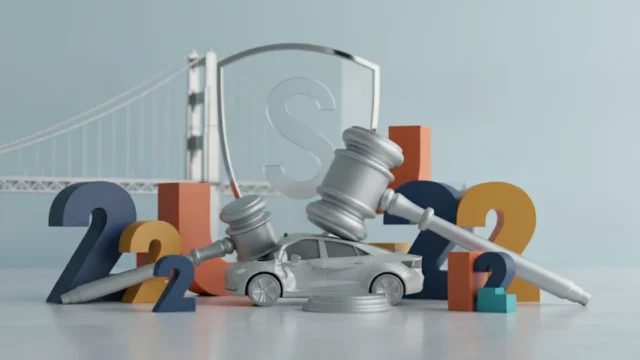
The jury in Musk v. OpenAI did not rule that Sam Altman and OpenAI acted ethically. It ruled that Elon Musk waited too long to complain. The claims were barred by statutes of limitations — a procedural finding that left the central legal question entirely untouched: whether a nonprofit explicitly founded to develop AI for the benefit of humanity can lawfully transform itself into a commercial entity targeting a trillion-dollar valuation.
That distinction is getting lost. Most coverage is treating the verdict as a clean vindication of OpenAI’s restructuring, when the jury never evaluated the restructuring at all. The court did not weigh whether OpenAI’s shift toward a for-profit model breached its founding contract. It determined only that Musk’s window to bring that challenge had already closed.
OpenAI’s own defense in the case leaned on this timeline aggressively. The company argued that the for-profit pivot was visible early enough that Musk should have sued years sooner — which is a telling argument. To win on the statute of limitations, OpenAI effectively had to convince the jury that its commercial turn was obvious and well-documented long before Musk filed. That argument succeeded. What it does not do is establish that the turn was legitimate.
The underlying ethical and governance question — whether a nonprofit AI safety organization can hand its assets and mission over to a capped-profit structure backed by Microsoft and then pursue a full IPO — remains legally unresolved. No court has adjudicated it on the merits. The California Attorney General’s office is conducting its own review of the conversion, and that process operates entirely outside what this jury decided.
Musk lost because of timing. OpenAI won because of timing. The core tension between the organization’s stated origins and its current commercial trajectory got no verdict, no ruling, and no resolution. Anyone reading this outcome as a green light on the governance question is reading a document that was never written.
The IPO Path Is Now Clear — And That Should Concern Everyone
The dismissal of Musk’s lawsuit removes the single most credible legal threat standing between OpenAI and a public offering. Analysts have pegged OpenAI’s valuation at roughly $300 billion, which would make its IPO one of the largest in tech history — surpassing Meta’s 2012 debut and rivaling Saudi Aramco territory. That process can now move forward without the cloud of litigation forcing institutional investors to price in existential legal risk.
What gets buried in the IPO excitement is what going public actually does to a company’s decision-making architecture. Once OpenAI sells shares on a public exchange, it answers to shareholders who expect returns on a quarterly cadence. That obligation doesn’t coexist comfortably with the kind of long-horizon, revenue-agnostic safety research that OpenAI’s nonprofit founding charter promised. Public companies don’t pause product launches to run additional alignment research. They ship.
The structural conversion also closes the door on future accountability challenges. OpenAI’s nonprofit origins gave attorneys general, regulators, and civil litigants a legal hook — the argument that the company held assets in trust for a public benefit mission and couldn’t simply monetize them for private gain. An IPO permanently cements the for-profit structure, replacing that public-benefit obligation with fiduciary duties to shareholders. California’s attorney general still has an ongoing review of OpenAI’s conversion, but a completed IPO would significantly narrow the remedies available.
The deeper irony is that Musk’s core argument — that commercializing OpenAI would subordinate safety to profit — has more structural merit now than it did when he filed. He just lost the legal standing to make it stick. The jury didn’t rule that OpenAI honored its mission. It ruled that Musk waited too long to complain. Those are entirely different verdicts, and only one of them offers any reassurance about what happens when Wall Street’s return expectations collide with the unglamorous, slow work of making powerful AI systems safe.
Smart Glasses on the Battlefield: The Militarization Story Being Underplayed
While courtrooms and cable news fixate on the Musk-Altman feud, a quieter and arguably more consequential story is unfolding on actual battlefields: consumer smart glasses are being adapted for military use, and almost no one in a position of authority is paying attention.
The same AI vision systems that Meta built into its Ray-Ban smart glasses — object recognition, real-time contextual awareness, hands-free information overlay — are being repurposed for soldier augmentation, targeting assistance, and battlefield surveillance. Defense contractors and military units are not waiting for bespoke hardware. They are taking existing consumer devices, layering military software on top, and deploying them. The technology pipeline from Silicon Valley product launch to combat application is now measured in months, not years.
This represents a genuinely new category of dual-use hardware, and existing legal frameworks are not equipped to handle it. The Arms Export Control Act and International Traffic in Arms Regulations were designed around purpose-built weapons systems. A pair of AI-enabled glasses that ships to consumers worldwide and then gets reprogrammed for targeting sits in a regulatory grey zone those statutes were never written to address. Export controls that apply to a missile guidance system do not automatically apply to the same underlying AI vision capability packaged inside a $300 consumer wearable.
The scale of the problem compounds quickly. Millions of these devices are already in circulation globally. The AI models powering their core features are increasingly open or semi-open, meaning modification requires minimal specialized expertise. A small military unit or a non-state actor can acquire, adapt, and deploy this technology with no meaningful checkpoint along the way.
The governance conversation happening right now — centered on OpenAI’s nonprofit structure, IPO valuations, and Sam Altman’s ambitions — is a conversation about corporate accountability. That matters. But the smart glasses story is a conversation about physical harm at scale, and it is receiving a fraction of the coverage. Weapons treaties negotiated in the twentieth century assumed hardware and lethality traveled together. They no longer do.
Google I/O in the Shadow of OpenAI: The Competitive Pressure Shaping Every Announcement
Google I/O 2025 arrived days after the Musk v. Altman verdict, and the timing was not coincidental. Every announcement Google made — from Gemini upgrades to AI-integrated Search to new developer tools — carried the fingerprints of a company fighting to reclaim a narrative it once owned. Google’s researchers invented the transformer architecture that makes modern large language models possible. OpenAI turned that research into a cultural phenomenon, and Google has spent two years explaining why that fact doesn’t matter.
It does matter. The public perception that Google lost the AI race it invented has real consequences for its share price, its developer ecosystem, and its enterprise sales pipeline. That pressure shows up directly in what Google chooses to announce, when it announces it, and how finished those products actually are when they hit the stage.
The Musk verdict sharpened that pressure considerably. With OpenAI’s path to IPO now cleared of its most prominent legal obstacle, Google faces a competitor that will soon have access to public capital markets and the legitimacy that comes with them. A publicly traded OpenAI changes the competitive calculus: more institutional investors, more enterprise credibility, more pressure on Google’s own AI revenue lines. Google’s leadership knew this when they walked onto the Google I/O stage.
The question consumers and journalists should ask isn’t what Google announced. It’s whether Google’s internal safety review timelines kept pace with its announcement calendar. Google dissolved its external AI safety advisory board in 2024 after it collapsed within two weeks of formation. The company that invented responsible scaling as a concept now ships under competitive duress. That’s a structural problem dressed up as innovation velocity.
When a company with Google’s resources rushes a product to a developer conference because a rival just survived a lawsuit, the people absorbing the risk aren’t the executives on stage. They are the users who will interact with systems that may not have completed the scrutiny that Google’s own research teams would otherwise demand. Applauding the announcement rate is the wrong reflex. Auditing it is the right one.
The Governance Vacuum No One Is Talking About
Three stories dominated the AI news cycle this week, and they have nothing to do with each other on the surface: a failed nonprofit accountability lawsuit, AI-enabled smart glasses being tested in active conflict zones, and Google staging a rushed product showcase at Google I/O to answer OpenAI’s momentum. Read them together and a single fact becomes impossible to ignore — there is no functional governance framework covering any of them.
The Musk v. OpenAI verdict is the sharpest illustration of this. A jury dismissed the case not because OpenAI proved it honored its public-interest mission, but because Musk waited too long to sue. The statute of limitations, not the merits, ended the case. That distinction matters enormously. No court has ruled on whether OpenAI broke faith with its founding charter. The question was never answered. It was simply closed.
That lawsuit, whatever Musk’s personal motivations in filing it, was functioning as one of the only active legal mechanisms attempting to hold a major AI company to an explicit public-benefit commitment. Nonprofit law, state attorneys general oversight, and contractual founding documents were the tools in play. Now that case is gone, and no equivalent challenge is waiting in the docket.
Meanwhile, AI hardware is already deployed in warfare, and consumer AI platforms are scaling to hundreds of millions of users ahead of a likely IPO that will value OpenAI in the hundreds of billions of dollars. Self-regulation has produced safety teams that get disbanded. Voluntary commitments have produced white papers. Litigation just produced a procedural dismissal.
Policymakers who read this week’s news as a business story are misreading it. The correct read is that every external check on AI development at scale — legal, regulatory, and market-based — is either absent, too slow, or has just been eliminated. The governance vacuum is not a future problem. The verdict made it present tense.
What Informed Readers Should Watch Next
Three developments will tell you everything about where AI governance actually lands — watch them closely.
First, OpenAI’s IPO filing. The jury’s verdict cleared a path by ruling Musk’s claims time-barred, but it never ruled on whether OpenAI violated its nonprofit mission. That question gets its real answer in the S-1. Specifically, read the terms governing the nonprofit parent’s retained equity stake. If that stake is diluted to a token percentage with no board control rights, the founding mission survives only as marketing language. If the nonprofit retains meaningful governance authority with veto power over safety decisions, something structural endures. The difference between those two outcomes is the entire argument about whether AI labs can self-govern.
Second, the smart glasses pipeline. Consumer AI wearables are already moving toward defense applications faster than most coverage reflects. Regulatory frameworks for AI-enabled surveillance hardware simply do not exist at the federal level in any enforceable form. When defense contracts tied to camera-equipped consumer devices get announced — and they will — the lag between deployment and any coherent oversight response will be measured in years, not months. Track the contracting announcements, not the product launches.
Third, Google I/O shipping timelines. Google has a consistent pattern of announcing capabilities at I/O that arrive in consumer hands 12 to 18 months later, or not at all. If that timeline compresses sharply — features announced in May shipping by August — it confirms that competitive pressure from OpenAI’s IPO momentum and Microsoft’s distribution advantages has become the primary forcing function on release decisions across the entire industry. Safety review cycles do not compress at the same rate. That gap is where the real governance risk lives.
None of these are abstract concerns. They are scheduled, dateable events with paper trails. Follow the S-1 language, the federal procurement database, and the Google product release cadence. Those three data points will tell you more about AI’s actual trajectory than any policy speech delivered in the next 12 months.