The verdict in plain English: what actually happened and why it ended this way
On May 18, a jury delivered an advisory verdict finding that Elon Musk’s claims against OpenAI were barred by the statute of limitations. US District Judge Yvonne Gonzalez Rogers accepted the verdict, and the case was closed.
That’s the headline. Here’s what it doesn’t mean.
The jury never ruled on whether OpenAI abandoned its founding nonprofit mission. It never ruled on whether Sam Altman and the board broke the promises made to early donors and co-founders. The court didn’t examine those allegations, weigh the evidence, and find Musk wrong. It found that he waited too long to sue — a procedural conclusion that says nothing about the underlying conduct.
A statute-of-limitations dismissal works like a legal expiration date. The law sets a window during which a plaintiff can bring a claim. If you miss that window, your case is thrown out regardless of whether your allegations are true, false, or somewhere in between. The court is not saying the wrongdoing didn’t happen. It’s saying the clock ran out.
OpenAI’s public statements after the verdict framed it as vindication. Most news coverage echoed that framing. Neither version is accurate. A company can be exonerated — that requires a ruling on the merits, where a judge or jury examines the facts and finds the defendant did nothing wrong. That didn’t happen here.
What did happen is that three weeks of testimony — including Altman being grilled over alleged conflicts of interest with companies doing business with OpenAI, and Musk being painted as a power-seeker who wanted personal control over AI development — produced no definitive legal answer on the central question the case was supposed to resolve: who OpenAI answers to, and whether it has honored the terms under which it was built.
The case is closed. The question it raised is not.
The credibility war: what Musk and Altman were really fighting over on the stand
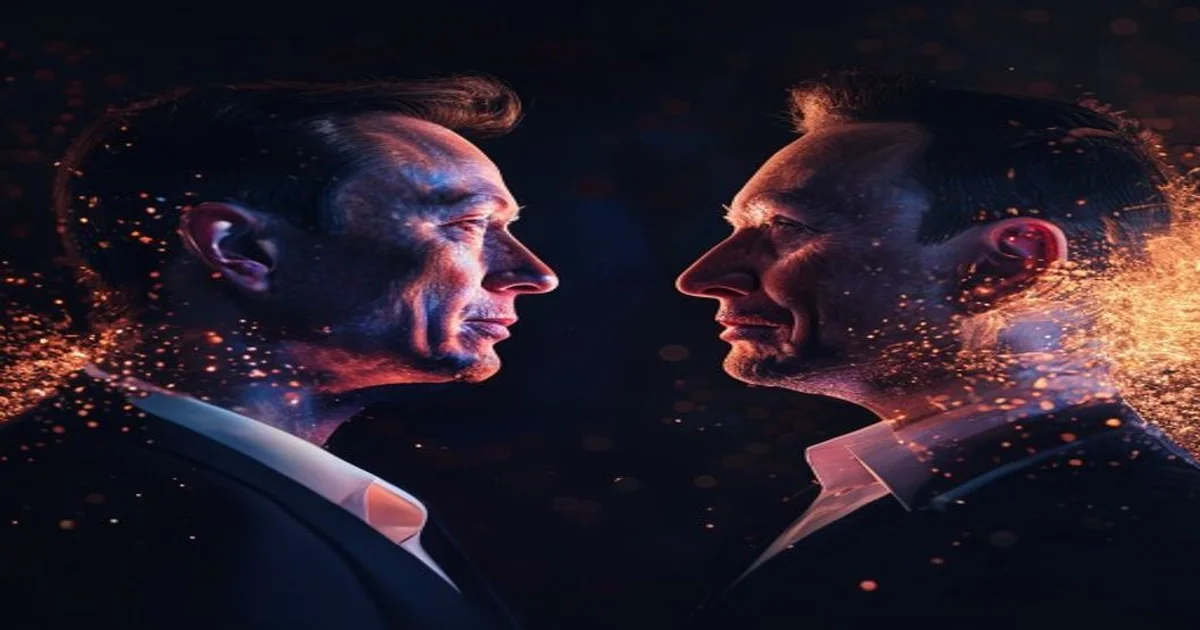
The final week of Musk v. Altman stripped away the legal abstractions and turned the San Francisco courtroom into something closer to a character trial. Two of the most powerful figures in technology sat across from opposing counsel and fought over a single question: who was the true believer, and who was the opportunist?
Musk’s legal team targeted Altman’s conduct as CEO, pressing him on alleged self-dealing involving companies that hold commercial relationships with OpenAI. The argument was straightforward: Altman had taken an organisation founded on safety-first, nonprofit principles and quietly redirected it toward profit once ChatGPT made commercial success look inevitable. In this framing, Altman’s original commitments were never sincere — they were a fundraising posture, discarded once they became inconvenient.
Altman pushed back directly. He portrayed Musk not as a principled whistleblower but as a co-founder who departed on his own terms, failed to take over the organisation he wanted to lead, and then built xAI as a direct commercial rival. The message to the jury was explicit: Musk didn’t file this lawsuit to protect OpenAI’s mission — he filed it to damage a competitor. With xAI now competing for the same talent, investment, and enterprise contracts as OpenAI, Musk’s financial motive to see the company destabilised was, Altman’s team argued, impossible to ignore.
Neither account was clean. Altman faced pointed questions he didn’t answer with full confidence. Musk’s early correspondence about OpenAI’s direction complicated the narrative that he was simply an aggrieved idealist. What the week produced wasn’t resolution — it was a choice. The jury had to decide which man’s self-interest was more disqualifying, and by extension, whose version of OpenAI’s founding promise deserved legal protection. When the verdict came down on May 18, they sided with Altman, finding Musk’s claims barred by the statute of limitations. Judge Yvonne Gonzalez Rogers accepted that verdict.
The missing context: what the trial exposed about OpenAI’s governance that nobody is talking about
The verdict resolved a statute of limitations question. It resolved nothing about how OpenAI actually governs itself.
Throughout the trial, internal communications and conflicting founder testimony pulled back the curtain on decisions made in OpenAI’s earliest days — decisions that now shape an organisation pursuing a valuation in the hundreds of billions of dollars. Those documents showed a founding vision that was genuinely contested: not just between Musk and Altman, but in the organisation’s own DNA. No court has ruled on whether the nonprofit parent board retains meaningful authority to hold the for-profit arm accountable to the original mission. The verdict doesn’t change that.
OpenAI operates through a hybrid structure where a nonprofit sits atop a capped-profit subsidiary. In theory, the nonprofit board exists to ensure commercial activity serves the broader mission. In practice, the trial exposed how informal agreements, undocumented understandings, and competing personal agendas shaped foundational decisions that were never codified in enforceable terms. Altman faced direct examination over alleged conflicts of interest involving companies with business ties to OpenAI. That scrutiny didn’t end with the jury’s advisory finding.
What the proceedings handed to governance experts and regulators is a rare primary source: sworn testimony, authenticated internal communications, and competing accounts of what OpenAI’s founders actually agreed to build. California’s attorney general retains oversight authority over the organisation’s nonprofit status. The ongoing restructuring — which would shift more control toward conventional for-profit governance — is still subject to regulatory review. None of that review has concluded.
The trial produced a winner. It did not produce an answer to the question that matters most: who is actually accountable for what the most powerful AI company in the world decides to do next, and what mechanism exists to enforce that accountability when billions of dollars and competing interests pull in the opposite direction from the founding mission.
Why the statute of limitations outcome is a double-edged result for OpenAI
The jury’s May 18 verdict handed OpenAI a procedural win, not a moral one. US District Judge Yvonne Gonzalez Rogers accepted the advisory finding that Musk’s claims were time-barred, which means the central question — whether OpenAI’s transformation into a for-profit entity betrayed its founding mission — was never adjudicated on the merits. OpenAI walks away without a damaging precedent on the books, but also without any court-validated confirmation that its commercial pivot was lawful under its nonprofit charter.
That distinction carries real consequences. OpenAI is mid-transition into a for-profit structure, actively courting investors and negotiating partnerships that depend on clarity about what the nonprofit parent can and cannot do. The statute of limitations ruling provides none of that clarity. No court has interpreted what OpenAI’s founding commitments actually obligate the organization to deliver, or to whom. Investors writing large checks and partners signing long-term agreements are still operating on the organization’s word rather than any authoritative legal interpretation.
The procedural escape route also signals something to future challengers. A more carefully timed lawsuit — filed closer to a triggering event like a formal restructuring vote or a specific transfer of assets — would not face the same limitations trap that sank Musk’s claims. State attorneys general, who hold oversight authority over nonprofit corporations, could pursue this route. California’s AG is already scrutinizing OpenAI’s conversion. Federal regulators with a mandate over AI development could follow. Each of those actors watched this trial, saw exactly where Musk’s legal strategy broke down, and can adjust accordingly.
Winning on a technicality bought OpenAI time. It did not buy OpenAI legitimacy. The governance questions that animated this trial — who controls the most powerful AI company in the world, and under what obligations — remain unresolved and now more visibly contested than before the case began.
What this means for the broader AI industry: governance is the next battleground
The Musk v. Altman verdict landed not with a bang but a procedural shrug. The jury sided with OpenAI on May 18, finding Musk’s claims barred by the statute of limitations — meaning the substantive question of whether OpenAI betrayed its public-benefit mission never received a legal answer. That ambiguity is now the precedent. Anyone hoping the trial would establish clear accountability standards for AI organizations that drift from their founding mandates walked away empty-handed.
That gap matters beyond OpenAI. Anthropic, founded by former OpenAI researchers, operates under a public benefit corporation structure. Other AI labs have adopted similar hybrid arrangements that blend profit-seeking with stated ethical commitments. All of them now exist in the same legal gray zone the trial exposed but failed to resolve. Founders can write mission statements into their charters; courts may never adjudicate whether those statements were honored if enough time passes before someone challenges the drift.
Policymakers are the ones left holding the problem. The statute of limitations defense that killed Musk’s claims was never designed with decade-long institutional mission creep in mind. AI companies can transform their fundamental structure — as OpenAI did, shifting from a nonprofit to a capped-profit model — across years and multiple funding rounds, and existing law may simply run out the clock before any challenger can make a case stick. That is a structural flaw, not an edge case.
The trial also made clear that governance disputes at the frontier of AI will be ugly, credibility-driven affairs. Altman faced grilling over alleged self-dealing with companies doing business with OpenAI. Musk was painted as a control-seeker rather than a principled objector. Neither portrait inspires confidence that the people building the most consequential technology in the world have robust external checks on their power. Courts proved an inadequate venue. Legislatures have not yet built a better one.
What happens next: the fights that didn’t end with the verdict
The jury’s verdict closes one chapter but barely slows the war. Musk still operates xAI, his direct competitor to OpenAI, and continues to use his platform on X to attack Altman’s credibility and OpenAI’s nonprofit origins. Losing a statute-of-limitations ruling doesn’t strip him of regulatory levers, political allies, or a billionaire’s capacity to fund parallel campaigns indefinitely.
OpenAI’s conversion from nonprofit-controlled entity to a more conventional for-profit structure remains unfinished and newly exposed. Three weeks of testimony placed that restructuring under a national spotlight, and state attorneys general in California and Delaware — both with jurisdiction over nonprofit conversions — now have a detailed public record of internal disputes, disputed commitments, and governance decisions made without full board transparency. Fresh legal challenges to the restructuring are not a possibility; they are a queue.
The reputational damage runs deeper than any ruling can fix. Altman spent days on the stand defending himself against accusations of self-dealing involving companies like Helion and Reddit that hold commercial relationships with OpenAI. Musk, in turn, was portrayed in open court as someone who wanted personal control over AGI development and walked away when he couldn’t get it. Both men emerged with their public narratives dented in ways that press releases cannot easily repair. Investors, employees, and potential partners watched a foundational AI institution air its worst internal contradictions in federal court.
The question of who governs OpenAI — and under what obligations to the public — was never actually answered by Judge Yvonne Gonzalez Rogers or the jury. The verdict resolved a procedural question about timing, not a substantive one about accountability. That unresolved question now moves into regulatory hearings, restructuring negotiations, and the court of public opinion, where neither Musk nor Altman holds a controlling stake.