The Hidden Tax on Running a Small Business: Fragmented Software Costs
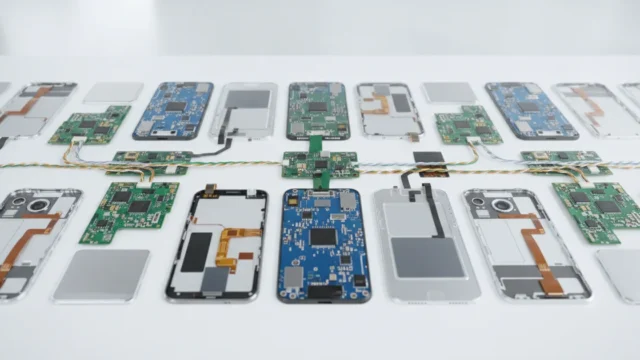
A small business running standard operations today pays separately for nearly everything. QuickBooks for accounting. Shopify or a standalone invoicing tool for sales. A separate inventory platform. An HR system for payroll and personnel. A CRM to track customer relationships. Each subscription carries its own monthly fee, its own login, its own data silo — and its own renewal negotiation when the vendor decides to raise prices.
The costs compound fast. A 20-person company can easily spend $1,500 to $3,000 per month across five or six SaaS tools, none of which talk to each other without expensive middleware or manual data entry. That fragmentation isn’t accidental. Software vendors have a direct financial incentive to sell point solutions: a focused tool is easier to market, easier to position against a single competitor, and far easier to lock customers into. Switching one piece means disrupting workflows built around it, which is exactly the kind of friction that keeps renewal rates high and pricing power firmly with the vendor.
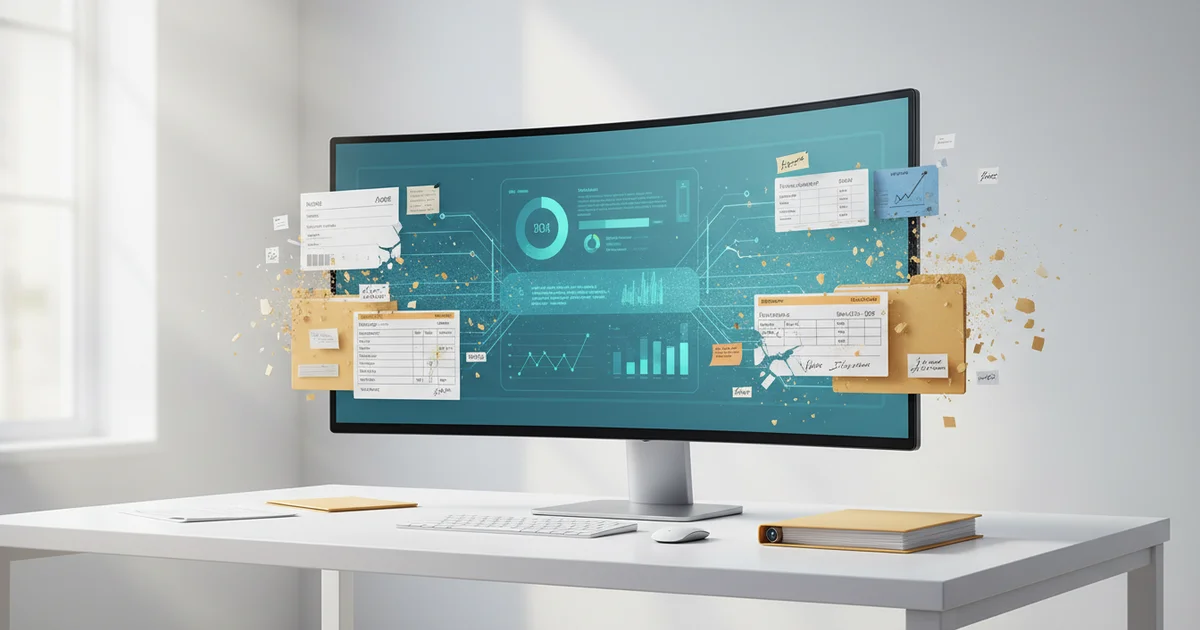
ERPNext attacks this structure directly. It consolidates accounting, order management, inventory tracking, manufacturing, asset management, HR, and payroll into a single platform — and charges zero in licensing fees. The entire codebase is open-source, maintained publicly on GitHub under the Frappe organization. A business running ERPNext replaces the entire stack of fragmented subscriptions with one system, eliminating both the per-tool costs and the integration overhead that comes with stitching those tools together.
The cost calculus this creates is straightforward. The licensing fee disappears entirely. The integrations between modules are native, not bolted on. A sales order flows directly into inventory, which flows into accounting, without a third-party connector or a manual export. For a business operating on thin margins — which describes most SMBs — that consolidation isn’t a minor convenience. It’s the difference between software that drains operating budget and software that doesn’t.
What ERPNext Actually Does: A Feature Set That Rivals Paid Enterprise Giants
ERPNext packages a genuinely comprehensive set of business tools into a single open-source deployment — and the depth of each module is where the real story lives.
The accounting suite covers the full financial workflow without gaps. From recording individual transactions to generating and analyzing financial reports, it matches the functional range of dedicated accounting software that typically costs hundreds of dollars per user annually. Cash flow management, invoicing, and financial summaries all live in one place, eliminating the need to sync data between separate systems.
Order management goes further than basic sales tracking. ERPNext monitors inventory levels in real time, handles stock replenishment, manages sales orders, and oversees the complete fulfillment chain — customers, suppliers, shipments, and deliverables included. That inventory-level visibility is significant. Many small businesses pay separately for warehouse management software precisely because their accounting or CRM tools don’t reach that far down the supply chain. ERPNext closes that gap natively.
The platform also includes manufacturing tools that handle the production cycle end to end: material consumption tracking, capacity planning, and subcontracting management. Asset management, HR, and additional modules extend the coverage further.
The cumulative effect is the key point. A small or mid-sized business running ERPNext doesn’t replace one paid tool — it replaces an entire ecosystem. The typical stack for a growing business might include separate subscriptions for accounting software, an inventory system, an HR platform, a CRM, and order management tools. Each carries its own licensing cost, its own implementation overhead, and its own integration problem when data needs to flow between them. ERPNext collapses that stack into a single system with a single data layer, deployed once.
That breadth, delivered under a fully open-source license, is what separates ERPNext from the narrow free tiers that enterprise vendors use to pull businesses into paid upgrades. The features aren’t a preview — they’re the product.
Open Source as a Business Model: What ‘100% Free’ Really Means
ERPNext’s entire codebase sits publicly on GitHub under the GNU General Public License v3. Any developer, auditor, or curious business owner can read every line of code that handles their financial data, inventory records, and payroll. That transparency is a meaningful security advantage. Proprietary ERP vendors ask customers to trust their systems without showing how those systems actually work. ERPNext removes that leap of faith entirely.
The “100% free” label refers specifically to licensing fees, which are zero. Frappe Technologies, the company behind ERPNext, does not charge for the software itself. But running an ERP system in a real business carries real costs, and pretending otherwise does small businesses a disservice. Implementation consulting, custom module development, cloud hosting, and ongoing technical maintenance are where budgets get spent. A self-hosted deployment on a VPS can run as low as $20–$50 per month in infrastructure costs, but a properly scoped implementation with workflow customization and staff training routinely costs several thousand dollars. The honest calculation still lands far below SAP or Oracle licensing, where per-user annual fees alone can exceed $1,000 per seat before a single consultant is hired.
The open-source structure also eliminates single-vendor dependency, one of the most underappreciated risks in enterprise software. With SAP or Microsoft Dynamics, the vendor controls the roadmap, the pricing, and the exit. With ERPNext, a global community of contributors — spanning India, Europe, North America, and beyond — continuously ships improvements to the platform. If Frappe Technologies ceased to exist tomorrow, thousands of developers could maintain and extend the codebase. That resilience is structurally impossible with closed, proprietary software where the source code is a corporate trade secret.
For small and mid-sized businesses, the practical implication is straightforward: the software cost barrier disappears, and the remaining costs — implementation and maintenance — are negotiable, competitive, and not controlled by a single entity with an incentive to lock you in.
What Most Coverage Gets Wrong: This Isn’t Just a ‘Cheap Alternative’
The dominant framing in tech media goes like this: open-source ERP is what you use when you can’t afford the real thing. That framing is wrong, and it obscures something important about how enterprise software actually works.
ERPNext handles accounting, order management, manufacturing, inventory, payroll, asset management, and CRM inside a single unified system — built on one database, one codebase, one interface. The typical SMB “stack” achieves the same functional coverage by stitching together QuickBooks, a separate inventory tool, an HR platform, and a CRM, then spending real money on integrations that break every time one vendor pushes an update. That fragmented approach doesn’t just cost more. It produces worse data. When your sales figures live in one system and your inventory lives in another, you’re always operating on lag, reconciling discrepancies instead of running your business.
The pricing conversation also obscures who enterprise software has historically ignored. SAP and Oracle built their licensing models around organizations with dedicated IT departments and six-figure implementation budgets. That wasn’t an accident — it was a deliberate market decision. Small and mid-sized businesses were never the intended beneficiaries. They were left to assemble patchwork solutions and absorb the hidden costs of incoherence.
The emerging market dimension makes this even sharper. A manufacturer in Lagos, a logistics company in Karachi, or a retailer in Nairobi faces the same operational complexity as their counterparts in Frankfurt or Chicago — but with a fraction of the capital budget and no access to enterprise vendor support infrastructure. For those businesses, a zero-license ERP with full source code access isn’t a discount option. It’s the difference between having enterprise-grade operational infrastructure and not having it at all. That’s a categorically different kind of access than swapping Salesforce for a cheaper CRM.
ERPNext doesn’t need to be defended as “good enough.” The integrated design argument stands on its own merits against fragmented paid stacks. The framing just needs to change — from consolation prize to what it actually is: a direct challenge to who gets to run a serious business.
The Real Barriers to Adoption — and Why They Are Shrinking
For most of ERPNext’s early life, “free” came with an asterisk. The software itself cost nothing, but standing it up required a Linux server, comfort with the command line, and enough patience to navigate Frappe’s bench deployment tool. For a 20-person manufacturing company without a dedicated IT department, that friction was effectively a locked door. Proprietary vendors knew it and used it. SAP Business One and NetSuite charged handsomely for the privilege of just working out of the box, and enough business owners paid that premium to avoid the self-hosting headache.
That calculus has shifted. Frappe Cloud, the official managed hosting service, lets a business owner spin up a fully operational ERPNext instance in minutes, with automatic updates, backups, and support handled entirely off-site. Third-party managed hosting providers have multiplied alongside it, creating genuine price competition. The technical barrier that once separated open-source aspiration from operational reality no longer requires an in-house engineer to clear.
Customization tells a similar story. ERPNext runs on the Frappe framework, a full-stack web application platform that has matured significantly over the past decade. Frappe ships with a low-code customization layer that allows users to add custom fields, modify forms, build reports, and create automated workflows directly inside the browser interface — no Python or JavaScript required. A operations manager who understands the business logic can now build the workflow without filing a ticket to a developer. That shift in who holds the keys to customization is consequential. It removes the expensive consulting engagement that once stood between a business’s specific needs and the software’s actual behavior.
ERPNext covers accounting, order management, manufacturing, inventory, HR, and asset management in a single unified system. The breadth means fewer integration headaches and fewer separate vendor contracts. The combination of managed cloud deployment and low-code adaptability is turning ERPNext from a project requiring technical sponsorship into software a determined business owner can adopt and shape independently.
What This Means for the Future of Business Software
ERPNext signals something larger than a single product success: enterprise software infrastructure is commoditizing, and the competitive moat is shifting. When a fully open-source system handles accounting, order management, manufacturing, asset tracking, and HR in a single platform at zero licensing cost, the feature checklist stops being a differentiator. What remains valuable is implementation expertise, configuration depth, and reliable support — the human layer, not the software layer.
That shift creates real pressure on commercial vendors. Mid-market players like Zoho and QuickBooks built sustainable businesses on the premise that integrated business software requires a paid license to be trustworthy and complete. ERPNext directly challenges that premise. As adoption grows, those vendors face a harder question: what does a subscription fee actually buy beyond functionality that a free alternative already provides? The honest answer, for many of them, is increasingly thin.
For the open-source ecosystem, the implications run deeper than market competition. ERPNext proves that mission-critical, complexity-heavy business software is viable territory for open-source development — not just developer tooling, operating systems, or infrastructure utilities. Building something that manages a company’s cash flow, supply chain, and payroll simultaneously is a different category of ambition than a command-line tool or a database engine. ERPNext demonstrates it can be done, sustained, and scaled.
The businesses that move first stand to gain the most. A small manufacturer or regional distributor that replaces a patchwork of paid subscriptions with a well-implemented ERPNext deployment doesn’t just cut costs — it gains data integration and operational visibility that larger competitors paid millions to achieve. The technology access gap between enterprise and small business narrows. That’s not a feature update. That’s a structural change in who gets to run a modern operation.