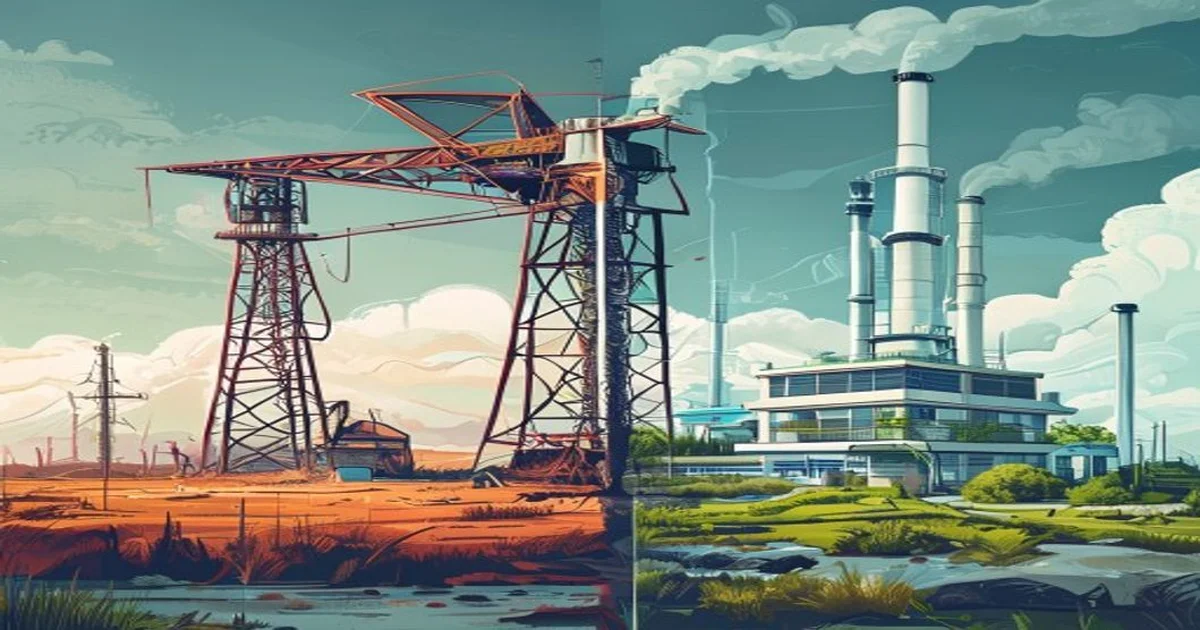
The Abandoned Well Crisis Nobody Talks About
Millions of inactive oil and gas wells are scattered across the United States, and a significant share of them have no identifiable owner. These are orphaned wells — abandoned by companies that went bankrupt, dissolved, or simply walked away — leaving state and federal governments, and ultimately taxpayers, responsible for the cleanup bill.
That bill is staggering. The Environmental Protection Agency estimates there are over 3 million abandoned oil and gas wells across the country, and plugging them costs anywhere from tens of thousands to hundreds of thousands of dollars per well. The Infrastructure Investment and Jobs Act allocated $4.7 billion toward orphaned well cleanup in 2021, the largest federal commitment to the problem in history. It still isn’t enough to close the gap.
These wells are not just an accounting problem. They are actively damaging the places where people live right now. Orphaned wells leak methane, a greenhouse gas roughly 80 times more potent than carbon dioxide over a 20-year period. They also contaminate aquifers, pushing hydrocarbons and brine into the groundwater supplies that rural communities depend on. The damage is ongoing, not theoretical.
The scale of the problem has been chronically underfunded and underreported for decades. State regulators have historically lacked the resources to inventory every inactive site, which means official counts almost certainly understate reality. Academic researchers using aerial surveys and satellite data have consistently found more leaking wells than state databases record.
The communities absorbing this damage are often the same ones that hosted the original drilling operations — rural areas in Pennsylvania, West Virginia, Texas, Oklahoma, and Wyoming that saw economic booms and were left holding the environmental costs once extraction became unprofitable. The orphaned well crisis is a slow-moving disaster hiding in plain sight, and the baseline is worse than most coverage acknowledges.
The Geothermal Opportunity Hidden in Plain Sight
Millions of abandoned oil and gas wells are scattered across the United States, leaking methane into the atmosphere and contaminating groundwater while sitting on some of the most valuable untapped energy infrastructure in the country. These wells already reach thousands of feet into the earth, where temperatures climb high enough to generate usable heat. The expensive, time-consuming drilling work — historically the single biggest cost barrier to geothermal development — is already done.
Policymakers in both Republican- and Democratic-led states are now exploring whether those holes in the ground can be repurposed to produce geothermal energy. The pitch is straightforward: retrofit existing well infrastructure instead of drilling new wells from scratch, slashing the capital costs that have kept geothermal power a marginal player in the American energy mix. Regions with dense oil and gas histories also hold decades of subsurface data — temperature gradients, rock formations, fluid behavior — that geothermal developers would otherwise spend years and millions of dollars collecting.
The energy case is compelling on its own terms. Geothermal power generates electricity continuously, around the clock, regardless of weather conditions. That makes it something genuinely rare in the clean energy landscape: a baseload power source. Solar and wind require storage or backup capacity to cover gaps; geothermal does not. Grid operators struggling to balance intermittent renewables with stable demand have every reason to want more of it.
The opportunity sits at the intersection of two urgent problems. The U.S. faces a massive liability in its orphaned well inventory — sites with no official owner that continue polluting communities and releasing greenhouse gases. Converting those wells into productive clean energy assets addresses the environmental cleanup obligation while simultaneously expanding reliable low-carbon power capacity. One hole in the ground stops being a problem and starts being a solution.
The Double Win: Clean Energy and Environmental Remediation
Abandoned oil and gas wells represent one of the most expensive environmental liabilities in the United States. Millions of inactive wells sit unplugged across the country, leaking methane into the atmosphere and contaminating groundwater, with no responsible owner left to cover the cleanup bill. Plugging a single well costs anywhere from tens of thousands to hundreds of thousands of dollars, and the total national backlog runs into the hundreds of billions.
Converting those same wells into geothermal energy producers flips the math entirely. Instead of spending public money to eliminate a hazard, states generate revenue from it. The income from energy production can offset plugging and remediation costs, turning a line item that drains state budgets into one that funds itself. In the most favorable cases, a productive geothermal well pays for its own cleanup and then keeps generating returns for decades.
This creates a rare policy moment. States carrying large orphan well inventories — Texas, West Virginia, Oklahoma, Pennsylvania — are the same states scrambling to add reliable, baseload clean energy to their grids. Those two pressures usually pull legislators in different directions and toward different agencies. Here, they point at the same solution. Republican-led states that have resisted clean energy mandates have shown genuine openness to geothermal development precisely because it grows from oil and gas infrastructure rather than replacing it.
The narrative shift matters as much as the economics. For decades, abandoned wells have been framed exclusively as liabilities — legal, financial, and environmental. Reframing them as undeveloped energy assets changes who pays attention and who invests. It draws in energy developers who see upside, not just regulators managing downside. That reframing unlocks a different class of capital and a different kind of political champion. A state legislator reluctant to vote for a renewable energy bill will vote for a bill that cleans up pollution and creates jobs in former oil country — even if the result looks identical on a grid operator’s ledger.
What Most Coverage Gets Wrong: The Obstacles Are Real
The optimistic headlines about converting abandoned wells into geothermal power plants leave out a fundamental problem: most of those wells are in the wrong place. Geothermal energy requires subsurface temperatures high enough to generate usable heat or electricity, and those conditions don’t exist uniformly across the United States. The Western states sitting atop the Ring of Fire have favorable geology. The Gulf Coast and Appalachian Basin, where millions of orphaned wells cluster, often don’t. Depth matters too — shallower legacy wells drilled decades ago for conventional oil production frequently can’t reach the temperature gradients that make conversion economically viable. Reporters covering this story tend to treat “millions of abandoned wells” as a ready-made inventory. It isn’t.
Then there’s the ownership problem. A significant share of abandoned wells in the U.S. are classified as orphaned — meaning no legally identifiable responsible party exists. States like Pennsylvania and West Virginia have backlogs of thousands of these sites. Any developer eyeing conversion has to navigate unclear title chains, potential liability for pre-existing contamination, and regulatory frameworks written for plugging wells, not repurposing them. That legal ambiguity stops investment before engineering questions even get asked.
The workforce dimension gets almost no attention in clean energy coverage, and that’s a mistake. Oil and gas workers — drillers, wellsite geologists, petroleum engineers — already possess skills directly transferable to geothermal operations. Their unions, including the United Steelworkers, which represents refinery and extraction workers, have real political weight in key states. Ignoring them as stakeholders doesn’t make them irrelevant; it makes conversion harder. States that have structured energy transition programs around explicit labor agreements, like some offshore wind projects in the Northeast, move faster and face less political resistance. Geothermal conversion advocates haven’t built those coalitions yet, and that gap shows up in legislative progress — or the lack of it.
Where This Is Actually Happening — and Who Is Driving It
Policymakers in both Republican- and Democratic-led states are moving — slowly — to build frameworks that would allow abandoned oil and gas wells to be repurposed for geothermal energy production. The work is early-stage, but the political coalition forming around it is unusual. States with heavy oil and gas histories, including Texas, Wyoming, and West Virginia, have begun exploring pilot programs that treat existing well infrastructure as an energy asset rather than a liability.
The companies best positioned to lead this transition are not solar developers or wind farm operators. They are startups and established firms that already understand directional drilling, subsurface geology, and wellbore integrity — the same skill set that built the shale boom. Companies like Sage Geosystems and Criterion Energy are drawing directly on oil and gas engineering expertise to develop geothermal projects at former fossil fuel sites. That crossover knowledge cuts development costs and timelines in ways that traditional renewables companies cannot easily replicate.
Federal money is already flowing toward abandoned wells, but almost entirely for plugging and remediation. The Bipartisan Infrastructure Law allocated $4.7 billion to address orphaned wells — sites with no solvent owner left to cover cleanup costs. That funding is being used to seal wells and walk away. Redirecting even a portion of it toward conversion feasibility studies and pilot projects would change the economics significantly. The infrastructure for that pivot exists; the policy direction does not yet.
The core opportunity is that millions of wells are already drilled, already mapped, and already sitting inside regions with detailed subsurface data accumulated over decades of oil and gas extraction. Starting a geothermal project from scratch requires expensive exploration and permitting. Converting an existing well skips much of that. The federal orphan well program could be restructured to require conversion assessments before any plugging decision is made — a straightforward policy change that no state has yet mandated at scale.
The Bigger Picture: A Model for Fossil Fuel Transition?
The well-to-geothermal conversion model carries implications far beyond geothermal energy itself. If developers can systematically repurpose abandoned oil and gas infrastructure — using existing boreholes, existing subsurface data, and existing grid connections — the same logic applies to coal mines, retired gas pipelines, and exhausted petroleum fields sitting idle across the country. The United States has millions of inactive wells already drilled into the ground, many leaking methane and contaminating groundwater with no responsible owner on record. Converting even a fraction of those sites into productive clean energy assets reframes the entire cleanup problem as an investment opportunity.
That reframing has real policy consequences. The dominant clean-energy narrative treats transition as construction: build wind farms, build solar arrays, build transmission lines. That framing favors new development and, by extension, new developers. A conversion model favors different actors — oil and gas workers who know the equipment, companies with legacy drilling expertise, and states like West Virginia, Wyoming, and Oklahoma that have spent decades building fossil fuel economies. Republican and Democratic state governments have both shown interest in geothermal well conversion precisely because it fits local industrial identity rather than disrupting it.
But scaling this model demands institutional coordination that does not currently exist. Environmental regulators, energy developers, and state governments each control different pieces of the puzzle — permitting authority, capital, and subsurface rights — and they operate under rules designed for separate industries. A well regulated under oil and gas law does not automatically qualify for geothermal energy permits. Liability for legacy contamination can block transaction structures that would otherwise attract private investment. Federal orphan well cleanup funds, which Congress expanded through the Infrastructure Investment and Jobs Act, were not designed with energy conversion in mind.
The technical proof-of-concept is advancing. The institutional infrastructure to support it at scale is not. Until regulators, developers, and legislators build frameworks that treat abandoned fossil fuel assets as transition resources rather than environmental liabilities alone, the conversion model stays a promising idea rather than a replicable blueprint.