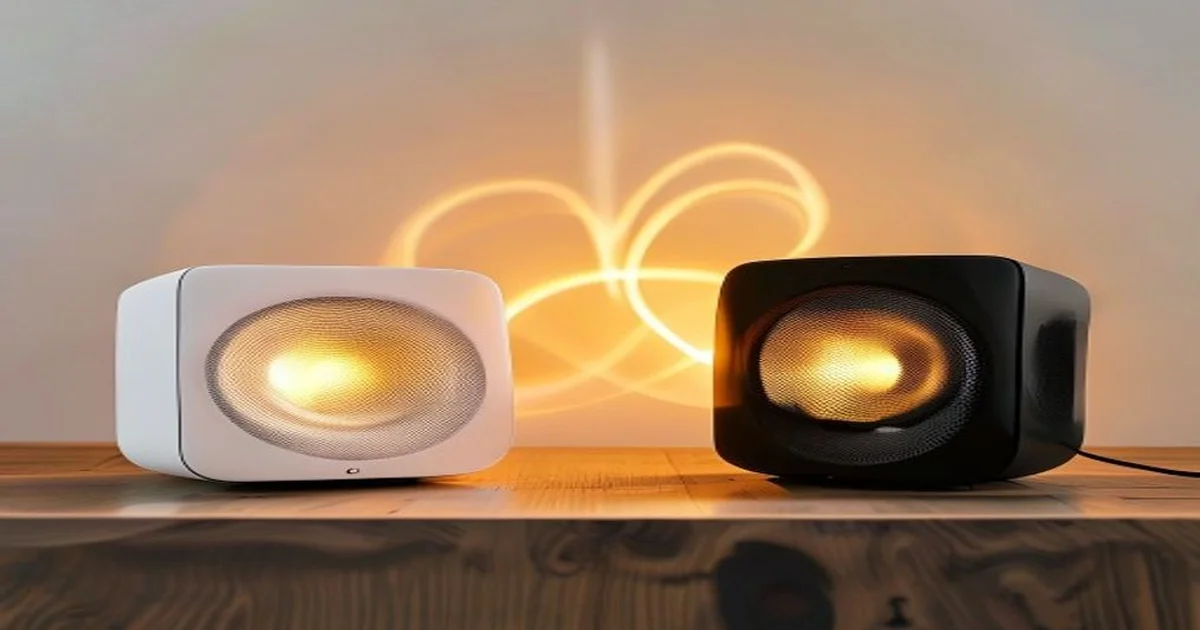
The ‘walled garden’ myth in home audio
For years, Bose and Sonos built their market positions on a single unspoken promise: buy into us completely, or accept the consequences. Sonos spent the better part of two decades engineering a proprietary wireless mesh network that communicated only with itself. Bose responded with its own SimpleSync ecosystem, pairing Bose speakers and headphones in ways that excluded every other brand by design. The message to consumers was consistent and deliberate — mixing is risk, and risk is your fault.
That narrative served manufacturers exceptionally well. A consumer who buys a Sonos Arc soundbar faces real pressure to buy Sonos Era 300 rear surrounds rather than a competing product that might perform better at the same price. The ecosystem becomes the salesperson. Each new room is another locked-in purchase, and the switching cost climbs with every additional device.
What rarely got examined was whether the interoperability penalty was real or manufactured. The assumption that cross-brand setups produce degraded experiences lived mostly in marketing materials and forum speculation — not in systematic, real-world testing. When a ZDNET writer actually ran a hybrid Bose-Sonos home audio setup and documented the results, the chaos the industry had long predicted failed to materialize. The two ecosystems coexisted without meaningful friction.
That single stress test doesn’t rewrite the rulebook, but it exposes something the industry preferred to leave vague: the incompatibility warnings protected revenue, not experience. Consumers who accepted the walled garden logic spent more, replaced more, and questioned less. The brands that benefited most from ecosystem loyalty were never the ones living with the speakers — they were the ones selling them.
The shift happening now isn’t purely technical. It’s a credibility problem for the closed-ecosystem sales argument. Once real-world hybrid setups start working harmoniously, the burden of proof reverses. Manufacturers can no longer assume consumers will accept lock-in as a reasonable trade-off for convenience. They have to justify it.
What a Bose-Sonos hybrid setup actually looks like in practice
The setup works by dividing labor along each brand’s strengths rather than forcing one system to cover every room. Sonos handles the multiroom networking layer — its app acts as the central routing hub, managing playlists, grouping zones, and syncing audio across the house. Bose hardware takes over in the rooms where acoustic performance matters most: the living room and primary listening space, where its speaker engineering earns its keep.
Configuration runs through the Sonos app, which manages the whole-home audio graph. Bose units in the high-priority zones connect into that network rather than operating as isolated islands, so a track queued from a phone routes through Sonos’s infrastructure and lands on whichever speakers — Bose or Sonos — the listener selects. The Bose speakers handle output; Sonos handles coordination.
The friction that most people expect from mixing ecosystems largely failed to materialize in day-to-day use. Switching between zones, adjusting volume, and grouping rooms for synchronized playback all worked through a single interface without constant app-juggling or manual reconnection rituals. The experience challenged the assumption that cross-brand audio setups require ongoing technical maintenance.
The practical lesson is that Sonos excels at network logic and whole-home synchronization, while Bose’s reputation holds in the acoustic domain. Running them together means treating each brand as a specialist with a defined role rather than betting the entire house on one company’s full product catalog. That model — pick the best networking layer, pick the best hardware for critical listening zones — reflects a shift in how mixed smart home systems can be assembled without sacrificing usability.
Where the cracks still show — and why they matter
Cross-brand audio setups have real friction points, and ignoring them doesn’t make them disappear.
Voice assistant integration is the sharpest thorn. Running a Bose-Sonos hybrid, for example, means navigating two separate apps — the Bose Music app and the Sonos app — because neither company has full visibility into the other’s devices. Asking Alexa or Google Assistant to play music across both ecosystems simultaneously still requires workarounds that single-brand users never encounter. You can get there, but the path is longer than the marketing suggests.
Software update cycles compound the problem in ways that are genuinely unpredictable. When Sonos pushes a firmware update and Bose ships one of its own on a different schedule, the window for unexpected incompatibilities opens. A feature that worked last Tuesday — say, a specific streaming protocol handshake or a voice command shortcut — can quietly break when only one side of your setup has updated. Single-brand households are insulated from exactly this kind of asymmetric risk.
What mainstream coverage gets wrong is the framing. Most reviews either wave these problems away entirely or treat them as dealbreakers that should send buyers back to a single-brand setup. Neither response is accurate. The app-switching friction is real but settles into muscle memory within a few weeks. The update incompatibility risk is real but rare in practice, and most issues resolve themselves within days as the lagging company catches up.
The honest assessment is that these limitations place a small but consistent tax on the cross-brand experience — measured in extra taps, occasional reboots, and the occasional morning where a routine stops working for no obvious reason. For buyers who prioritize sound quality room-by-room over seamless ecosystem integration, that tax is worth paying. For buyers who want everything to just work without thinking about it, the single-brand path remains the lower-friction choice. Knowing which category you fall into before you buy is the most useful piece of advice any review can offer — and it’s the one most reviews skip.
The broader smart home implication: best-of-breed is back
The success of mixed audio setups points toward a larger reconfiguration of how smart home purchasing decisions get made. Standards like Matter and Thread — backed by Apple, Google, Amazon, and Samsung through the Connectivity Standards Alliance — are systematically dismantling the technical case for staying inside a single brand’s walls. Matter, which reached version 1.3 in 2024, now covers lighting, thermostats, locks, blinds, and energy management alongside its original device categories. Thread provides the low-latency mesh networking underneath. Together they turn interoperability from a marketing promise into an engineering baseline.
The logic that made a Bose-Sonos hybrid setup viable applies directly to these categories. A homeowner who wants Lutron’s lighting control in the living room, an Ecobee thermostat in the hallway, and Aqara door sensors on the perimeter no longer has to compromise on performance to keep everything talking. The infrastructure handles the translation. Brand uniformity, once a practical necessity, becomes a purely aesthetic choice.
This shifts purchasing power back toward consumers in a concrete way. For years, the smart home market rewarded loyalty to a single ecosystem because the friction of mixing brands was real and significant. That friction generated revenue — in replacement products bought for compatibility reasons, in subscription services tied to proprietary platforms, in the upgrade cycles manufacturers could engineer by keeping devices siloed. Removing that friction removes that leverage.
The practical result is that consumers can now evaluate each room on its own terms. A home theater gets the audio hardware that delivers the best sound at the target price. A kitchen gets the display that integrates most smoothly with cooking workflows. A bedroom gets the lighting system with the most precise circadian tuning. The question shifts from “what does my ecosystem support?” to “what performs best here?” That is a meaningful change in how several billion dollars of annual smart home spending gets directed — and manufacturers who built their moats around lock-in rather than product quality are going to feel it.
What this means for how you should shop for home audio now
Stop asking which brand deserves your loyalty. Start asking which brand solves the specific problem in front of you.
That reframe changes everything about how you build a home audio setup. Sonos earns its place through multiroom coordination — its app handles whole-home audio grouping with less friction than almost any competing system, and its hardware integrates cleanly across dozens of streaming services. Bose, by contrast, consistently delivers stronger standalone acoustic performance, particularly in the Quiet Comfort and SoundLink lines, where tuning and driver quality justify the premium for a room where you actually sit and listen.
The logical pairing writes itself. Put Sonos in the hallway, kitchen, and bedroom — spaces where synchronized background audio and easy app control matter more than sonic detail. Put a Bose speaker in the living room or home office, where you want real acoustic performance from a single unit. Both brands now operate over AirPlay 2 and Spotify Connect, which means switching between them involves no special configuration. They share a network, not a walled garden.
Budget-conscious buyers gain the most from this approach. A Sonos Era 100 runs around $249. A Bose SoundLink Max sits at $399. Buying one of each — matched to purpose — costs less than a pair of Sonos Era 300 speakers and delivers better acoustic performance in the room where it counts. More practically, hybrid setups remove the sunk-cost pressure that single-brand ecosystems create. You can start with one Sonos unit, add a Bose speaker six months later when finances allow, and never feel locked into completing a matching set that no longer fits your actual needs.
The room-by-room logic also future-proofs your spending. When a single speaker fails or a better option emerges, you replace one node — not a whole system.
The missing context most reviews won’t give you
Most audio reviews test products in isolation. A reviewer unboxes a Sonos Era 300, runs it through its paces in a dedicated listening room, and publishes a verdict — all without a single competing brand’s hardware in the chain. That methodology produces clean, reproducible results. It also produces a blind spot the size of most people’s actual living rooms.
ZDNET’s approach breaks from that pattern. Their testing draws on real-world use cases and pulls in customer review data from owners who are already living with these products in messy, multi-brand environments. That’s a structurally different kind of signal. Lab benchmarks tell you how a speaker performs under optimal conditions. Aggregated owner experience tells you how it behaves when it’s sharing a network with a Bose SoundLink and a voice assistant it was never designed to talk to. Those are different questions, and only one of them reflects how most households actually function.
The Bose-Sonos hybrid experiment that ZDNET documented isn’t really a story about two speaker brands. It’s a stress test for a much bigger assumption that has quietly shaped smart home purchasing for a decade: that ecosystem loyalty is a rational strategy. For years, the logic held. Staying inside one brand’s walls meant fewer compatibility headaches, smoother software updates, and tighter feature integration. Sonos built an entire business model on that premise.
What the hybrid setup reveals is that the premise is weakening. Spotify Connect, AirPlay 2, and Bluetooth don’t care which logo is on the grille. When a Bose speaker and a Sonos speaker can both pull from the same streaming queue without special configuration, the switching cost that justified ecosystem lock-in starts to evaporate.
For consumers planning purchases in 2024 and beyond, that changes the calculation. Buying the best individual product for each room — regardless of brand — is no longer the audiophile heresy it once was. It’s increasingly just good shopping.