What Netflix Is Actually Considering
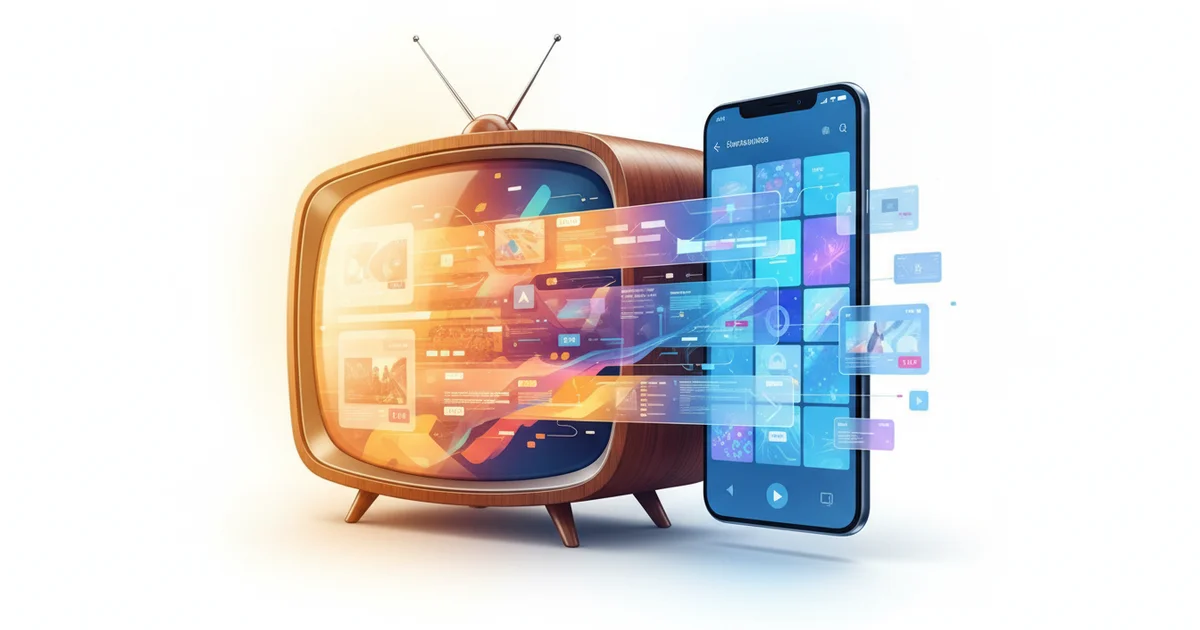
Netflix is exploring a significant departure from its core model. According to The Wall Street Journal, the company is considering launching continuously streaming live channels that run 24/7 — not occasional live events, but persistent, always-on programming that subscribers can tune into at any moment without making an active selection.
The difference matters. Netflix built its entire identity around on-demand streaming: you pick what you want, when you want it, and watch on your schedule. These proposed linear channels would flip that relationship entirely. Subscribers would passively tune in the way people once turned on cable television, letting a channel run in the background rather than navigating a content library to find something specific.
This is still an exploration, not a confirmed product launch. Most headlines covering the story are treating it as a done deal — it isn’t. Netflix has not announced a release date, a format, or even a firm internal commitment to move forward. That distinction matters when evaluating what this actually signals versus what it might eventually become.
What Netflix is reportedly considering would place it in direct competition with free, ad-supported streaming platforms like Pluto TV and Tubi, both of which already operate this linear channel model at scale. Those services have built substantial audiences around passive, lean-back viewing — exactly the behavior Netflix has never previously tried to capture.
The timing is deliberate. Netflix is dealing with signs of slowing engagement and has been actively diversifying its revenue streams, including its advertising tier. Live and continuous programming is harder to skip through, which makes it more attractive to advertisers and harder to fast-forward past — a structural advantage over traditional on-demand content that lets viewers skip ads entirely. Whether the company commits to this model or quietly shelves it, the fact that Netflix is seriously evaluating always-on linear streaming reflects how dramatically the competitive landscape has shifted since the platform first launched.
The Engagement Problem Netflix Needs to Solve
Netflix has a subscriber attention problem. The streaming platform is showing clear signs of slowing engagement — users are opening the app less frequently and watching for shorter stretches. For a subscription business built entirely on perceived value, that trend is an existential threat. If subscribers stop watching, they start canceling.
The root cause is partly structural. Netflix hosts thousands of hours of content across every genre imaginable, and that scale works against the platform. Psychologist Barry Schwartz documented this dynamic in his research on decision fatigue: the more options a person faces, the more likely they are to make no choice at all. On a streaming service, that paralysis translates directly into closed apps and cancelled subscriptions. Viewers spend 10 minutes scrolling through titles and land on nothing, then open YouTube instead.
This is the “what do I watch tonight?” problem, and it bleeds subscribers slowly. The on-demand model, once Netflix’s core selling point, assumes viewers arrive with intent. Increasingly, they don’t. They arrive tired, indecisive, and looking for the path of least resistance.
Always-on live TV channels eliminate that friction entirely. A continuously streaming channel removes the browse decision — content is already playing when the subscriber opens the app. This mirrors exactly how linear television held audiences for decades. Nobody had to choose what was on ABC at 9 p.m. on a Tuesday; the network chose for them. That passive viewing model drove massive, consistent watch time.
According to The Wall Street Journal, Netflix is actively exploring always-on channels that would run content 24/7, letting subscribers treat the platform like a traditional TV network rather than a video library. Free ad-supported streaming services like Pluto TV and Tubi already operate this model successfully, proving real audience demand exists for lean-back, low-friction viewing. Netflix entering that space signals that the company recognizes its on-demand foundation alone is no longer enough to keep subscribers watching — or paying.
The Irony: Streaming Is Becoming What It Replaced
Netflix built its empire on a single, powerful argument: you should never have to watch what someone else decided you’d watch at a time they decided you’d watch it. That argument killed Blockbuster, gutted cable subscriptions, and made “binge-watching” a household word. Now Netflix is reportedly exploring always-on linear channels that run content continuously, 24 hours a day — the exact format it spent fifteen years dismantling.
The strategic reversal is striking. Linear television, with its fixed schedules and passive viewing experience, was the villain in Netflix’s origin story. Reed Hastings built the company’s entire brand identity around escaping that model. The on-demand promise — watch anything, anytime, entirely on your terms — was not a feature. It was the ideology.
What Netflix is now acknowledging, even if not in those words, is that Pluto TV and Tubi figured something out first. Both free, ad-supported streaming services built their growth on curated linear channels that require zero decision-making from the viewer. Tubi now reports over 80 million monthly active users. Pluto TV, owned by Paramount, streams across more than 35 countries. Amazon folded its Freevee content into Prime Video but retained linear channel functionality. These platforms proved that a meaningful segment of streaming audiences actually wants the lean-back experience — the television running in the background while they cook dinner or fold laundry, no browsing required.
Most coverage of Netflix’s potential pivot focuses on the ad revenue upside, since continuous streaming channels limit the ability to skip commercials. That angle is real, but it misses the deeper admission. Netflix may be conceding that traditional broadcast and cable television solved a genuine human problem: decision fatigue. The paradox of choice is not a new concept, but streaming platforms spent a decade making it dramatically worse, then building recommendation algorithms to clean up the mess they created.
An always-on Netflix channel does not represent innovation. It represents the rediscovery of something that existed before Netflix did.
What Content Would Fill These Channels — and Who Decides
Netflix enters this experiment with a staggering content library built over more than a decade of aggressive original production. Reality franchises like Love Is Blind, Too Hot to Handle, and The Circle could anchor dedicated relationship and competition channels. Stand-up specials from Dave Chappelle, Ali Wong, and Hannah Gadsby could fill a comedy channel running around the clock. True crime docuseries, nature documentaries, and international dramas round out a catalog deep enough to program multiple themed linear channels without commissioning a single new title.
The real question is who — or what — builds the schedule. Netflix’s data infrastructure gives it a capability legacy broadcast networks never had. The platform tracks not just what subscribers watch, but when they watch, how long they stay, and at what point they abandon a title. That behavioral data could theoretically power hyper-personalized channel streams, serving a true crime feed tuned to a specific viewer’s completion history rather than a generic prime-time lineup. No cable programmer ever had that. Algorithmic channel curation at that level would be a genuine structural advantage over Pluto TV and Tubi, which rely on broader demographic targeting.
The cannibalization risk is real. Netflix built its identity on intentional viewing — the promise that subscribers actively choose what to watch, when to watch it, and how fast to consume it. Continuous streaming channels replace that active choice with passive consumption. A subscriber who leaves a reality channel running for three hours is not engaging with the platform the way Netflix historically designed the experience. That shift may inflate total viewing hours in internal metrics while quietly degrading the perceived value of the subscription. When background TV becomes the dominant use case, the premium streaming brand starts to look like a souped-up version of the very cable bundle Netflix spent years positioning itself against.
What This Means for Netflix’s Ad Tier — and Its Business Model
Netflix’s ad-supported tier, launched in November 2022, has struggled with one fundamental problem: advertisers trained on linear television don’t think in algorithms. They think in time slots. Always-on channels fix that.
Scheduled, continuous programming gives brands exactly what they’ve bought for decades — a predictable window, a defined audience, and a guaranteed placement. A shampoo ad running during a true crime block at 9 p.m. is a transaction advertisers understand. A mid-roll insertion triggered by a recommendation engine during someone’s third consecutive binge episode is not. Netflix’s move toward linear-style streaming channels effectively translates its inventory into a language legacy TV buyers already speak.
That translation has real revenue consequences. Traditional TV ad spending still runs into the tens of billions annually in the United States, and a significant portion remains controlled by media buyers at agencies who have resisted shifting full budgets into on-demand environments. By offering scheduled ad inventory, Netflix positions itself to capture dollars that have been slow to migrate from broadcast and cable — money that platforms like Hulu have partially accessed through their own live TV products, but which Netflix has largely been locked out of.
The competitive implications extend beyond ad revenue. If always-on streaming channels gain traction, Netflix stops being a library service with a premium brand and becomes a full-spectrum broadcaster. That reframes its rivalry entirely. Disney+ carries ESPN and the weight of ABC. Warner Bros. Discovery operates CNN and a portfolio of cable networks alongside Max. Broadcast networks maintain appointment viewing habits that streaming has never fully erased. Always-on channels give Netflix a structural foothold in that territory — not just competing for screen time, but competing for the architecture of how people watch television.
Pluto TV and Tubi built entire businesses on free, ad-supported streaming channels. Netflix would enter that model with a subscriber base already exceeding 270 million accounts and a content library those platforms can’t match. The ad tier becomes a fundamentally different product — and a significantly more dangerous competitor to traditional television — the moment scheduled programming locks in.
The Missing Context: This Is Part of a Bigger Strategic Shift
Always-on channels don’t exist in isolation. They follow a clear pattern of moves Netflix has made over the past two years to colonize more hours of a subscriber’s day. The company streamed the Jake Paul vs. Mike Tyson boxing match in November 2024, drawing over 60 million concurrent households. It locked down NFL Christmas Day games. It broadcast live stand-up comedy specials with real-time audience reactions. It runs a gaming catalog that now includes over 100 titles. Each initiative targets a different slice of daily media consumption that Netflix previously ceded to competitors.
The through-line most streaming coverage misses: Netflix is reconstructing the cable bundle, but with its own intellectual property at the center instead of third-party network deals. Traditional cable sold subscribers access to other people’s content. Netflix is building a closed ecosystem where the platform, the programming, and increasingly the advertising revenue all stay in-house. Always-on linear channels fit that architecture perfectly — they extend watch time, generate continuous ad inventory, and reduce the cognitive friction that causes subscribers to open a rival app instead.
This is the strategic ambition that makes the always-on pivot significant beyond the feature itself. Netflix isn’t just adding a passive viewing mode. It’s positioning itself as a full-spectrum media destination — the place subscribers go for prestige drama, live sports, background entertainment, gaming, and eventually whatever format comes next.
The question Netflix hasn’t answered publicly is whether subscribers actually want one platform to own that much of their attention. Cable’s collapse happened partly because the bundle became bloated and impersonal. If Netflix’s expansion into continuous streaming, live events, and interactive content starts to feel like the same unwieldy aggregation, the brand identity that built the platform — curated, on-demand, subscriber-first — erodes. The company is betting that controlling its own IP makes the difference. That bet is still unproven.