Why 2026 Is the Tipping Point for Smart Watering
Smart home technology spent its first decade almost entirely indoors — learning thermostats, voice-controlled lighting, connected locks. That era is over. The same hardware maturity that made indoor systems reliable and broadly compatible has now moved into the yard, and the category has crossed a threshold where early-adopter roughness is no longer the story.
The old barrier was real: smart irrigation once meant a $300+ controller wired into a multi-zone in-ground system, which effectively limited the market to homeowners with professional installations and the budgets to match. That barrier is gone. Wireless watering options now span hose-end timers under $30, single-zone Bluetooth controllers, and full multi-zone Wi-Fi systems that retrofit onto existing setups without professional help. Apartment dwellers with container gardens and homeowners with basic above-ground hoses are now squarely in the target market.
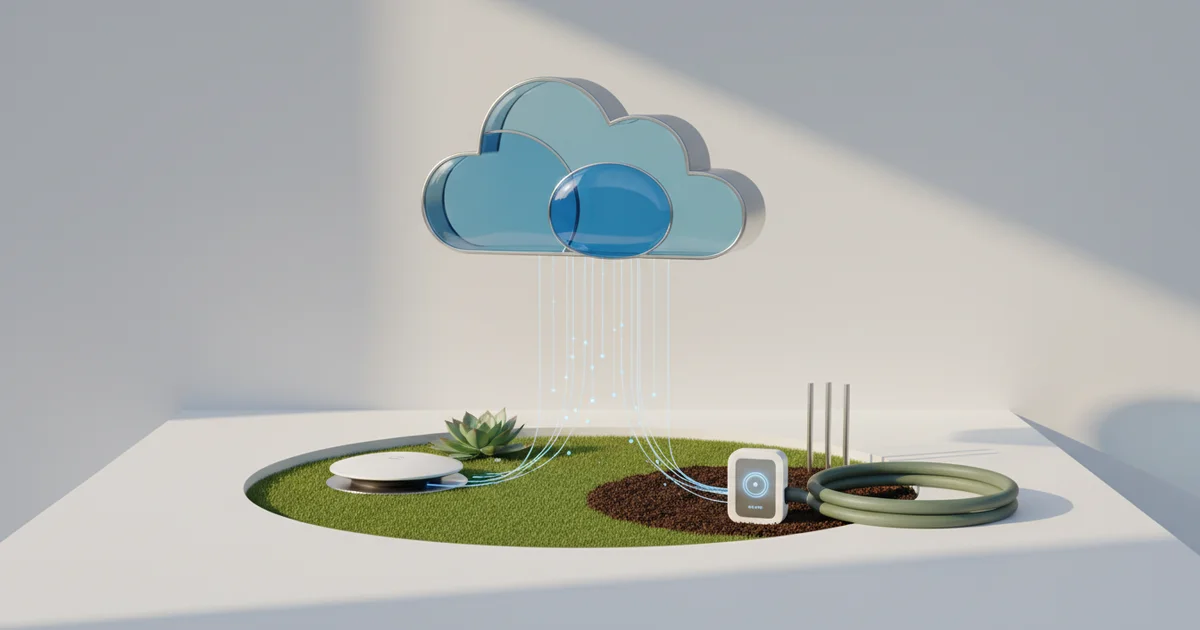
The more consequential shift is algorithmic. Seasonal complexity — knowing when to water less because a cold front is coming, or more because a heat dome parked over your region for two weeks — is the core reason most people either drown their lawn or let it go brittle. Manual schedules set in April don’t account for July. Weather-aware irrigation controllers now pull real-time and forecast data to adjust watering schedules automatically, a capability that existed in crude form five years ago but has only recently become accurate and reliable enough to trust without manual overrides.
These three changes — hardware maturity, democratized price points, and dependable weather intelligence — arriving at the same time is what makes 2026 different from any previous year in this category. Buying a smart watering system is no longer a bet on promising technology. It’s a purchase of proven infrastructure.
What Most Roundups Get Wrong: It’s Not One Product Category
Most buyer guides treat smart irrigation as a single product category. It isn’t. Lumping a Rachio 3 eight-zone in-ground controller in the same roundup as a basic GreenIQ hose-bib timer and calling them alternatives confuses buyers and leads to purchases that fail within a season. These two products solve completely different problems for completely different homes. A homeowner with an existing underground sprinkler system and dedicated valve wiring needs a smart controller that slots into that infrastructure. A renter with two spigots and a patio needs a Bluetooth timer that costs under $40. Treating them as competitors wastes money either way.
The category mainstream coverage ignores almost entirely is smart drip and soaker-hose timers designed for raised beds and container gardens. This matters because container gardening and raised-bed cultivation are the fastest-growing segments of home food production in the United States. Products like the Orbit B-hyve drip kit and Rain Bird’s smart drip controllers target exactly this user — someone who has no in-ground system, no valve wiring, and no desire to install one, but still wants weather-responsive, automated watering for tomatoes and herbs. Most roundups dedicate one obligatory paragraph to this segment before pivoting back to multi-zone controllers.
The failure point nobody writes about is infrastructure compatibility. Before a buyer chooses any smart irrigation product, three questions determine whether the install succeeds or fails: Does the home have existing 24-volt AC valve wiring? What is the static water pressure at the spigot? How many independent water sources does the property have? A multi-zone smart controller requires existing low-voltage wiring between the controller location and each valve. Without it, the product is useless regardless of its app ratings. Water pressure below 30 PSI eliminates certain drip timer options. A single outdoor spigot means a multi-port manifold timer, not a single-channel unit.
These are not edge cases. They are the most common reasons smart irrigation products get returned. Buyer guides that skip compatibility checks and go straight to app features are not actually helping buyers — they’re just reviewing gadgets.
The Real Value Proposition: Water Bills and Conservation, Not Convenience
The EPA estimates that smart irrigation controllers cut outdoor water use by up to 50% compared to conventional timer-based systems. That single statistic reframes the entire purchase — yet most product pages lead with app control and voice assistant compatibility, burying the conservation angle three scrolls down.
The distinction matters because smart controllers don’t just automate watering — they actively prevent it. Weather-skip features pull local forecast data and cancel scheduled cycles before rain arrives. Rain sensors halt irrigation mid-run when precipitation hits a set threshold. Soil moisture sensors go further, measuring actual ground saturation rather than running on a calendar. The result is a system that runs less, not just smarter.
For homeowners in drought-prone states like California, Texas, and Arizona, this translates directly to money. Municipal water utilities in these regions increasingly use tiered pricing structures, where each additional unit of water costs more than the last. A household that drops from the third pricing tier to the second by cutting outdoor use 30 to 40 percent can see the controller pay for itself within a single summer watering season. A mid-range smart controller costs $100 to $250 installed. Water bill savings in high-use months can reach $50 to $80 per month in peak summer — the math closes fast.
This makes smart irrigation one of the few smart home upgrades with a measurable, sub-12-month payback period. A smart thermostat typically takes two to three years to recover its cost. A smart irrigation system in a water-stressed market can do it in one season.
The framing most buyers never receive before purchase: this is water infrastructure, not a gadget. Treating it as a convenience upgrade is how homeowners end up spending $150 on a controller and using it to do exactly what their $20 mechanical timer already did — just with a nicer interface.
How to Actually Choose: Matching System to Yard Reality
The first question isn’t which controller to buy — it’s whether you have buried irrigation lines. Multi-zone smart controllers like Rachio 3 and RainBird ST8I-WIFI are purpose-built to replace existing in-ground systems. If your yard already has zones running underground, upgrading to one of these is genuinely straightforward: swap the controller, download the app, and you’re done. If you don’t have buried lines, a smart controller solves nothing. You’re looking at a separate landscaping project — trenching, pipe, heads, valves — that routinely runs $2,000 to $5,000 before a single smart device enters the picture. Know which situation you’re in before pricing anything.
For yards without in-ground systems, smart hose timers have closed the feature gap faster than most buyers realize. In 2025 and 2026, models from Orbit, LinkTap, and Gardena now offer Wi-Fi connectivity, app-based scheduling, and built-in flow metering that catches leaks and tracks water volume in real time. These run $40 to $120 per spigot — a fraction of a full controller installation — and deliver most of the water-saving functionality that made premium systems worth the price.
Zone count is where buyers consistently make the most expensive mistake. A zone controls one irrigation circuit: front lawn, back lawn, raised vegetable beds, flower borders, and drip lines for shrubs are each their own zone with distinct watering needs. Grass wants frequent, shallow watering. Established shrubs want deep, infrequent soaking. Vegetables need consistency. Buying an 8-zone controller when your yard realistically has 11 distinct areas means you’ll group incompatible plant types on the same schedule — which defeats the core purpose of smart irrigation. Count every distinct watering area before choosing a zone tier, then buy one tier up. Rachio, for example, sells 8-zone and 16-zone versions at a cost difference of roughly $50. That $50 gap closes fast compared to the water waste of mismatched programming.
The Smart Home Integration Question: How Much Connectivity Do You Actually Need?
Most smart irrigation controllers advertise Alexa, Google Home, and HomeKit compatibility as headline features. In practice, almost nobody uses them. Irrigation runs on schedules and weather logic — not on voice commands. The app is the real interface, and it’s where you’ll spend 95% of your interaction time. Before paying a premium for deep smart home integration, ask yourself honestly how often you’d say “Alexa, skip tomorrow’s watering.” The answer for most homeowners is never.
The connectivity features that actually deliver value are the ones brands bury in the accessories section. Flow sensors detect leaks and measure real-time water usage, giving you hard data on gallons consumed per zone. Soil moisture sensors push systems from calendar-based watering into genuine demand-based irrigation — the system checks whether the ground actually needs water before running, not just whether Tuesday has arrived. Both add-ons have dropped into the $30–$80 range and represent a more meaningful upgrade than any voice assistant shortcut.
Offline functionality is the sleeper issue the industry doesn’t advertise. A growing number of controllers now require active cloud connectivity to function beyond basic manual operation. If the company’s servers go down, gets acquired, or pivots to a paid subscription model, a cloud-dependent controller can lose its intelligence entirely — or stop working altogether. Rachio, RainBird, and Orbit all maintain some local scheduling capability, but the degree varies significantly by model. Read the fine print before buying: a controller that bricks without Wi-Fi is a liability, not a convenience.
The practical framework is straightforward. Prioritize a strong standalone app, reliable local scheduling as a fallback, and compatibility with flow or soil sensors. Treat voice assistant integration as a minor bonus, not a buying criterion. The smartest irrigation setup isn’t the one most deeply embedded in your smart home ecosystem — it’s the one that consistently waters based on real conditions and keeps running when the cloud doesn’t.
Our 2026 Picks: Best in Each Real-World Category
Three categories dominate the smart irrigation market in 2026, and each one has a clear winner.
For existing in-ground systems, the Rachio 3 remains the benchmark. It handles up to 16 zones, pulls hyperlocal weather data to skip unnecessary cycles, and installs in under 30 minutes without a technician. Homeowners with standard 8-zone setups pay around $150 and recover that cost through water bill reductions within a single summer in most U.S. climates. The app walks through wiring step by step, and the controller works with every major smart home platform.
For hose-based setups, the Orbit B-hyve XR Wi-Fi Timer is the 2026 standout in the sub-$60 category. The dual-zone version runs $54 and delivers automatic rain skip, remote scheduling, and soil moisture logic that previously required a full controller installation. That’s roughly 80% of the functionality of a premium in-ground system at a fraction of the price. Setup takes under 10 minutes — attach it to the spigot, connect to Wi-Fi, done. For renters or homeowners without buried irrigation lines, this is the upgrade that actually makes sense.
For gardens and raised beds, most buying guides stop at hose timers and miss this entirely. Drip systems operate at lower pressure and lower flow rates than standard sprinkler zones, which means generic smart timers either misread usage or water too aggressively. The Melnor WiFi AquaTimer with flow monitoring solves this. It tracks actual water volume delivered — not just time elapsed — and lets gardeners set per-plant targets rather than blanket schedules. Overwatering is the leading cause of raised bed plant death, and this timer eliminates that variable. It retails around $70 and connects to standard 1/4-inch drip line fittings without adapters.
Each of these products fits a different homeowner profile. The right one depends entirely on what infrastructure already exists at the property — not on which device has the most features or the highest price point.