What Claude Cowork’s plugin system actually is (and isn’t)
Anthropic’s knowledge-work-plugins repository lives on GitHub under the anthropics organization, which means any team can read the source, fork it, modify it, and push contributions back. This is not a curated app store where third-party vendors list integrations behind terms-of-service agreements. Anthropic owns and maintains the code directly, and the open-source model gives organizations a level of auditability that closed plugin ecosystems simply cannot offer.
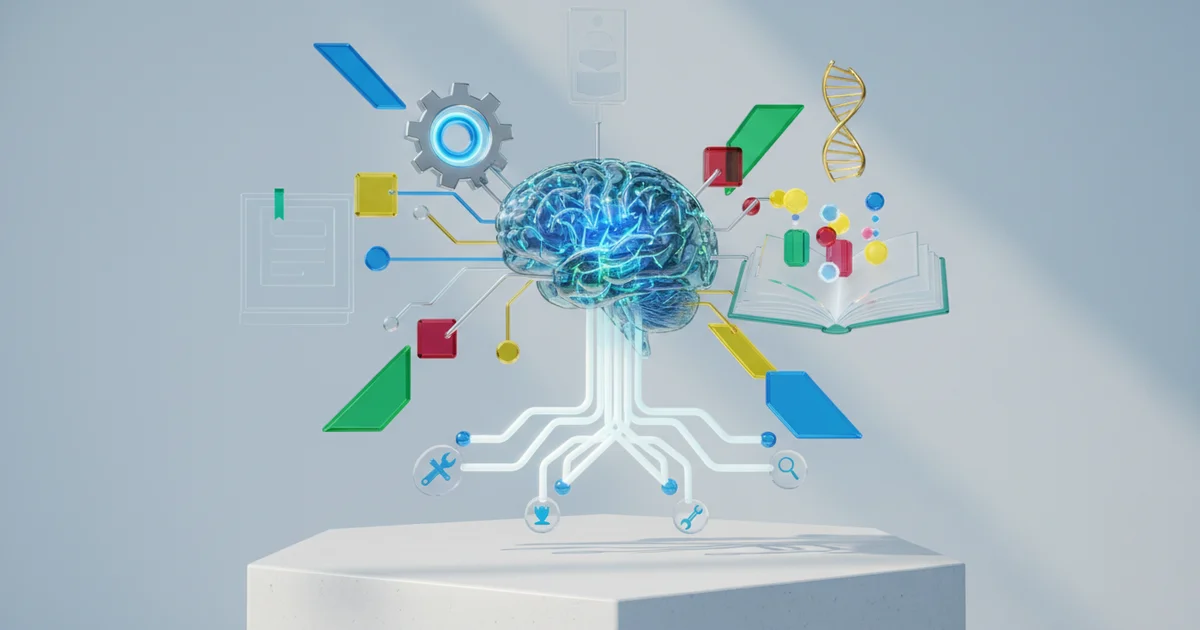
The structure of each plugin is more disciplined than it might appear at first glance. Rather than packaging a single capability, every plugin bundles four distinct components: skills that define what Claude knows about a job function, connectors that link Claude to external tools and data sources, slash commands that expose repeatable actions to end users, and workflow logic that governs how sub-agents handle multi-step tasks. That combination makes a plugin closer to a deployable role configuration than a prompt template or a thin API wrapper.
The compatibility matrix is also deliberate. Plugins are built primarily for Claude Cowork, Anthropic’s product aimed at knowledge workers who want Claude to produce finished, professional outputs rather than conversational responses. But the same plugins run on Claude Code, the developer-focused environment. Anthropic is using one plugin primitive to serve two distinct audiences — the software engineer debugging a pipeline and the operations manager standardizing a procurement workflow — without fragmenting the underlying architecture.
The practical implication is that a company can start with an out-of-the-box plugin for, say, a finance or legal role, then layer in its own tools, internal terminology, and proprietary processes. The starting point is generic; the end state is a version of Claude that behaves as if it was hired specifically for that organization. That customization path, built on inspectable open-source code, is what separates this system from the prompt-engineering workarounds teams have been stitching together on their own.
The real innovation: encoding institutional knowledge, not just tasks
Most coverage of Anthropic’s knowledge-work-plugins repository focuses on individual plugins as productivity tools. That framing undersells what’s actually being built.
The architecture of each plugin reveals the real intent. A plugin doesn’t just tell Claude what tasks to perform — it encodes how a team does work: preferred formats, internal terminology, decision criteria, critical workflows, and which slash commands surface for team members. That’s not a productivity feature. That’s institutional memory rendered machine-readable.
The tool and data connector layer makes this concrete. A plugin specifies exactly which databases, APIs, and proprietary data sources Claude pulls from during a session. A legal team’s plugin points to their contract repository and clause library. A finance team’s plugin connects to their internal reporting formats and approval workflows. Claude doesn’t arrive at each session as a blank model — it arrives already wired into the organization’s context. That context persists across sessions and across team members, without anyone re-prompting it into existence.
This is where the compounding dynamic kicks in. A team that invests in customizing a plugin today — mapping their tools, codifying their process standards, refining how Claude handles edge cases in their workflows — builds an asset that gets more valuable over time. New hires inherit it. Processes stay consistent at scale. The organization’s accumulated judgment lives in the plugin, not in the heads of individual employees or in scattered prompt documents someone saved to a shared drive.
The open-source repository gives teams a functional starting point for roles like analyst, writer, and researcher. But Anthropic is explicit that the starting point isn’t the product — the customized version is. The organizations that treat these plugins as living documents, updated as their processes evolve, are building something competitors can’t easily replicate: an AI layer that runs on their specific institutional knowledge. That’s a structural advantage, and it accumulates quietly.
Slash commands and workflow triggers: making AI feel native to how work already happens
Anthropic’s knowledge-work-plugins repository exposes slash commands as a first-class feature, and that design choice matters more than it might appear. When Claude can be triggered through keyboard-driven shortcuts inside an existing workflow, the context switch disappears. Employees don’t open a separate AI interface, reformulate their request from scratch, and then paste results back into their actual tool. They stay in the environment where work is already happening and invoke Claude from there.
The plugin architecture goes further by letting teams define critical workflows directly inside the plugin configuration. This is not a minor convenience. A legal review process or a client reporting cycle carries real stakes — errors compound, steps get skipped, and output quality varies depending on who’s running the process that day. When those workflows have guardrails and step sequences baked into the plugin itself, that variation shrinks. The process stops living inside individual employees’ heads or ad-hoc prompt habits and starts living in a system the whole team shares.
That consistency is where team leads and operations managers have the clearest reason to pay attention. Claude Cowork plugins are built around the premise that every teammate gets the same structured starting point for a given job function, regardless of how much experience they have prompting AI tools. A junior analyst triggering a client report workflow runs the same defined steps as a senior one. The output reflects the company’s own terminology, tools, and process standards — not whatever prompt the individual happened to write that morning.
Anthropic describes the real power of these plugins as coming from customization: organizations layer in their specific connectors, terminology, and process logic on top of the role-specific foundation each plugin ships with. That makes the slash command less of a shortcut to a generic AI response and more of an entry point into a version of Claude that has already been taught how your team works. For ops functions trying to standardize output at scale, that distinction is the whole point.
Open source as a competitive strategy, not just goodwill
Anthropic didn’t post the knowledge-work-plugins repository to GitHub out of altruism. Hosting it under the official anthropics organization is a deliberate move to seed a community contribution loop. Every plugin a third-party developer publishes — for a specific industry, workflow, or tool stack — makes Claude Cowork more useful to the next enterprise buyer without Anthropic writing a line of code. The more the ecosystem grows, the harder Cowork becomes to abandon.
The open format also solves a concrete sales problem. Enterprise IT and security teams routinely block black-box integrations because they can’t inspect what data leaves the network or what actions an integration can take. With the plugin source code sitting on GitHub, those teams can audit exactly what a plugin does before approving deployment. That’s not a minor convenience — it compresses a procurement cycle that can otherwise stretch across quarters.
The strategic logic mirrors what HashiCorp did with Terraform and what Elastic did with the ELK stack. Both companies open-sourced the layer that developers touch every day, built a loyal contributor base around it, then captured revenue through managed cloud platforms that enterprises preferred over running the infrastructure themselves. Anthropic is running the same play: commoditize the plugin format, capture value in Cowork subscriptions. The plugins become the distribution mechanism; the platform is where the margin lives.
What separates this from a goodwill gesture is the architecture of the lock-in. Plugins bundle skills, connectors, slash commands, and sub-agents tuned to specific job functions. Once a company customizes those plugins with its own tools, terminology, and processes, the configuration represents real institutional knowledge embedded in the platform. Switching costs aren’t theoretical — they’re encoded in every custom workflow the team has built on top of Cowork. Anthropic opened the door with open source and built the walls with customization.
What this means for knowledge workers right now — and what to watch
Knowledge workers who start building team-specific plugins now will hold a compounding advantage within 12 months. A plugin that encodes your company’s terminology, approval workflows, and data connectors isn’t just a productivity shortcut — it becomes a proprietary operational asset that a competitor can’t download from any public repository. Anthropic open-sourced the base library precisely so organizations would customize on top of it. The customized version belongs to the organization that built it, and that institutional knowledge hardens over time.
The competitive framing here is direct and intentional. Cowork’s stated promise — that Claude delivers “finished, professional work” — puts Anthropic in a head-to-head fight with Notion AI, Microsoft Copilot, and Glean, all of which sell themselves on the same “get work done” premise. The difference Anthropic is betting on is depth of role specificity. A plugin built for a specific job function, pre-loaded with the right connectors and slash commands, is a different product category than a general writing assistant embedded in a document editor.
The question no one in enterprise IT is asking loudly enough: who owns a plugin when an employee builds it on company time? Employment law in most jurisdictions assigns IP created during employment to the employer, but AI workflow artifacts don’t fit cleanly into existing work-for-hire frameworks. Is a plugin a tool, a process document, or something else? If a senior engineer leaves and takes their plugin architecture knowledge with them, does the company still own what they built? Legal and HR teams have not caught up to this question. Governance policies for AI-generated code and configuration artifacts are nearly nonexistent in most organizations.
The practical move for teams right now is to treat plugin development the same way mature engineering organizations treat internal tooling — version-controlled, documented, and covered by explicit IP assignment agreements before the first line gets written.