The Moment That Went Viral for the Wrong Reasons
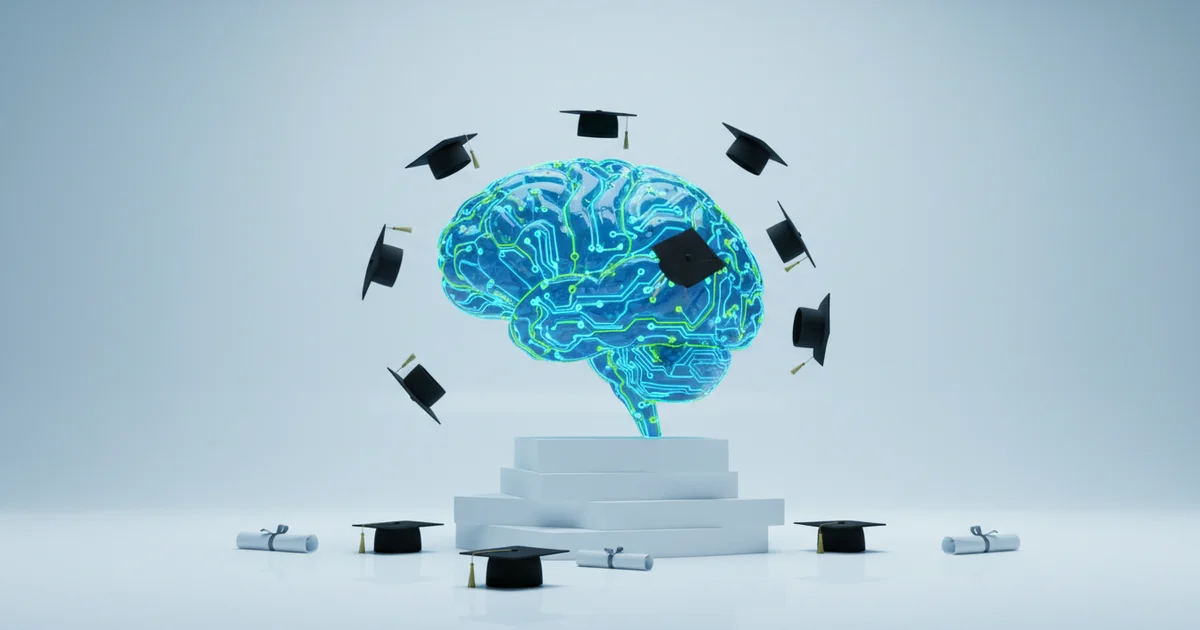
Eric Schmidt walked onto the stage at the University of Arizona’s commencement ceremony for the class of 2026 expecting to inspire. He told graduates that their purpose was to help shape artificial intelligence. The crowd booed him — loudly, immediately, and without apology.
Schmidt’s response was telling. “I can hear you,” he said, before conceding that fears about vanishing jobs and a broken future were “rational.” That concession matters. A former CEO of one of the most powerful technology companies in history, standing before the generation AI is supposed to serve, admitted out loud that their anger made sense.
Most outlets filed this under awkward graduation moments and moved on. That framing misses what actually happened. Schmidt was not heckled by critics who had spent careers studying labor economics. He was booed by people who had spent years doing everything right — attending college, accruing debt, building credentials — only to enter a job market being actively reshaped by the technology he spent decades championing.
Arizona was not an isolated incident. Graduates at the University of Central Florida and Middle Tennessee State University jeered at similar AI-forward commencement messaging during the same graduation season. The booing is a pattern, not a moment.
The AI industry has grown accustomed to dissent from regulators, academics, and ethicists — people it can dismiss as out of touch or ideologically opposed to progress. It has no ready script for dissent from 22-year-olds in polyester gowns tallying student loan balances on the day they receive their diplomas. That demographic is supposed to be the enthusiastic inheritor of the AI future, the generation that grows up fluent in the tools and grateful for the opportunities. The booing at Arizona signals that inheritance is being refused.
What the Boos Were Really About: Jobs, Futures, and Broken Promises
When Eric Schmidt told University of Arizona graduates that their job was to help shape AI, they booed him. Loudly. “I can hear you,” he said — and then, in a moment that revealed far more than any rehearsed keynote, he admitted that fears about disappearing jobs and a broken future were “rational.” That concession landed like an indictment. The former Google CEO had just confirmed, in front of thousands of people in polyester gowns tallying student loan payments, that the optimistic framing wasn’t holding up.
Arizona was not an isolated incident. Graduates at the University of Central Florida and Middle Tennessee State University jeered similar AI pep talks during the same commencement season. A pattern that dismissive coverage calls “AI skepticism” is more precisely described as a collective refusal to applaud a technology that is actively disrupting the job market these graduates are about to enter.
This is the context most tech coverage strips out. The people being asked to celebrate AI are not distant observers weighing abstract pros and cons. They are writers, coders, analysts, designers, and entry-level professionals stepping into industries where AI tools are already replacing the exact junior roles that have historically served as career on-ramps. The cheerleading asks them to absorb the downside risk personally while the upside accrues elsewhere.
Schmidt’s on-stage acknowledgment punctured the standard industry script — the one where AI is framed as an accelerant for human potential, where every displaced job becomes a pivot opportunity, where anxiety is recast as failure of imagination. Graduates were not buying it, because they don’t have the luxury of abstraction. They have tuition debt, a cooling hiring market, and a job landscape being reshaped by the same technology they were told to celebrate. The boos were not a rejection of technology. They were a rejection of being handed a broken promise and told to clap.
The Commencement Speech as a Barometer of Cultural Mood
Commencement speeches occupy a strange psychological space. Audiences cannot leave without social consequence, yet they arrive emotionally raw — years of debt, sacrifice, and deferred life decisions compressed into a single afternoon under a polyester gown. That combination makes the crowd an unusually honest instrument. Polite applause is easy to manufacture; genuine, sustained booing is not.
When former Google CEO Eric Schmidt told University of Arizona graduates that their task was to help shape AI, the crowd responded with a resounding chorus of boos. Schmidt acknowledged it directly — “I can hear you” — then conceded that fears about disappearing jobs and a broken future were “rational.” That concession, extracted in real time from one of the architects of the modern tech industry, is more telling than any survey data. It was not a prepared talking point. It was a man recalibrating his message mid-sentence because the room refused to absorb it.
Arizona was not an isolated incident. Graduates at the University of Central Florida and Middle Tennessee State University jeered similar AI-forward messaging at their own ceremonies. MIT Technology Review flagged the pattern explicitly in its AI Hype Index, a tracker the publication describes as its “highly subjective take on the latest buzz about AI.” The fact that a publication embedded in the technology world felt compelled to categorize commencement booing as a measurable data point in public sentiment says something on its own.
Graduation speeches are built around hope. They are structurally designed to celebrate possibility and project optimism onto the future. When AI — a technology its own industry has spent three years marketing as the most transformative force in human history — becomes a reliable trigger for audience hostility at those specific events, the narrative has crossed a threshold. The technology is no longer landing as opportunity. For the generation that will live longest with its consequences, it is landing as threat.
The Hype Machine and Its Widening Credibility Gap
For years, AI executives have delivered a consistent message: disruption is coming, but it will be manageable, new jobs will emerge, and the workforce just needs to adapt. Those assurances land differently depending on who is receiving them. For a billionaire with equity in the companies building this technology, the transition is an abstraction. For a 22-year-old carrying student loan debt and entering a job market already reshaping itself around automation, it is a lived reality with no safety net.
Eric Schmidt is not a neutral messenger on this subject. As former CEO of Google — a company now deploying AI tools that have already contributed to workforce reductions — his instruction to University of Arizona graduates that their job is to “help shape AI” carries a contradiction he appeared unable to outrun. The crowd booed. He acknowledged it, telling the audience “I can hear you,” before conceding that fears about disappearing jobs and a broken future were “rational.” That concession may have been meant to disarm the room, but it only sharpened the problem: if the fears are rational, the optimism being sold alongside them deserves far more scrutiny than it typically receives.
The booing at Arizona was not an isolated moment. Graduates at the University of Central Florida and Middle Tennessee State University jeered at similar AI-forward commencement messages this season. A pattern across multiple campuses, in different regions, among students who do not know each other, is not a mood. It is a signal.
The credibility gap driving that signal is structural. The people making confident predictions about AI’s manageable disruption are largely insulated from its consequences. They hold stock in companies whose valuations depend on AI adoption accelerating. They will not be the ones competing for entry-level roles that no longer exist or reskilling in their thirties because an industry collapsed faster than any transition plan anticipated. The graduates booing Schmidt understand this intuitively, even if the industry has spent years hoping they would not notice.
What the Industry Must Do Differently — Before the Backlash Deepens
The boos that greeted Eric Schmidt at the University of Arizona did not come from technophobes. They came from people carrying student debt into a job market that AI is actively reshaping, and they came from graduates at the University of Central Florida and Middle Tennessee State University too. This is a pattern, not an incident.
Schmidt’s instinct — to acknowledge the fear, call it “rational,” and move on — represents exactly the posture the industry needs to abandon. Validation without commitment is a rhetorical move, and younger audiences raised on corporate sustainability pledges that went nowhere can identify it instantly. Saying job displacement fears are understandable costs nothing. Funding retraining programs, lobbying for portable benefits tied to workers rather than employers, or supporting serious AI liability frameworks costs something. The industry has done the first and avoided the second.
The stakes are practical, not symbolic. AI companies depend on social license — the broad public acceptance that allows rapid deployment to continue without punishing regulation or organized resistance. That license is easier to lose than to recover. If the generation that will spend the next forty years inside AI-transformed labor markets decides the technology was imposed on them rather than built with them, the political consequences will follow. Legislators respond to constituents, and today’s booing graduates are tomorrow’s voters, workers, and union members.
The industry faces a clear choice. It can continue sending executives to commencements armed with optimism and anecdotes about AI-created opportunity, and keep getting booed. Or it can treat this generation as a negotiating partner — backing concrete workforce investment, supporting transparency requirements, and accepting that deployment speed must sometimes yield to displacement reality. The first path is cheaper in the short term. The second is the only one that doesn’t end with an entire generation viewing AI as something that was done to them by people who never had to live with the consequences.