The Artemis II Images That Reignited Public Interest in NASA’s Archives
The Artemis II mission did something rare: it made millions of people stop scrolling. When NASA released a photograph of Earth taken from more than 250,000 miles away — shot from the far side of the moon during the crewed lunar flyby — the image spread across every major platform within hours. It belongs among the most visually arresting NASA photographs in recent memory, the kind that makes the scale of space feel genuinely personal rather than abstract.
What surprised many people was how some of the mission’s most widely shared images were captured. Astronauts aboard the Orion capsule used iPhone 17 Pro Max phones to photograph Earth from inside the spacecraft. Consumer hardware, orbiting the moon. The resulting shots carry an intimacy that polished mission photography sometimes lacks — you can feel the cramped reality of the capsule alongside the impossible view outside the window. That combination of the familiar and the extraordinary is exactly why the images went viral.
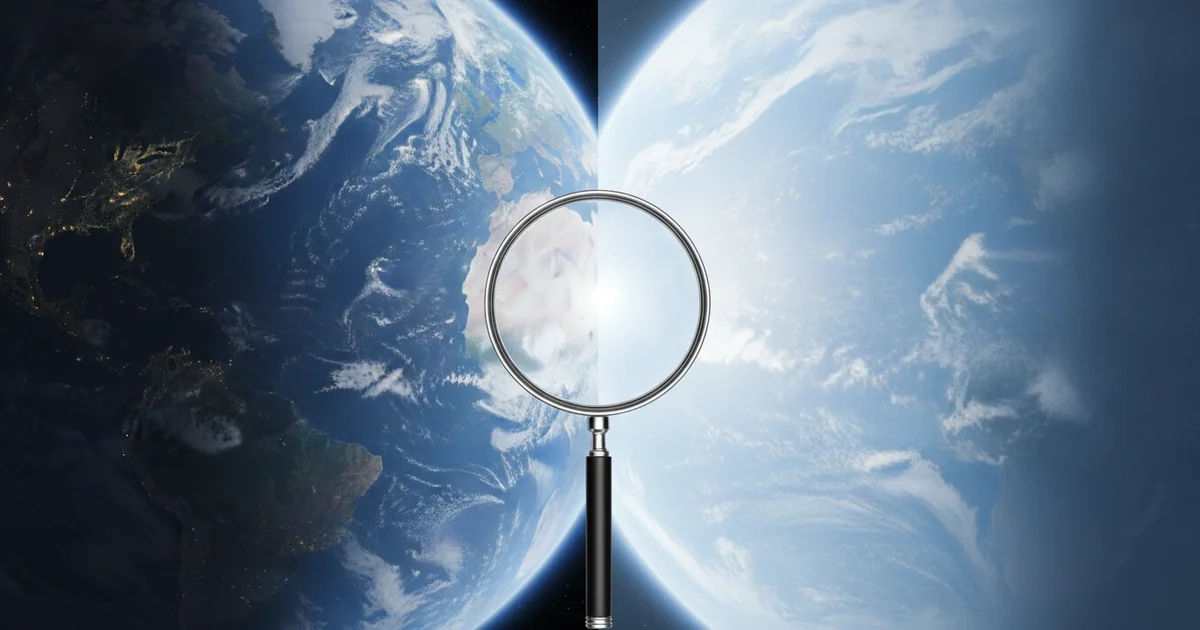
The timing matters. AI-generated space imagery has become sophisticated enough that fabricated nebulae, fake planetary surfaces, and fictional spacecraft interiors circulate on social media presented as real. Against that backdrop, authenticated NASA space photos carry a weight they didn’t need to carry five years ago. People are actively searching for original NASA imagery, primary-source space photography, and verified astronomical pictures precisely because the alternatives have become harder to dismiss at a glance.
Artemis II essentially handed the public a reason to seek out NASA’s actual archives. The mission generated a fresh wave of real space exploration photos — sourced, dated, and publicly available — that landed at exactly the moment when the difference between genuine and generated imagery is becoming a literacy issue, not just a curiosity. For anyone who saw those Earth photos and wanted more, the archives are where authentic NASA content lives.
What Most Coverage Misses: NASA Has a Vast, Largely Untapped Image Library
When the Artemis II crew returned stunning photographs of Earth from more than 250,000 miles away — some shot on iPhone 17 Pro Max phones from inside the Orion capsule — those images exploded across social media feeds and news sites worldwide. That predictable cycle repeated itself: a handful of spectacular shots go viral, publications run them, audiences share them, and then the moment passes. What almost no coverage mentions is where those photos actually live, or that thousands of equally remarkable images sit in the same publicly accessible archive, waiting for anyone curious enough to look.
NASA maintains one of the largest publicly funded image libraries on the planet. The collection spans decades of crewed missions, robotic planetary probes, space telescopes, and Earth observation satellites. Hubble Space Telescope imagery alone represents decades of continuous output. Add James Webb Space Telescope releases, Mars rover photography from Curiosity and Perseverance, Voyager probe data, and imagery from dozens of other missions, and the scale becomes genuinely hard to grasp. This is not a static museum — NASA adds new content continuously, with each mission generating fresh material that feeds directly into searchable, downloadable repositories.
The gap in how media covers NASA photography is real and consistent. Outlets report on individual images as news events but rarely point audiences toward the NASA Image and Video Library or the Jet Propulsion Laboratory’s Photojournal, where the full depth of the archive is actually accessible. Casual space enthusiasts often know the iconic shots — Earthrise, the Pale Blue Dot, the Pillars of Creation — without knowing they can browse, download, and use thousands of other authentic NASA images freely, since the agency is taxpayer-funded and most of its visual content sits in the public domain.
That distinction between a viral moment and an accessible, permanent archive matters enormously right now. Understanding that NASA’s image repositories exist, span missions from the 1960s through active programs today, and are open to the public reframes how anyone should approach space photography online — especially when the alternative is increasingly indistinguishable AI-generated imagery flooding the same feeds.
Where NASA Actually Posts Its Best Photos: A Practical Breakdown
NASA does not keep its imagery in one place, and that’s actually by design. The agency distributes authentic space photography across several distinct platforms, each built for a different type of user.
The NASA Image and Video Library at images.nasa.gov serves as the most comprehensive public archive, housing hundreds of thousands of verified photographs, footage clips, and audio files spanning decades of missions. Full-resolution downloads are free and unrestricted for most uses, since NASA content produced by federal employees carries no copyright. This is the destination for anyone who needs original, uncompressed image files rather than social media reposts.
NASA.gov itself hosts mission-specific galleries that update directly following new data releases. The James Webb Space Telescope maintains a dedicated image page where processed scientific imagery appears within days of each observing program completing its data pipeline. Mars rover missions — including Perseverance and Curiosity — feed raw image archives that update within hours of new frames arriving from the surface. Artemis mission pages aggregate crew photography, launch imagery, and orbital footage in one place tied directly to each flight.
NASA’s Flickr accounts, particularly the Johnson Space Center and Hubble Space Telescope streams, offer high-resolution photographs organized by mission and date. These accounts function as curated highlights rather than complete archives, but the image quality matches what is available through official NASA servers.
Instagram and X profiles surface the most visually striking frames to mass audiences, but those posts represent a narrow editorial selection. Social media versions are also compressed, which makes them unsuitable for verification purposes or publication at larger sizes. When an image circulates on social platforms without a traceable NASA archive link attached, that absence of provenance is itself a warning sign worth acting on.
Anyone trying to confirm whether a space image is genuine NASA photography — rather than AI-generated content designed to look like it — should start at images.nasa.gov, cross-reference the image metadata, and check whether the specific mission page corroborates the claimed date and location.
How Consumer Tech Is Changing Who Takes Space Photos — and How We Trust Them
When Artemis II astronauts captured images of Earth from more than 250,000 miles away — from the far side of the moon — they used iPhone 17 Pro Max smartphones. The same device sitting in millions of pockets worldwide produced photographs now archived as part of one of humanity’s most significant space exploration milestones. That fact alone marks a genuine turning point in how space documentation works.
Consumer smartphone cameras have crossed a quality threshold that NASA itself now considers acceptable for recording crewed lunar missions. This isn’t a novelty stunt. It’s a formal acknowledgment that professional-grade space photography no longer requires exclusively purpose-built equipment.
That shift creates a real problem for anyone trying to verify what they see online. AI image generators already produce convincing depictions of astronauts, planetary surfaces, and deep-space objects. Now that authentic NASA mission photos come from the same type of hardware sitting in a consumer’s hand, the visual gap between a genuine space image and a fabricated one narrows further. A stunning photo of Earth hanging over the lunar horizon, shared on social media with no context, is harder than ever to authenticate by appearance alone.
Social media sharing strips metadata, removes original sourcing, and often detaches an image entirely from the mission or photographer that produced it. An AI-generated space scene and a real Artemis II photograph can travel the same feeds, accumulate the same likes, and carry the same caption. Visual inspection alone won’t reliably separate them.
Going directly to NASA’s official image repositories solves this problem. NASA’s archives include provenance data — mission names, capture dates, equipment used, and photographer credits — that social media posts routinely omit. When a real NASA lunar photograph is published through official channels, it comes with a verifiable record. An AI-generated fake does not. For anyone who wants to confirm whether a space image is authentic NASA documentation or a synthetic creation, the official source is the only reliable starting point.
Tips for Finding, Downloading, and Using NASA Images Legally
NASA’s entire image and video archive sits at images.nasa.gov, and the vast majority of it is public domain — meaning you can download, reprint, and republish without paying licensing fees or filing requests. That fact alone separates NASA’s library from almost every other source of professional space photography online, yet viral posts sharing these images rarely mention it, and they almost never link back to the original high-resolution file.
Finding a specific image is straightforward once you know how the search tools work. The NASA Image and Video Library lets you filter results by keyword, media type, date range, center, and mission name. Search “Artemis II Earth” and you can pull the original RAW or TIFF files rather than the compressed JPEGs that circulate on social media. Those compressed versions lose detail that matters — both for print use and for verifying that an image hasn’t been manipulated.
Proper credit matters even when copyright doesn’t apply. NASA asks users to identify images with the credit line “NASA” plus the specific center or mission that produced the photo, such as “NASA/JPL-Caltech” for Jet Propulsion Laboratory imagery or “NASA/ESA” for Hubble Space Telescope content produced in partnership with the European Space Agency. Skipping that attribution is how authentic space photography loses its provenance and becomes easier to confuse with AI-generated alternatives.
For staying current without depending on social media algorithms, NASA operates mission-specific RSS feeds and a newsletter program through nasa.gov/subscribe. Subscribing directly means new imagery from active missions — James Webb Space Telescope releases, Mars Perseverance rover updates, or Solar Dynamics Observatory solar event captures — lands in your inbox or feed reader on NASA’s schedule, not when an engagement-optimized platform decides to surface it. That direct pipeline is the most reliable way to build a personal reference library of verified, sourced space imagery at a time when convincing synthetic alternatives are only a prompt away.
Why Direct Access to NASA’s Archives Is a Media Literacy Issue Right Now
AI image generators have reached a point where photorealistic depictions of galaxies, lunar surfaces, and spacecraft can be produced in seconds and are nearly indistinguishable from the real thing to an untrained eye. That creates a direct problem for anyone trying to understand what space actually looks like — and what humanity has actually accomplished there.
NASA’s publicly accessible archives exist precisely as an answer to that problem. Because the agency is federally funded, every image it produces is public domain. That means the raw, unfiltered record of human space exploration is available to anyone willing to look for it, without a paywall or a permissions request. Knowing that resource exists — and knowing how to use it — is now a practical media literacy skill, not just a niche interest for space enthusiasts.
The Artemis II mission sharpens the point. The mission delivered a striking photograph of Earth taken from more than 250,000 miles away, on the far side of the moon, along with images shot from inside the Orion capsule using iPhone 17 Pro Max phones. Those images circulated widely on social media, which is exactly where AI-generated lookalikes also circulate. The two streams of content — one verified, one potentially fabricated — run through the same feeds, and most people have no instinct to question which is which.
Building the habit of tracing images back to nasa.gov, or to NASA’s own image and video library, interrupts that passivity. It replaces the assumption that whatever appears in a feed is real with a simple, repeatable action: check the source. That habit does not require technical expertise. It requires only knowing that a primary source exists and is accessible.
Space imagery is a useful entry point for this kind of source literacy because the stakes feel low and the content is genuinely compelling. People want to see real photographs of Earth from lunar distance. Giving them a direct path to NASA’s verified archives turns that curiosity into something more durable — a reflex toward primary sources that applies well beyond space photography.