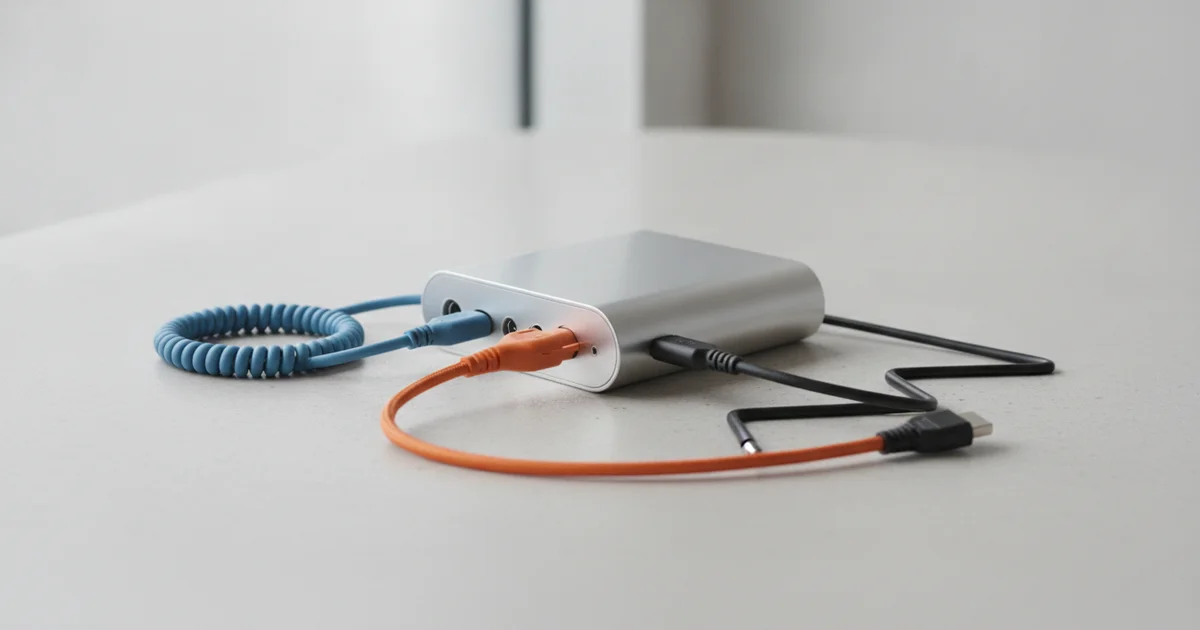
The ‘set it and forget it’ case for permanent power station connections
Most portable power stations sit in a closet between uses. That’s the fundamental flaw in how households approach emergency power backup. When a storm knocks out the grid at 2 a.m., a power station with a dead battery is no different from not owning one at all. The gap between “prepared” and “actually prepared” comes down to one habit: keeping devices permanently connected.
Treating a portable power station as permanent household infrastructure rather than emergency gear changes the entire equation. A unit that stays plugged in, charged, and actively powering select devices becomes part of the home’s energy ecosystem. Homeowners stop thinking about it as a backup gadget and start thinking about it the way they think about a circuit breaker — something that just works when everything else fails.
The discipline here is intentional. Connecting every device defeats the purpose, draining battery capacity and creating the same chaos you’re trying to avoid. Limiting permanent connections to three devices forces a prioritization exercise that most emergency planning skips entirely. What do you actually need to function during a multi-day outage versus what is simply comfortable to have? A CPAP machine for someone with sleep apnea is a medical necessity. A phone charger maintains communication with emergency services. A portable router or mesh node keeps internet access alive when cellular towers get overwhelmed. Those three categories — medical, communication, connectivity — represent genuine resilience. A television or gaming console does not.
This selection process reframes how households define essential. The constraint is the point. Running a power station at partial load also preserves battery health over time, extending the lifespan of lithium iron phosphate cells that already handle thousands of charge cycles better than older lithium-ion units. Brands like EcoFlow and Jackery design their flagship stations specifically to handle continuous low-draw connections without degrading capacity at the rate earlier portable battery systems did.
The result is a home energy backup system that requires zero action during a crisis because all the action happened in advance.
What the three device choices actually signal about modern preparedness
The three devices most commonly kept on permanent standby at a power station — a smartphone, a Wi-Fi router, and a CPAP machine — aren’t chosen because they draw the least wattage. They’re chosen because they cover the three pillars that actually determine how well a household functions when the grid goes down: information access, connectivity infrastructure, and personal health maintenance.
That selection logic marks a genuine shift in how serious emergency preparedness works. Older frameworks treated power backup as a way to keep lights on and food cold. The new calculus treats sustained access to real-time information as a physical safety requirement. During a regional outage, a charged smartphone connected to a live network is the difference between knowing an evacuation route is open and driving into a flooded road. A home Wi-Fi router running on battery backup extends that awareness to every connected device in the house, including smart weather radios, emergency alert apps, and medical monitoring tools.
The health device category carries the most underreported weight. Roughly 39 million Americans use CPAP or BiPAP machines for sleep apnea treatment. A single night without that equipment is not an inconvenience — it is a documented health risk, particularly for people with cardiovascular comorbidities. Hearing aid chargers represent the same category of quiet necessity. As home medical technology becomes standard household infrastructure rather than specialized equipment, backup power planning has to account for it by default, not as an afterthought.
What this three-device framework actually signals is that resilience thinking has gotten more personal and more specific. Generic advice to “charge your devices” before a storm misses the point. The smarter approach identifies which devices, if they lost power, would directly compromise safety, situational awareness, or a medical routine — and keeps those connected to a portable power station continuously, not just when a forecast looks threatening. That permanent-connection discipline is the actual preparedness upgrade most households haven’t made yet.
The battery health reality most guides ignore
Leaving devices permanently connected to a power station triggers a reasonable concern: will continuous charging destroy the batteries over time? The answer depends heavily on which generation of hardware you own.
Older lithium-ion power stations genuinely struggled with always-on setups. Keeping a lithium-ion cell at 100% charge for extended periods accelerates chemical degradation, shortening the usable lifespan of the internal battery pack. That concern was valid and well-documented. It is also increasingly obsolete.
Most current portable power stations use lithium iron phosphate chemistry, commonly written as LiFePO4. LiFePO4 cells tolerate sustained high states of charge dramatically better than standard lithium-ion. EcoFlow, Jackery, and Bluetti all ship flagship models with LiFePO4 cells rated for 3,000 to 3,500 full charge cycles before dropping to 80% capacity. A conventional lithium-ion pack typically reaches that threshold in 500 to 800 cycles. For a unit sitting plugged in as a home backup device — cycling deeply only during actual outages — that cycle count stretches across a decade or more of real-world use.
The second piece of the equation is pass-through charging, a feature that changes how connected devices interact with the station entirely. When a compatible power station is plugged into wall power, devices running through it draw electricity directly from the grid rather than pulling from the station’s internal battery. The battery acts as a standby reserve, not an active participant. This means a phone, a CPAP machine, or a mesh router charging overnight through the station isn’t touching the station’s battery at all — those cycles stay intact for grid-down emergencies when they actually matter.
Connected device batteries face a separate concern: phones and laptops kept permanently at 100% charge do experience some degradation. The practical solution is to use the power station’s USB-C output at a regulated wattage rather than fast-charging protocols, and to rely on any smartphone’s built-in charge limiting feature — iOS and Android both cap charging at 80% when the option is enabled. The combination of LiFePO4 stations with smart pass-through and software-managed device charging resolves what once looked like an insurmountable trade-off in long-term emergency power preparedness.
What most coverage misses: the opportunity cost of the wrong three devices
Most portable power station coverage stops at the same question: which unit should you buy? Capacity comparisons, inverter wattage specs, solar input rates — the reviews are thorough. What they skip is the decision that actually determines whether your backup power system works when the grid goes down: which devices you permanently assign to it.
That omission carries real consequences. A flat-screen television pulls between 80 and 200 watts during operation. A gaming console like the PlayStation 5 draws up to 200 watts under load. Plug either of those into a 1,000Wh portable power station as a default fixture, and a few hours of passive use quietly erodes the capacity reserve you assumed was waiting for an emergency. You reach for the station during an outage believing you have hours of runtime. You have considerably less.
Emergency management professionals use a triage framework — immediate life-safety needs first, comfort second, entertainment last. Consumer tech media almost never applies that logic to power station setup guides. The result is a gap between how preparedness experts think about backup energy and how most households actually configure their equipment.
The three-device selection problem is fundamentally a capacity allocation problem. Every watt-hour you spend on a high-draw, low-priority device is a watt-hour unavailable for medical equipment, communications, or lighting during an extended outage. A CPAP machine running at 30–60 watts, a WiFi router drawing 10–20 watts, and a phone charging at 18–25 watts represent a combined load that a mid-range home battery backup can sustain for many hours. A television and a game console represent a load that drains that same station before most outages resolve.
Choosing the right permanent connections to a portable power station isn’t a hardware question. It’s a prioritization question — and the answer you give before the power fails determines what’s available after it does.
Practical setup: making your power station a true always-on hub
Where you place your portable power station determines whether it actually works for you during an emergency. A unit stored in a closet or garage becomes invisible in daily life, which means the battery drains unnoticed, firmware updates get skipped, and the device becomes unreliable exactly when reliability matters most. Integrate the station into a visible home workspace — on a desk, a utility shelf in the kitchen, or a dedicated corner of a home office — and it becomes part of your routine. You notice the charge level. You keep it topped off.
Pairing the station with a compatible solar panel input is the single most effective upgrade for long-term outage resilience. A fixed battery capacity, even a generous 1,000Wh unit, has a hard ceiling. A 100W to 200W solar panel connected via the station’s DC input port removes that ceiling for multi-day or week-long grid failures. Most modern power stations from brands like Jackery, EcoFlow, and Bluetti accept solar input alongside wall charging, making the hybrid setup straightforward to configure. Position the panel near a south-facing window or run a cable to an outdoor location for full sun exposure.
Battery health requires active management even when grid power is available. Lithium iron phosphate cells — the chemistry used in most quality home battery backup units — benefit from periodic discharge-and-recharge cycles rather than sitting at full charge indefinitely. Running the station down to roughly 20 to 30 percent capacity every one to three months, then charging it back to full, keeps the battery management system calibrated and produces accurate state-of-charge readings. Without these cycles, the displayed percentage drifts from reality, and a station that reads 80 percent full may only deliver 60 percent of its rated capacity when the grid goes down.
Think of this setup as a living system — a solar-ready, always-monitored backup power hub — rather than a piece of emergency equipment that sits dormant. That shift in framing is what separates preparedness that functions from preparedness that only feels complete.