The deal that broke through the noise
During Amazon Prime Day, one Garmin smartwatch climbed to the top of the bestseller charts — a position that typically belongs to Apple Watch and Samsung Galaxy Watch models. That alone signals something has shifted in the wearable market.
The discount was steep enough to convert consumers who had been sitting on the fence for months. Garmin GPS watches carry premium price tags that put them out of reach for casual buyers, so a significant price cut removed the last real objection. But the telling detail is what happened after Prime Day ended: the deal stayed live, and sales kept moving. That does not happen when purchase behavior is driven purely by event hype. Sustained demand after a sale window closes points to genuine consumer interest, not just deal-chasing.
Garmin has been building toward this moment for years. While Apple dominated smartwatch headlines with ECG features and slick industrial design, Garmin quietly accumulated a loyal base of runners, cyclists, triathletes, and hikers who prioritized GPS accuracy and multi-week battery life over app ecosystems. That audience has been growing, and it has started to pull in a wider group of fitness-focused buyers who have grown frustrated with charging their Apple Watch every night.
The Prime Day surge is the visible peak of a longer trend. Garmin wearables have been climbing fitness tracker and sports watch rankings steadily, as consumers researching workout watches and activity trackers increasingly discover that brand prestige matters less than performance metrics. Heart rate monitoring accuracy, sleep tracking depth, training load analysis — these are the features driving purchase decisions for a growing share of the market.
A non-Apple, non-Samsung device reaching top-seller status on the largest retail event of the year is not a fluke. It is a data point confirming that serious fitness tracking has crossed into the mainstream.
What most coverage is missing: battery life as a dealbreaker
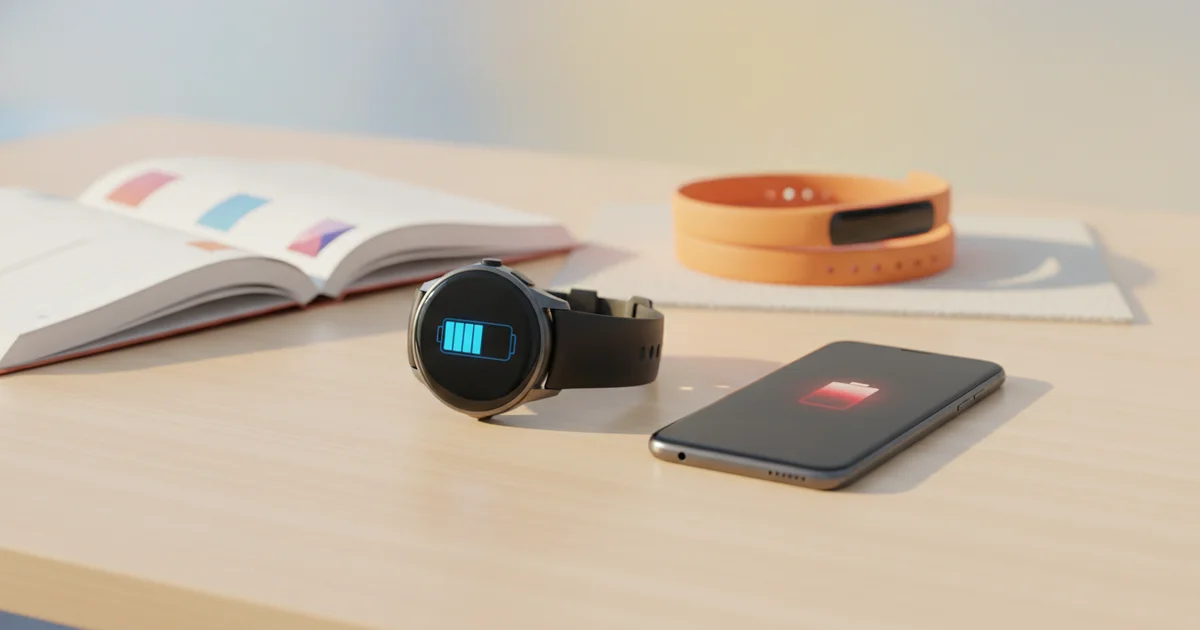
Battery life dominates every serious conversation about wearable fitness technology, yet mainstream tech coverage keeps burying it beneath discussions of app stores and AMOLED displays. That omission matters, because battery anxiety is the single most consistent complaint real Apple Watch owners raise. A device that demands nightly charging trains users to take it off — and a fitness tracker you remove every evening is one that misses your sleep data, your early morning heart rate baseline, and your 5am training session.
Garmin solves this at the hardware level, not with workarounds. Depending on the model and mode, Garmin GPS watches deliver anywhere from two weeks in smartwatch mode to over a month in basic timekeeping mode. The Garmin Instinct 2 Solar pushes further, using solar charging to extend battery life indefinitely under the right conditions. These are not marketing edge cases. They represent a fundamentally different relationship between athlete and device.
For trail runners, ultramarathon competitors, and multi-day hikers, this distinction is binary. A GPS watch that dies at mile 18 of a 30-mile mountain race is not a minor inconvenience — it eliminates navigation, pace data, and heart rate monitoring simultaneously. Travelers crossing multiple time zones face the same problem: charging infrastructure is unpredictable, and carrying a cable for a watch that needs daily power adds friction that compounds over a long trip.
The fitness wearable market is shifting because a growing segment of buyers has moved past novelty features and started asking practical questions. Can this device track my training load across a full week without interruption? Will it survive a weekend backcountry ski trip without a power bank? Garmin’s answer to both is yes. Apple Watch’s answer requires a charging puck, a spare battery case, or a shorter itinerary.
That gap — measured in days, sometimes weeks — is why serious endurance athletes, outdoor enthusiasts, and data-driven fitness users consistently choose Garmin GPS watches over flashier alternatives. The halo of the Apple Watch is real, but it dims fast when the battery hits 10% at the trailhead.
The fitness tracking gap Apple and Samsung haven’t closed
Garmin builds its health metrics on sports science research that predates the smartwatch era by decades. Features like VO2 max estimation, training load analysis, recovery advisor, and advanced sleep tracking aren’t consumer electronics add-ons — they’re implementations of physiological frameworks that coaches and exercise scientists have used since the 1980s. The Garmin Forerunner and Fenix lines translate that science into wrist-based data that serious athletes and health-focused users can actually act on.
Apple Watch and Samsung Galaxy Watch offer their own versions of these metrics. Both display VO2 max estimates and sleep stages. Neither matches Garmin’s depth in practice. Independent reviews from outlets including ZDNET consistently find that Garmin’s accuracy holds up under real training conditions, while competing devices produce figures that look similar on a spec sheet but diverge meaningfully during high-intensity exercise or multi-day tracking. For a casual user logging 20-minute walks, that gap is invisible. For a runner training for a half marathon or a cyclist managing weekly load, it changes how useful the device actually is.
That distinction is becoming a purchasing criterion rather than an enthusiast footnote. Wearable health tracking has moved from a novelty feature into something millions of people use to make daily decisions about sleep, stress, and exercise intensity. As that shift accelerates, buyers are asking harder questions about data quality. “Good enough” accuracy satisfies someone checking step counts. It fails someone using recovery scores to decide whether to push through a hard session or rest.
Garmin’s body battery metric, HRV status tracking, and training readiness scores all feed from the same underlying sensor data — but the algorithms processing that data reflect a level of refinement that consumer electronics competitors haven’t replicated. Samsung and Apple iterate rapidly on hardware and software ecosystems. Garmin iterates on physiological measurement. Those are different engineering priorities, and they produce different results for users who treat their fitness wearable as a performance tool rather than a notification screen.
Who this watch is actually for — and who should skip it
Garmin builds watches for people who actually use the data. If you train with purpose — logging weekly runs, tracking elevation on weekend hikes, monitoring power output on a bike — the Forerunner and Fenix ecosystems return genuine value. The dashboards are dense, the metrics are granular, and the GPS accuracy holds up where a phone signal doesn’t. Committed recreational athletes get hospital-grade health tracking, including continuous heart rate monitoring, blood oxygen saturation, and recovery time analysis, without paying the five-figure price tag attached to clinical-grade equipment.
Casual wearers face a steeper learning curve. Garmin’s interface prioritizes sport profiles and physiological data over the frictionless daily experience that Apple Watch and Pixel Watch deliver out of the box. Contactless payments through Garmin Pay have narrower bank support than Apple Pay. Notification handling is functional but not elegant. If your primary use case is checking texts during meetings and tapping to pay for coffee, an Apple Watch Series 9 or Samsung Galaxy Watch is a more natural fit.
The Prime Day discount shifts the calculus for the “Garmin-curious” crowd — people who have wondered whether serious fitness tracking would change their training but didn’t want to commit $500 or more to find out. When a capable multisport GPS watch with 11-plus days of battery life drops into the $200 to $300 range, the trial cost becomes reasonable. A runner who currently uses a basic fitness band can step up to VO2 max estimates, training load analysis, and route navigation without a premium commitment.
The sweet spot is the recreational athlete logging three to five workouts a week who wants data that coaches their performance rather than simply counts their steps. That person will open the Garmin Connect app regularly, engage with sleep scores, and actually adjust behavior based on the Body Battery readout. For that user, the Prime Day price makes the Garmin ecosystem one of the strongest value propositions in wearable fitness technology right now. Everyone else should buy the watch that matches how they actually live, not how they plan to train.
The bigger picture: premium wearables are fragmenting by use case
The wearables market has split into distinct tribes, and retailers selling to a single “smartwatch buyer” are misreading the room. Apple dominates one territory — lifestyle integration, tap-to-pay, seamless iPhone notifications, and health alerts for a mainstream consumer who measures success in app count and design prestige. Garmin dominates another: multi-day battery life, GPS accuracy across trail runs and open-water swims, and training metrics that serious endurance athletes actually trust. These two audiences share a wrist but not a priority list, and they overlap far less than a unified marketing funnel assumes.
Prime Day made that fracture visible at scale. When Amazon’s recommendation engine surfaces a Garmin Forerunner or Instinct as a top-selling deal alongside televisions and kitchen appliances, it signals that fitness-motivated, price-sensitive buyers exist in mass-market numbers — not just in specialty running stores or triathlon forums. These are consumers who researched VO2 max tracking and sleep stage analysis before they ever opened Amazon, and a discount is the final push they needed. The algorithm does not amplify products that lack demand; Garmin’s Prime Day performance reflects a real and underserved appetite.
The business consequence for brands that ignore this segmentation is straightforward: lost revenue and lost loyalty. A runner who buys an Apple Watch because the marketing reached them first often churns within a year, frustrated by daily charging and shallow training data. A buyer matched correctly to a Garmin Venu or Fenix series becomes a repeat customer who upgrades within the same ecosystem. The wearable fitness tracker category rewards specificity — in product development, in messaging, and in channel strategy.
The brands winning long-term are not chasing a monolithic smartwatch consumer. They are building for defined use cases: outdoor navigation, recovery monitoring, cardiac health, competitive sport. Garmin’s Prime Day visibility proves that a premium GPS watch with a 16-day battery can outperform lifestyle devices when placed in front of the right buyer at the right price point. That is not a Prime Day anomaly. It is a structural signal about where the fitness wearable market is actually heading.
Should you buy it now or wait?
Prime Day ended, but this Garmin discount did not. That is unusual. Amazon’s promotional pricing on fitness wearables typically snaps back within 24 to 48 hours of the sale window closing, and extended Garmin deals at this price tier have historically disappeared without warning. If you are waiting for a better moment to buy, that moment is unlikely to arrive before the price resets.
Before you add it to your cart, be honest about your use-case profile. The Garmin Forerunner and Venu lineups are built for people who log structured workouts, track VO2 max, follow training load metrics, and actually care about GPS accuracy over a multi-hour run or ride. If your fitness routine is a daily 20-minute walk and checking notifications, a discounted GPS multisport watch is still a $200-plus purchase that will sit on your nightstand. A discounted device you do not use is wasted money at any price.
The timing question has two variables. On the Apple side, Apple Watch Series 11 is expected in September 2025, which means anyone eyeing that ecosystem has a concrete reason to wait roughly eight weeks. On the Garmin side, the Forerunner 970 and updated Venu 3 variants are anticipated later this year, and Garmin typically does not discount current-generation hardware aggressively once a successor launches. Buying now locks in current-generation hardware at a price that recent historical data shows is at or near its lowest recorded point.
The calculation is straightforward. Serious runners, cyclists, hikers, and triathletes who want advanced health monitoring, accurate sleep tracking, and battery life measured in days rather than hours should move now. Casual users or anyone committed to the Apple Watch ecosystem should wait for September. Everyone else should stop refreshing the product page and make a decision — this pricing window is closing.