The upgrade trap: why we buy new phones when we don’t need to
Every September, Apple announces a new iPhone. Within weeks, millions of users who’ve spent two or three years with their current device start feeling the pull. The phone feels sluggish. The battery barely makes it to noon. The obvious conclusion, reinforced by Apple’s own marketing, is that it’s time to upgrade.
That conclusion is almost always wrong.
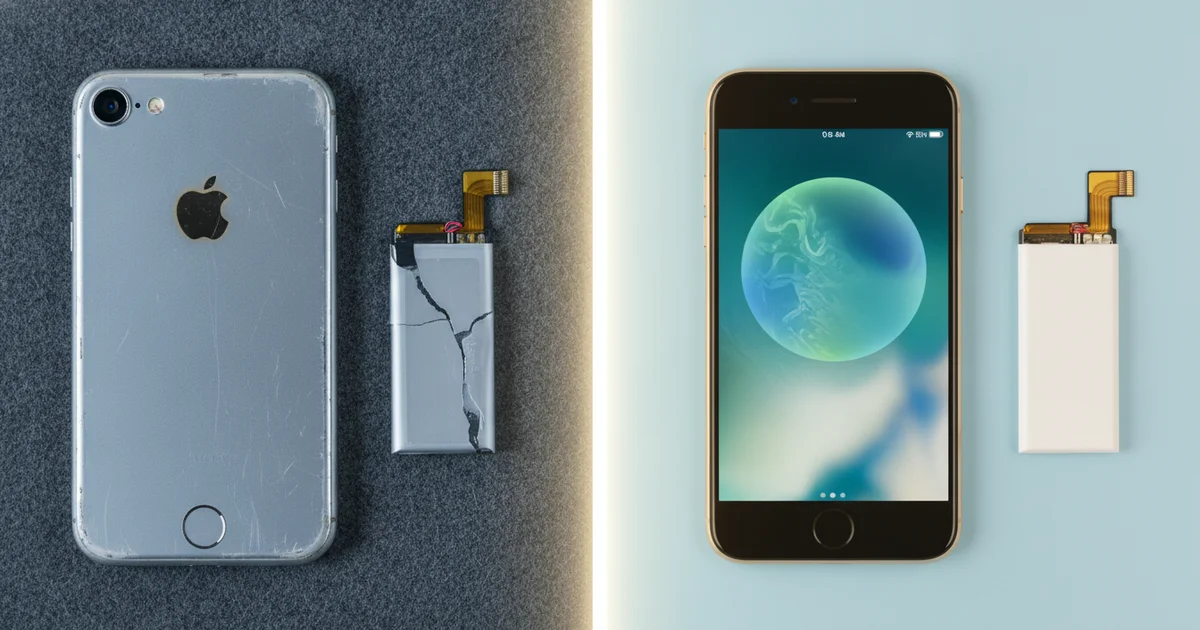
Battery degradation is the silent killer of iPhone performance. Lithium-ion batteries lose capacity with every charge cycle, and by the time an iPhone is two to three years old, battery health has typically dropped to the 70–80% range. At that level, iOS actively throttles CPU performance to prevent unexpected shutdowns — which means the phone isn’t slow because the hardware is outdated. It’s slow because the battery can no longer deliver the power the processor needs to run at full speed. The phone users assume is dying is, in most cases, running perfectly functional hardware underneath a worn-out power cell.
One ZDNET writer discovered this firsthand when her iPhone 14 Pro — purchased in January 2023 — had dropped to 72% battery capacity after roughly three years of use. A single Apple Store appointment brought it back to 100%. The phone that had been limping through the afternoon was restored to the performance it had on day one.
Apple’s annual release cycle keeps upgrade pressure high. New camera features, faster chips, and thinner designs give users genuine reasons to consider switching — but those reasons land on top of a performance frustration that a battery replacement could eliminate entirely. The result is a consumer default: replace the device rather than repair the component causing the problem.
A new iPhone costs anywhere from $799 to over $1,200. An iPhone battery replacement at Apple costs a fraction of that. Most users never run the numbers because the upgrade path is the visible one — pushed by carrier trade-in deals, retail promotions, and Apple’s own product launches. iPhone battery health checks take thirty seconds inside Settings, but most users have never opened that screen. That single gap in awareness drives billions of dollars in unnecessary phone upgrades every year.
What battery health actually means — and why 80% is the silent tipping point
Your iPhone is quietly keeping score, and most users never check the tally. Buried inside Settings > Battery > Battery Health & Charging sits a single percentage that tells you more about your phone’s real condition than any external symptom ever could. The majority of iPhone owners have never opened that menu.
That number represents battery capacity — how much charge your iPhone can hold compared to when it was new. A brand-new iPhone starts at 100%. Every charge cycle chips away at that figure. The degradation is gradual enough that most people never notice it happening, which is exactly what makes it dangerous to your daily experience.
Apple draws a hard line at 80%. Below that threshold, the company officially classifies the battery as consumed. At that point, iOS may begin throttling processor performance to prevent unexpected shutdowns — a feature Apple calls Optimized Battery Charging, designed to protect the hardware but one that visibly slows the device. Sudden shutoffs, sluggish app loading, and a phone that dies at 20% instead of zero are the practical results of crossing that boundary.
The ZDNET writer who finally checked their iPhone 14 Pro discovered the battery had fallen to 72% capacity — well past Apple’s cutoff and deep into degraded territory. The phone was roughly three years old, purchased in January 2023, and had gone from feeling fast and capable to needing near-constant charging. Nothing on the outside of the device flagged the problem. No warning notification. No change in how the phone looked or felt in hand.
That’s the central trap with lithium-ion battery degradation: the decline is invisible until the inconvenience becomes impossible to ignore. By the time most users connect the dots between poor iPhone battery life and actual battery health, they’ve already spent months blaming the software, the apps, or the phone itself — and started pricing out a full upgrade. Checking that one settings screen first takes about ten seconds and can reframe the entire conversation.
The appointment process: simpler than most people assume
Most iPhone users assume booking a battery replacement means navigating a clunky third-party website or calling a store and waiting on hold. The reality is far simpler. Apple built the scheduling process directly into iOS — go to Settings, tap on your name, select the device, and Apple’s service options appear right there. No browser required, no separate app, no searching for a phone number.
Once you arrive at the Apple Store, the service runs entirely through Apple’s own technicians using genuine Apple parts. There’s no handoff to a third-party repair vendor, no uncertainty about component quality, and no guesswork about whether the replacement battery will trigger software warnings on your device. Apple-genuine batteries pair cleanly with iOS, keeping battery health reporting accurate and uninterrupted.
The turnaround time makes the whole process practical for people who rely on their iPhone constantly. Most battery replacements finish the same day, often within a few hours. Dropping the phone off in the morning and picking it up before lunch is a realistic scenario at most Apple Store locations. For anyone anxious about being without their device, that same-day window removes the biggest psychological barrier.
The entire experience — from booking the iPhone battery service to walking out with a restored device — is designed to reduce friction. Apple pre-checks battery eligibility through the Settings diagnostic, so technicians already know what the phone needs before you walk in. Customers who’ve gone through the process consistently report that the actual time spent in-store is minimal.
For a repair that effectively returns an aging iPhone to factory battery performance, the logistics are about as low-effort as they get. The appointment takes two minutes to book. The replacement takes a few hours. The result is a phone that holds a charge like it did on day one.
The result: 72% to 100% and what that actually feels like
The number tells the whole story: 72% to 100%. That jump represents the full restoration of maximum battery capacity on a three-year-old iPhone 14 Pro — not an estimate, not a software trick, but a physical replacement that reset the battery to factory condition.
What does 100% capacity actually mean in daily use? It means the iPhone 14 Pro that once died by early afternoon now runs a full day on a single charge. Screen-on time increases measurably. The frantic hunt for a charger before a lunch meeting disappears. The low-battery anxiety that becomes a background hum of modern smartphone life simply stops.
There’s also the throttling problem. Apple’s performance management system automatically reduces CPU and GPU speeds when a degraded lithium-ion battery can no longer deliver sufficient peak power. At 72% health, that throttling is active and noticeable — apps load slower, the camera takes a beat longer to process, scrolling loses its snap. A new battery eliminates the trigger condition entirely. The processor runs at full speed because the power source can actually support it.
The subjective experience post-replacement is where upgrade-focused tech coverage consistently fails readers. Reviews of the iPhone 16 describe how fast and responsive it feels. They rarely mention that an iPhone 14 Pro with a fresh battery feels nearly identical in day-to-day use. The chip inside a three-year-old Pro model is not the limiting factor for most people — the degraded cell powering it is.
Users who replace their iPhone battery describe the result the same way: it feels like a new phone. That reaction is not nostalgia or placebo. It reflects the reality that battery health degradation is the primary driver of perceived device slowdown for the majority of iPhone users, and reversing it restores the device to the condition it was in on day one.
The broader lesson: repairability is a financial and environmental decision
Every iPhone you keep out of a landfill for an extra year represents real, measurable impact. Manufacturing a new smartphone generates roughly 70 kg of CO2 equivalent — most of a device’s total lifetime carbon footprint — before a single call is made. Choosing a battery swap over an upgrade directly reduces that manufacturing demand and keeps functional hardware out of the e-waste stream, which already accounts for 62 million metric tons globally per year.
The repair economy is finally getting institutional support. Right-to-repair laws have passed in California and are advancing at the federal level, pressuring manufacturers to make parts and repair pathways more accessible. Apple responded with its Self Repair Program in 2022, giving consumers direct access to genuine parts and repair manuals — a significant shift for a company that spent years making its devices deliberately difficult to open. That policy change is an acknowledgment: consumers want phones that last, not phones that expire on a manufacturer’s preferred upgrade schedule.
For anyone holding a two-to-four-year-old iPhone, the financial math is straightforward. An out-of-warranty battery replacement at the Apple Store costs $99 for most current models. A new iPhone 16 starts at $799. Replacing the battery and keeping the phone for another two years saves $700 or more, and restores the device to its original performance benchmarks — faster app launches, better camera responsiveness, and full all-day battery life.
The deeper issue is behavioral. The upgrade cycle isn’t driven purely by need; it’s driven by habit and by retail environments designed to sell new hardware. The Apple Store, the same place that books Genius Bar appointments and displays the latest models under flattering light, is also where you can break that cycle in under two hours. Booking a battery replacement through Settings > Battery > Battery Health & Charging takes about three minutes. The repair itself typically takes less than two hours.
iPhone battery health, device longevity, and smartphone repairability aren’t niche concerns for tech enthusiasts. They’re consumer finance decisions with clear right answers — and in 2024, the tools to make the smart call have never been more accessible.