Ambiance Tech Is No Longer a Luxury Add-On
Smart home ambiance tech spent years being dismissed as a gamer’s aesthetic indulgence — LED strips behind monitors, color-changing bulbs used once and forgotten. That era is over. The category has matured into a genuine lifestyle segment, with products engineered around circadian rhythms, room acoustics, and daily routine rather than pure novelty. Philips Hue, Govee, and Nanoleaf now ship products that respond to time of day, sync with content on screen, and adapt to occupancy — features that reflect serious product development cycles, not marketing gimmicks.
What separates ambiance devices from most consumer electronics is the absence of friction. A smart thermostat requires installation, calibration, and often a subscription. A productivity app demands behavioral change. A well-placed ambient light or a sound machine delivers its value the moment it’s switched on. No onboarding. No monthly fee. No learning curve. The benefit is immediate and physical — better sleep, a more focused work-from-home setup, a living room that feels intentional rather than accidental.
The fact that these products are now routinely discounted — appearing in major sale events alongside TVs and laptops — is a sign of category maturity, not saturation. When a product type starts appearing consistently in editors’ deal roundups and recommendation lists from outlets like ZDNET, it signals that retailers are confident in sustained consumer demand and are competing on price to capture it. Buyers who interpret sales as a red flag are misreading the market. This is the point at which a formerly niche category becomes accessible to the majority of households.
Mainstream tech coverage continues to chase CPUs, foldable phones, and AI-powered everything. Ambiance tech doesn’t generate benchmark scores or spec comparisons, so it gets underreported. That gap between media attention and actual consumer value is exactly why buyers who pay attention right now are positioned well. The products are better than they’ve ever been, the prices reflect competition rather than desperation, and the lifestyle payoff is immediate.
What ‘Ambiance’ Actually Means in Hardware Terms
Ambiance hardware breaks into four distinct product categories: smart lighting, white noise and sound machines, ultrasonic aroma diffusers, and projection devices. Consumer media treats each category as its own isolated universe — lighting gets reviewed alongside smart home hubs, sound machines get buried in sleep-aid roundups, and diffusers barely register outside wellness publications. That siloed coverage leaves buyers with no practical framework for building a system that actually works together.
The hardware specs that separate effective products from expensive disappointments are specific and rarely foregrounded in typical roundups. Color temperature range is the single most important variable in smart lighting — a bulb that only spans 2700K to 4000K cannot replicate the deep amber of a candle-lit room or the cool daylight needed for focused work. Sound machines are measured in decibels, and a unit that tops out at 75 dB will not mask traffic noise in a urban apartment. Diffusion area determines whether a 300ml ultrasonic diffuser can scent a 400-square-foot room or just a corner of it. These numbers exist on spec sheets and almost never appear in product reviews.
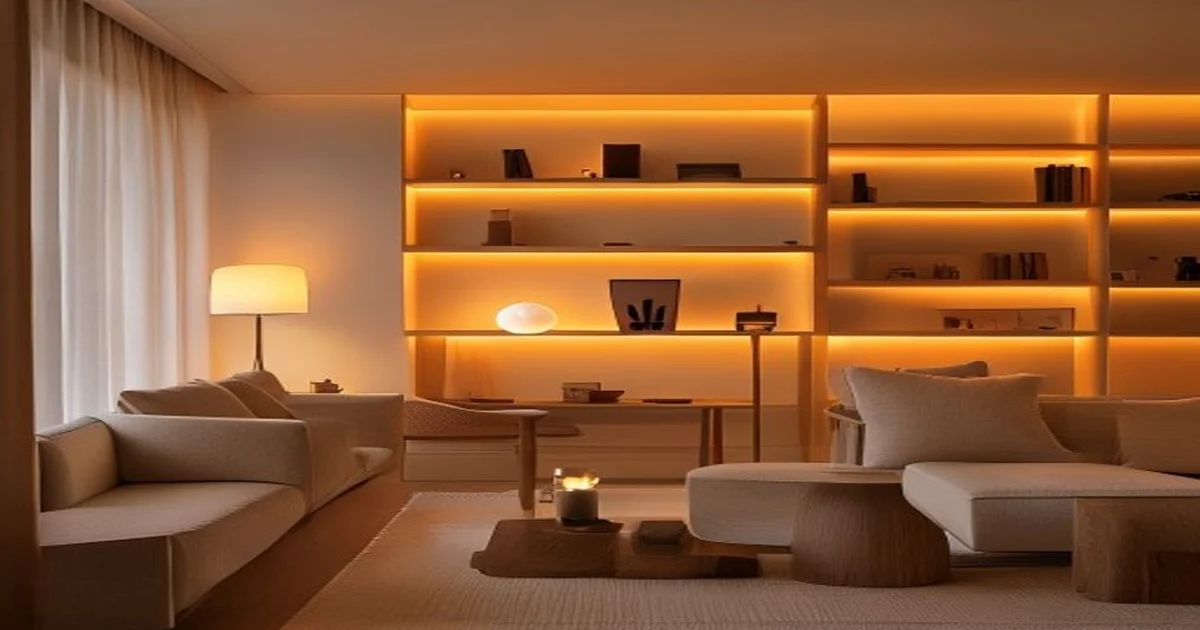
The products that deliver the most noticeable results layer multiple sensory inputs simultaneously. A Philips Hue gradient lightstrip set to 1900K amber, paired with a LectroFan Evo running brown noise at 65 dB and a diffuser dispersing cedarwood oil across 500 square feet, creates a cumulative environmental effect that no single device achieves alone. The layering principle is the central concept that single-product reviews structurally cannot address — a reviewer testing one smart bulb has no reason to discuss how its color temperature interacts with sound frequency or scent diffusion rate.
Treating these four categories as components of one system — rather than four separate purchases — is the shift that makes ambiance hardware genuinely practical rather than decorative. The specs are the architecture. Everything else is aesthetics.
The Missing Context: How These Gadgets Interact With Existing Smart Home Ecosystems
Buying an ambiance device without checking ecosystem compatibility is how a $150 purchase becomes a $150 mistake. Govee’s smart lights work with Alexa and Google Home but lack native Apple HomeKit support — a detail buried in spec sheets and absent from most review summaries. Philips Hue sits at the opposite end, with deep HomeKit integration, but costs significantly more than competitors that only play nicely with one or two platforms. Sound machines from LectroFan and Hatch operate largely in their own apps, with limited or inconsistent voice assistant integration that reviewers rarely stress-test before publishing.
The real power of ambiance tech unlocks through automation routines, and almost no buying guide demonstrates this. A Philips Hue scene that triggers at local sunset, a white noise machine that activates when a bedtime routine fires in Apple Home, a smart diffuser that runs thirty minutes before a scheduled wake-up — these are not edge-case uses. They are the primary reason the category earns its place in a serious smart home setup. Yet product reviews consistently focus on out-of-box brightness or sound quality rather than how devices behave inside an automation chain.
Matter, the cross-platform smart home standard backed by Apple, Google, Amazon, and Samsung, changes the compatibility picture significantly. Devices with Matter support connect to any major ecosystem without manufacturer workarounds or third-party bridges. Nanoleaf added Matter support to several of its lighting panels in 2023. Eve, the German smart home brand, has shipped Matter-compatible sensors and switches. In the ambiance category specifically, Matter adoption is early but accelerating, and a device purchased today with Matter support holds substantially more long-term value than one locked into a proprietary ecosystem.
Current buying guides treat ambiance gadgets as standalone purchases. They are not. A smart lamp that automates poorly or breaks a HomeKit routine creates friction that negates the entire point of ambient technology. Compatibility, automation depth, and Matter support belong in the first paragraph of every ambiance device review — not the footnotes.
Why Sales on These Products Deserve More Scrutiny Than Usual
Discounts on smart home ambiance products follow predictable seasonal rhythms, and understanding those patterns turns casual browsing into disciplined buying. Retailers time markdowns around back-to-school, holiday gifting, and winter wellness pushes — periods when demand for cozy, mood-enhancing tech spikes. These aren’t arbitrary clearance events. The timing is strategic, but the price cuts are often genuine, sometimes reaching 30 to 50 percent off retail on LED light strips, sunrise alarm clocks, and smart diffusers. ZDNET’s product coverage has flagged multiple simultaneous sales across this category, signaling that these discount windows are real opportunities, not manufactured urgency.
Refurbished and open-box units in this category carry far less risk than in most other consumer electronics segments. Smart bulbs, ambient light panels, and sound machines have no spinning drives, minimal heat-generating components, and no complex calibration requirements. Hardware failure rates on these products are low, and their functional lifespan regularly exceeds five years under normal use. Buying a certified refurbished Philips Hue starter kit or an open-box Hatch Restore at 20 to 40 percent below new pricing is a straightforward value decision, not a gamble.
The price-to-impact ratio in this category consistently outperforms more expensive smart home devices, and that argument rarely gets made clearly in mainstream tech coverage. A $35 smart bulb with tunable color temperature changes how a room feels across an entire day. A $60 white noise machine eliminates a sleep problem that a $400 smart mattress tracker only measures. The ambiance category solves concrete quality-of-life issues at a fraction of the cost of flagship devices, yet review cycles default to covering the expensive hardware. When these lower-cost products go on sale, the effective cost drops further, making the value case even harder to ignore. Paying attention to those sale windows — especially in October through January — is one of the more practical moves a consumer can make in the current smart home market.
Who Actually Benefits Most — and the Buyers Who Should Wait
Renters, remote workers, and people actively managing sleep disorders or chronic stress get more value from ambiance tech than anyone else — yet almost every major review treats the category as a playground for dedicated smart home hobbyists. That mismatch costs real buyers real money.
Renters can’t rewire a ceiling, install a Nest thermostat, or add recessed lighting without landlord approval. A Philips Hue gradient light strip, a LIFX color bulb, or a tabletop sound machine installs in minutes and leaves no trace when the lease ends. The investment travels with the tenant. For remote workers, the math is equally direct: a dedicated home office with tunable white lighting — the kind that shifts from cool 6500K daylight during focus hours to warm 2700K in the evening — costs under $150 to set up and demonstrably reduces eye fatigue over an eight-hour workday. That’s a fraction of what a standing desk or ergonomic chair runs.
Small-space dwellers also see outsized returns. In a 400-square-foot studio apartment, one smart lamp with a dynamic scene can transform the functional character of the entire room. A whole-home audio system or a smart thermostat demands infrastructure that a studio simply doesn’t have. Ambiance gadgets scale down without losing their core utility.
The buyers who should pause are those already deep inside a specific ecosystem. Someone running a full Philips Hue setup — bridge, bulbs, gradient strips — should not grab a discounted LIFX or Govee device just because it appears in a sale roundup. These systems use different protocols, different apps, and different automation logic. Adding a mismatched device doesn’t expand the ecosystem; it splits attention and creates friction. Before buying any discounted ambiance gadget, check whether it supports Matter, which enables cross-platform compatibility, or whether it operates as a standalone island requiring its own app and separate routines.
The right buyer profile is specific: someone in a lease, working from home at least three days a week, or prioritizing sleep and decompression in a compact living space. For that person, ambiance tech isn’t a luxury add-on — it’s the highest-return smart home investment available.
The Broader Trend: Wellness Tech and the Home Environment
Ambiance tech occupies a precise crossroads: the global wellness technology market, valued at over $60 billion, and the smart home market, projected to exceed $330 billion by 2028. Analysts routinely cover each category in isolation, but the products doing the most interesting work — tunable lighting, soundscape devices, aromatherapy diffusers with app control — operate in both simultaneously. That dual positioning is exactly why they keep getting underestimated.
Remote and hybrid work permanently changed what the home has to do. For millions of people, the living room or spare bedroom is now a productivity environment, a decompression zone, and a sleep space — sometimes within the same twelve hours. Lighting temperature, ambient sound, and air quality are no longer aesthetic preferences in that context. They are variables that measurably affect focus, cortisol levels, and sleep onset time. The American Psychological Association has linked uncontrolled environmental stressors — noise, poor lighting, temperature swings — directly to reduced cognitive performance and elevated anxiety. Ambiance gadgets address those stressors at the hardware level.
The next generation of these devices will close the loop entirely. Wearables already collect continuous biometric data — heart rate variability, sleep stages, stress scores — and the logical next step is feeding that data back into the home environment automatically. A bedroom that dims and cools when your wearable detects sleep onset, or a desk lamp that shifts to high-color-temperature light when your focus score drops, is not a speculative concept. Philips Hue already supports IFTTT and health app integrations, and companies like Withings are actively building home-health ecosystems that treat the environment as a therapeutic layer.
The products on sale today — smart bulbs, white noise machines, connected diffusers — are not endpoints. They are the infrastructure layer that biometric-driven automation will run on within the next hardware cycle. Buying into that foundation now, at discount prices, is the practical move. The category is not niche. It is early.