What X By Xreal Actually Is (And What It Isn’t)
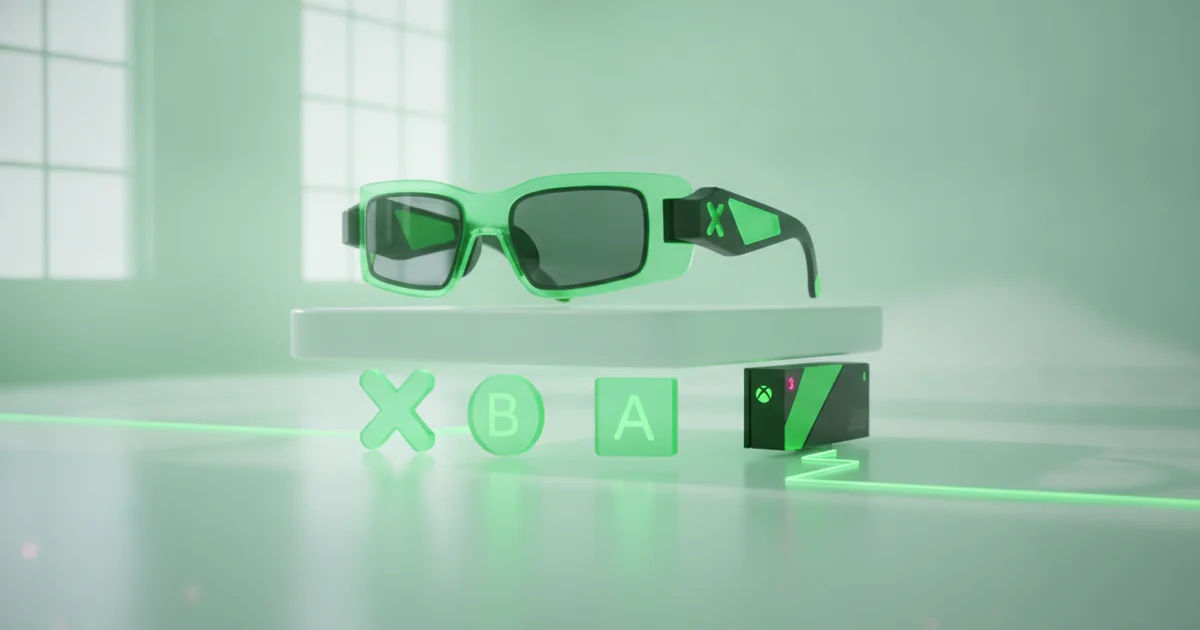
Xreal launched X By Xreal — shortened to xbx — as a dedicated sub-brand, not a product line extension. That distinction matters. By creating a separate brand identity, Xreal is explicitly segmenting the market: premium hardware on one side, accessible entry points on the other. The xbx glasses start at $299, roughly half the price of Xreal’s higher-end offerings.
What xbx actually sells is a display strapped to your face. These are not AI glasses. There is no camera, no voice assistant, no onboard intelligence processing your surroundings. The glasses take video output from an external device and beam it directly into your eyes, simulating a large screen experience — think watching a movie or playing a game on what feels like a big display, without the physical television.
That external device requirement is the caveat most coverage buries. The glasses do not work standalone. They connect to a phone, a gaming console, or a desktop computer via a tethered cable. The glasses are a display peripheral, not an independent wearable. If you want to use them, you need a compatible host device in your pocket or your hands.
Xreal built its reputation on screen-forward smart glasses aimed at people who want a sharper, more comfortable way to consume content than hunching over a phone or handheld console. The xbx sub-brand extends that same core function — high-quality video beamed to your eyes — to a lower price tier. The hardware philosophy stays identical. The target customer changes. At $299, xbx reaches gamers and commuters who were priced out before, without asking Xreal to cannibalize its premium positioning. That is the architecture of a company preparing for scale, not just launching another product.
The $299 Price Point Is the Real Breakthrough
Xreal built its reputation on premium hardware. The Air 2 Ultra retails at $699, and the standard Air 2 Pro sits at $449 — prices that position wearable displays firmly in the enthusiast-only category. The new xbx sub-brand cuts that entry cost nearly in half, starting at $299. That gap isn’t cosmetic. It’s the difference between a niche purchase that requires deliberate justification and a product that lands in the same mental spending bracket as a mechanical keyboard or a mid-range gaming headset.
$299 is where consumer behavior shifts. Tech buyers who would research a $500 gadget for weeks will impulse-purchase a $299 one on a Friday night. That psychological threshold is well-documented in consumer electronics — it’s why Sony, Microsoft, and Nintendo have fought for years to hit it with console launches. Xreal is applying the same logic to wearable displays, a category that has never had a serious sub-$300 contender from an established hardware maker.
The VR market offers a direct parallel. Early Oculus headsets launched above $600, and the category stalled. When Meta dropped the Quest 2 to $299 in 2020, sales accelerated sharply and the device became the dominant unit in the market. Xreal is executing the same playbook — let the early adopters fund the technology development at premium prices, then compress the margin once manufacturing scales and component costs fall.
The xbx glasses do exactly what the pricier Xreal lineup does: connect to a phone, console, or desktop and project a large display directly in front of the wearer. The use case for gaming and video consumption doesn’t require a $700 device. By separating the budget tier into its own sub-brand, Xreal protects the premium line’s positioning while opening the door to a consumer base that was never going to spend $449 on eyewear. That’s not a compromise strategy — it’s a market expansion move, and $299 is the number that makes it credible.
The Xbox Aesthetic Is a Marketing Signal, Not Just a Design Choice
The name “xbx” is not an accident. X By Xreal collapses into an abbreviation that sounds nearly identical to Microsoft’s Xbox, and the brand leans into an Xbox-adjacent green colorway that any console gamer will recognize immediately. Xreal publicly acknowledged the similarity and expressed confidence the naming is distinct enough to avoid legal trouble — but that acknowledgment itself confirms the company knows exactly what it’s doing.
This is borrowed visual equity, and it costs almost nothing. Xreal doesn’t need a formal partnership with Microsoft to benefit from decades of Xbox brand recognition. The color, the abbreviation, the vibe — they all signal to a specific audience before a single spec sheet is read. That audience is console gamers: the people most likely to drop $299 on a portable screen upgrade for their Xbox, PlayStation, or Nintendo Switch.
Console connectivity is a primary use case for these glasses. Xreal’s display-centric hardware connects directly to consoles and streams large, high-quality video into the wearer’s field of view — replacing a television or monitor with something you can use on a couch, a plane, or a bed. For a gamer who travels or shares a living space, that proposition is genuinely practical. The glasses aren’t asking users to change how they play; they’re offering a better screen for games they already own on hardware they already have.
Targeting gamers as an early adopter base is the strategically obvious move. Gamers already spend heavily on peripherals, already understand display specs like refresh rate and resolution, and already have a cultural appetite for novel hardware. Xreal’s higher-end glasses built credibility in that community first. The xbx sub-brand now converts that credibility into volume, using a name and color palette that functions as a wink to the most valuable segment of its existing audience. Whether or not Microsoft’s legal team eventually weighs in, the marketing signal has already landed.
What Most Coverage Is Missing: The Competitive Pressure Behind This Move
Xreal didn’t wake up one morning and decide to democratize wearable displays out of corporate goodwill. Rokid and TCL’s RayNeo have been undercutting the premium end of the display glasses market for months, building credible products at prices that make Xreal’s existing lineup look overpriced to anyone who isn’t already committed to the ecosystem. That competitive erosion from below forced Xreal’s hand.
Meta’s Ray-Ban smart glasses accelerated the pressure. When Meta priced its wearable at $299 and sold them in volume through a mainstream retail partnership with Ray-Ban, it didn’t just move units — it recalibrated what consumers expect to pay for a face-worn device. The Ray-Ban glasses don’t offer a display, but the price signal carried across the entire category. Every wearable company now has to justify anything north of $300 against a product that millions of people already know and want. That’s a brutal benchmark to operate against.
Xreal’s response — launching X By Xreal as a distinct sub-brand rather than simply cutting the price on existing hardware — is a deliberate brand architecture move. The xbx line starts at $299 and targets the accessible end of the market, while Xreal’s core lineup retains its premium positioning. This is a textbook good-better-best portfolio strategy. Running the budget play under a separate brand name protects Xreal from the perception that its flagship products have been cheapened. Apple has done this with the SE line. Samsung does it with the A series. The goal is the same: capture price-sensitive buyers without signaling to premium customers that the brand has compromised.
What makes the $299 number significant isn’t the hardware inside the xbx glasses — it’s what that price point represents as a competitive statement. Xreal is drawing a line and telling Rokid, RayNeo, and every other player in the affordable display glasses space that it intends to compete directly on their turf, not cede it.
The Tethered Model: Smart Compromise or Dealbreaker?
The xbx glasses work because they do less. Strip out the onboard processor, ditch the battery-hungry AI chip, and you end up with a 60-gram frame that can retail at $299. That’s not a limitation Xreal is hiding — it’s the entire engineering thesis. The glasses connect to a phone, gaming handheld, desktop, or console via USB-C and borrow all their computing power from the host device. The display does one job: beam a large, sharp image directly into the wearer’s eyes.
For the use cases Xreal is targeting — travel movie watching, portable gaming, couch sessions with a Steam Deck or Nintendo Switch — that tradeoff is genuinely reasonable. The user already has the processing device in their hands. A wire between the glasses and the controller or phone is not a meaningful inconvenience when the alternative is hunching over a six-inch screen for a three-hour flight. The tethered model fits naturally into the behavior it’s designed to support.
The harder question is how long that logic holds. Apple, Meta, and Google are all moving toward standalone AR glasses that carry their own processors and run independent software. When those products reach mass-market price points — a milestone none of them have hit yet — the idea of plugging your glasses into another device will start to feel like a transitional step rather than a permanent category. Xreal is betting it can build a loyal user base and distribution footprint before that shift arrives.
That window is real but finite. The xbx launch is a smart move for 2025. Whether the tethered display model survives as a distinct product category through 2027 depends entirely on how fast Apple and Meta can solve the standalone compute problem at a price consumers will accept. Xreal’s low weight and low price buy it time. They don’t buy it permanence.
Why This Matters Now: The Race to Define Everyday Wearable Displays
2025 is the year wearable displays stop being a conversation piece at CES and start sitting next to tablets and portable monitors in consumer buying decisions. The market has been waiting for a price trigger, and Xreal just pulled it.
At $299, Xreal’s new xbx sub-brand lands in the same spending territory as a decent Android tablet or a portable gaming monitor. That comparison is deliberate. Xreal built its reputation on screen-forward smart glasses that pipe large, high-quality video directly to the wearer’s eyes — no desk, no monitor arm, no craning over a phone. The xbx line extends that experience to buyers who previously looked at Xreal’s lineup and walked away on price. Getting that barrier down to $299 changes who shows up in the first place.
The timing creates a structural opening. Apple is not in this price tier. Samsung is not in this price tier. Neither company has a display-glasses product competing anywhere near $299. Xreal, a Chinese tech company with deep manufacturing leverage and a clear production rhythm, moved first and moved fast. Early pricing leadership in a nascent category builds brand loyalty that is expensive for late arrivals to displace. Consumers who buy their first pair of display glasses from Xreal and have a good experience do not automatically swap to a Samsung version two years later.
China’s manufacturing infrastructure gives Xreal a cost structure that Western competitors cannot easily replicate at speed. That advantage compounds during a land-grab phase, where unit volume and consumer familiarity matter more than feature differentiation. Xreal is not just selling glasses at $299 — it is planting a flag on what a wearable display is supposed to cost before the larger players arrive and try to reframe the category on their own terms.
The company that defines the entry price defines the category. Xreal is making that move now, while the window is open.