What Bee Actually Does — Strip Away the Marketing
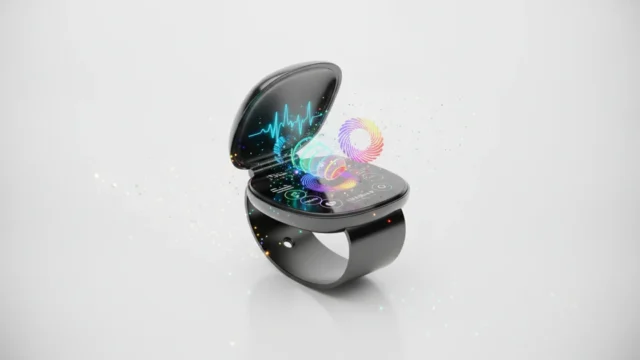
Bee is a wrist wearable that Amazon acquired and has since updated with expanded AI capabilities. It records every conversation within earshot, transcribes that audio in real time, and delivers summaries to the companion mobile app. The device runs continuously — there is no wake word, no button press, no moment where the user actively decides to capture something. You put it on at the start of the day and it runs until you take it off.
Setup pulls in basic personal information and, optionally, calendar access. That calendar integration is where the device moves beyond glorified note-taking. Bee cross-references what it hears against your scheduled commitments and pushes proactive reminders throughout the day. A conversation about rescheduling a meeting becomes calendar data. A passing mention of a deadline gets flagged. The device is not waiting to be useful — it is actively mining ambient conversation for actionable information.
This is a different category of product from Alexa or Siri. Those systems sit dormant until a trigger phrase activates them, which means consent is expressed repeatedly, interaction by interaction. Bee inverts that model entirely. Consent happens once, at setup, and from that point forward the microphone stays open. Every conversation — with colleagues, family members, strangers — gets processed whether those people agreed to it or not.
Amazon’s marketing frames this as a personal productivity tool for people who are forgetful or want better daily organization. That framing is accurate as far as it goes. The TechCrunch reviewer who tested the device found it genuinely useful and, in the same breath, described feeling creeped out by it. Both reactions are rational. The device does what it promises. What the marketing does not dwell on is the raw material that productivity runs on: a continuous audio record of a person’s daily life, flowing into Amazon’s infrastructure, tied to personal profile data the user entered at setup.
The Missing Context: Why Amazon Bought This — and Why It Matters
Amazon didn’t acquire Bee because it needed another wearable gadget. Amazon acquired Bee because continuous ambient audio is the one data type its existing empire has never been able to capture at scale.
Consider what Amazon already knows about you: your purchase history, your search queries, your streaming habits through Prime Video, your smart home activity through Alexa. Now add a device that records and transcribes your spoken conversations throughout the entire day — every meeting, every phone call, every offhand remark about wanting to redecorate your living room or feeling frustrated with your car. That’s a fundamentally different category of behavioral data. Purchase history tells Amazon what you already bought. Conversational data tells Amazon what you’re thinking about before you’ve decided to buy anything.
This is the context most gadget reviews skip entirely. TechCrunch recently tested the device and described it as “a kind of personal assistant” — accurate, but incomplete. The more precise description is that Bee is a continuous audio pipeline that now feeds into one of the most sophisticated advertising and recommendation systems on earth. Amazon runs the largest product advertising network in the United States. It operates AWS, which powers AI infrastructure for hundreds of companies. It has years of experience converting behavioral signals into purchase intent. Conversational data from Bee slots directly into that commercial architecture.
The post-acquisition product trajectory makes Amazon’s intentions clear. Rather than shelving Bee or running it as a standalone curiosity, Amazon has actively pushed feature updates since taking ownership — calendar integration, smarter summarization, ongoing refinements to the transcription layer. Companies don’t invest engineering resources in niche products they intend to leave dormant. They invest in products they plan to scale or integrate.
Bee’s current user base is small. That’s beside the point. The acquisition bought Amazon a data format, a technical foundation, and a roadmap — not a market share number. The question worth asking isn’t whether Bee is a useful gadget. The question is what Amazon builds on top of it once the data starts flowing.
The Creep Factor Is Real — And Deliberately Underplayed
When TechCrunch’s reviewer strapped on the Bee wearable and admitted to feeling “intrigued and slightly creeped out,” that phrasing did more honest work than Amazon’s entire marketing apparatus. Most consumer tech launches bury discomfort under aspirational imagery and productivity promises. Bee’s reviewer named the tension directly — and that tension is the product’s defining feature, not a side effect.
The device records conversations continuously throughout the day. That means every colleague who mentions a personal problem, every family member who vents over dinner, every stranger who speaks within earshot gets captured, transcribed, and fed into Amazon’s data infrastructure without agreeing to anything. The Bee user agreement governs the person wearing the device. It governs nobody else. Bystanders never see a terms-of-service page. They never click accept. Their words become structured data regardless.
Amazon’s framing positions this as a personal assistant for forgetful or busy people — calendar syncing, conversation summaries, daily reminders. That framing works precisely because it centers the wearer’s convenience and leaves the consent problem offscreen. The lifestyle pitch is compelling enough that early adopters will normalize the behavior before regulators or the public can articulate a coherent objection.
That normalization trajectory is the real long-term risk. Once a critical mass of users treats always-on ambient recording as unremarkable — the way people stopped questioning GPS tracking on smartphones — the window for meaningful pushback closes. The public’s capacity to resist surveillance technology shrinks in direct proportion to how many people already own it and find it useful. Amazon acquired Bee with that scaling pathway in mind. The “slightly creeped out” reaction is a feature of the adoption curve, not a bug. Early discomfort gets absorbed by habit, and habit becomes the new baseline against which all future devices get measured.
What the Wearable AI Category Gets Wrong About ‘Helpfulness’
The Bee wristband belongs to a crowded and increasingly ambitious category. Humane’s AI Pin launched at $699 and a $24 monthly subscription, promising to replace the smartphone entirely through ambient AI interaction. Rewind’s pendant dangled the appeal of a searchable, AI-indexed record of everything you heard and said. All three products share the same foundational premise: that total recall of your life is a feature, not a surveillance risk.
The productivity framing does a lot of heavy lifting here. TechCrunch’s reviewer described Bee as “useful if you’re forgetful or just want to be more organized about your life” — which is accurate as far as it goes, but frames a radical behavioral shift as a minor convenience upgrade. Taking a note is a deliberate act. You decide what matters, you capture it, you own the artifact. Strapping on a device that continuously records and transcribes every conversation you have is categorically different. The decision about what’s worth remembering gets offloaded — first to the algorithm, then to the platform.
That offloading is where the asymmetry lives. The user receives searchable transcripts and calendar nudges. Amazon receives a continuous stream of ambient audio from the daily life of a paying customer: their workplace conversations, their arguments, their medical appointments, their negotiations, their relationships. The device costs the user money. The data costs the user something harder to price.
Humane collapsed under the weight of a product nobody wanted badly enough to justify the tradeoff. Rewind pivoted. Bee is backed by the world’s largest e-commerce and cloud infrastructure company, which already profiles consumer behavior at extraordinary scale through Alexa, Prime purchase history, and AWS. The difference between Bee and its failed predecessors isn’t the concept — it’s the distribution muscle and the data infrastructure sitting behind it. When Amazon acquires a lifelogging wearable, the question of who benefits from total recall has a fairly obvious answer.
The Regulatory Vacuum These Devices Are Exploiting
No federal law in the United States specifically governs continuous ambient audio collection by consumer wearables. The Electronic Communications Privacy Act dates to 1986. The Federal Wiretap Act was built around targeted interception, not all-day passive recording worn on a wrist. The FTC’s authority over unfair and deceptive practices gives regulators some indirect reach, but no statute directly addresses what Bee does: record every conversation a user has throughout the day, transcribe it, and upload it to cloud servers for AI processing.
That vacuum benefits Amazon. The company faces no mandatory disclosure requirements about how long audio or transcripts are retained, who at Amazon can access them, or whether that data feeds into advertising profiles elsewhere in Amazon’s ecosystem.
The exposure falls on users instead. Eleven states, including California and Illinois, require the consent of all parties to a conversation before it can be legally recorded. A Bee user in San Francisco who records a lunch meeting without informing colleagues is potentially committing a criminal violation under California Penal Code Section 632. Illinois carries similar liability under the Illinois Eavesdropping Act. Amazon’s marketing materials do not prominently flag this risk. Users who read past the terms of service discover a brief advisory to check local laws — the legal equivalent of fine print.
Europe presents a harder wall entirely. GDPR requires a lawful basis for processing personal data, mandates explicit consent from data subjects, and grants individuals rights to access and deletion that create real enforcement costs. Continuous ambient recording of third parties — people who never agreed to Bee’s terms of service — sits in direct tension with GDPR’s core architecture. Data protection authorities in Germany and France have shown willingness to issue substantial fines. This likely explains why Bee launched in the United States, why Amazon’s competitors in the wearable AI space — Limitless, Plaud, Tab — have also concentrated their rollouts domestically, and why no major ambient AI wearable has launched with a simultaneous EU release.
The regulatory gap is not accidental. It is the market condition that makes this product category viable right now.
Should You Buy One? The Honest Cost-Benefit
For a specific slice of users, the Bee delivers genuine, hard-to-replicate value. Journalists conducting back-to-back interviews, executives running through six meetings before lunch, researchers who need verbatim records of field conversations — these people have a real problem, and Bee solves it. Passive transcription and AI summarization without pulling out a phone or fumbling with a recorder is legitimately useful, and no competing product currently packages it as seamlessly on the wrist.
The price of that utility is explicit: you hand Amazon a continuous, unfiltered audio record of your daily life. Not your search queries. Not your purchase history. Your actual conversations — with colleagues, doctors, partners, sources, clients — processed through Amazon’s infrastructure. The company acquired Bee in 2024 and has expanded its feature set since, but its data retention schedules, rules around third-party sharing, and policies on whether recordings train future AI models remain opaque to the average buyer. That information lives in terms-of-service documents that almost nobody reads before strapping the device on.
That gap matters. Amazon already holds more consumer behavioral data than almost any private company on earth. Adding ambient audio from users’ waking hours is a categorically different kind of access. Buying a Bee before regulators define what companies can do with this class of biometric and conversational data is not a productivity decision — it’s a trust decision. You are betting that Amazon will handle your most private, unguarded moments responsibly, indefinitely, across every future policy revision and corporate restructuring.
If you have high-volume transcription needs and you trust Amazon with that access, the device earns its keep. If either condition is missing, wait. The hardware will still exist in 18 months. Clearer rules, or the absence of them, will tell you far more about whether this trade-off is acceptable than any feature update will.