Cybersecurity

GPT-Red: How OpenAI Uses AI to Hack Its Own Models

GPT-Red: The AI That Hacks Other AIs OpenAI has built a large language model called GPT-Red whose sole job is to attack other AI systems. The model functions as an automated adversarial sparring partner — probing OpenAI’s own products for weaknesses, vulnerabilities, and exploitable behaviors before external bad actors get the chance. The approach is ... Read more

GPT-Red: How OpenAI Uses AI to Hack Its Own Models
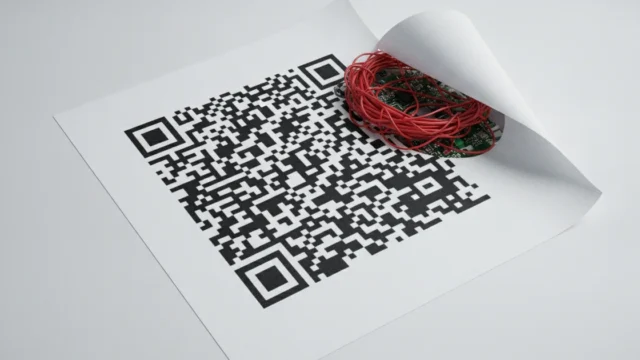
Illustration · Newzlet

GPT-Red: The AI That Hacks Other AIs

OpenAI has built a large language model called GPT-Red whose sole job is to attack other AI systems. The model functions as an automated adversarial sparring partner — probing OpenAI’s own products for weaknesses, vulnerabilities, and exploitable behaviors before external bad actors get the chance.

The approach is a formalized version of red-teaming, a security practice borrowed from military and cybersecurity disciplines where a dedicated team attempts to break a system by thinking like an attacker. Traditionally, that work involves human testers — specialists who manually craft jailbreak prompts, probe model outputs, and document failure modes. GPT-Red replaces much of that human labor with an AI that runs the same adversarial probing automatically, at machine speed, and across a scale no human team can match.

OpenAI gave MIT Technology Review an exclusive look at the system, a signal the company wants GPT-Red understood as a serious safety investment rather than a background process. The disclosure also reflects how dramatically the threat environment has shifted. Prompt injection attacks, model manipulation, and AI-assisted social engineering are no longer theoretical. They are active, evolving, and increasingly automated on the attacker’s side — which means a purely human defensive posture cannot keep pace.

What GPT-Red represents is a strategic acknowledgment: the arms race between AI offense and AI defense has already started, and policy documents or content filters alone are insufficient countermeasures. Automated red-teaming, adversarial machine learning, and AI-native vulnerability detection are now core components of responsible model deployment — not optional additions.

The tension embedded in this approach is real. OpenAI is using a powerful language model to stress-test other powerful language models, with less direct human oversight at each iteration. That tradeoff — speed and scale in exchange for reduced human review — sits uncomfortably against the company’s stated mission of safe and beneficial AI. GPT-Red may harden OpenAI’s models. It also demonstrates that the safety problem has grown complex enough to require AI to police AI.

What Most Coverage Is Missing: The Paradox of Building a Super-Hacker for Safety

OpenAI frames GPT-Red as a defensive tool, a sparring partner that stress-tests its own models by automating the kind of adversarial probing that human red teams perform manually. The logic is straightforward: find the vulnerabilities before bad actors do. What that framing quietly sidesteps is the object it creates in the process — a purpose-built, highly capable offensive AI system that catalogs attack vectors, generates novel exploits, and gets better at breaking things with every iteration.

That is the dual-use problem in its sharpest form. The same LLM trained to identify how AI systems fail is, by definition, trained to make AI systems fail. The knowledge is identical. The capability is identical. What differs is only the intent of the operator — and intent is not a technical safeguard.

Mainstream coverage of GPT-Red has largely accepted OpenAI’s own framing, treating the tool as an unambiguous safety advance. That framing ignores a second-order question: who audits the auditor? OpenAI used MIT Technology Review for an exclusive reveal, which shaped the initial narrative. But exclusive access granted to a single outlet is a communications strategy, not independent verification. No external body assessed GPT-Red’s own risk profile before the announcement. No third-party adversarial audit confirmed that the tool itself cannot be misused, leaked, or repurposed.

This is the conflict of interest that automated red-teaming quietly normalizes. When a company deploys its own AI to validate the safety of its own AI, the evaluation loop is closed from the inside. OpenAI sets the benchmark, runs the test, and reports the result. The incentive to surface catastrophic findings is structurally weaker than the incentive to demonstrate progress. That is not a criticism of individual researchers — it is how institutional incentives work.

The cybersecurity industry resolved an analogous tension decades ago by establishing independent penetration testing firms, third-party vulnerability disclosure programs, and regulatory audits. AI safety has no equivalent infrastructure. GPT-Red may well make OpenAI’s models more robust. It also marks the arrival of a new category of AI risk that the industry has not yet built credible external oversight to manage.

The Bigger Pattern: AI Safety Is Becoming Competitive Infrastructure

GPT-Red is not a public-facing product. OpenAI has no plans to release it commercially. That makes the strategic logic clear: automated red-teaming at scale is a proprietary advantage, not a charitable contribution to the broader AI ecosystem. Enterprise customers — banks, defense contractors, federal agencies — require documented security compliance before they sign contracts. A company that can demonstrate its models have been systematically hardened against adversarial attacks, jailbreaks, and prompt injection holds a certification edge that smaller competitors cannot easily replicate. Safety infrastructure, in this context, functions as a procurement weapon.

Elon Musk’s discreet acquisition of a $1 billion gas turbine firm to power Grok surfaced in the same news cycle as GPT-Red’s reveal. The pairing is not coincidental. Both stories expose the same underlying reality: the decisive battles in the AI arms race are being fought in the infrastructure layer, away from product launches and benchmark leaderboards. Musk secured dedicated power generation because grid dependency is a strategic liability. OpenAI built an autonomous AI security testing system because human red-team capacity is a bottleneck that slows deployment cycles and creates audit gaps.

These moves share a common architecture. Neither was announced with fanfare. Neither fits neatly into the public narrative about democratizing AI or building beneficial technology. Both represent companies locking down foundational capabilities — compute sovereignty on one side, cybersecurity hardening on the other — that determine who can credibly sell AI to governments and regulated industries.

The AI security market is real and growing fast. Adversarial machine learning, model robustness testing, and AI vulnerability assessment are already line items in federal procurement frameworks. The company that can certify its models survived rigorous automated adversarial testing gains a verifiable paper trail that satisfies compliance officers and procurement committees. GPT-Red gives OpenAI that trail at a scale no human team can match.

The race to build AI and the race to secure and power it are the same race. The contestants just stopped pretending otherwise.

Heat Pumps and the Energy Subtext Nobody Is Connecting

American households are installing heat pumps at record rates, drawn by federal incentives from the Inflation Reduction Act and rising energy costs. The technology shifts homes off fossil fuels and onto the electrical grid — exactly where energy planners want consumer demand to go. At the same moment, AI data centers are pulling electricity at a scale that grid operators describe as unprecedented, with some projections placing new data center demand at over 300 terawatt-hours annually by 2030. Two electrification trends are now competing for the same wires.

The tension sharpens when you examine how AI companies are actually solving their power problem. Elon Musk quietly acquired a $1 billion gas turbine company to supply dedicated generation for xAI’s Grok infrastructure. The deal bypassed public utility processes, regulatory proceedings, and any meaningful energy transition debate. Musk’s team built private fossil fuel generation capacity while millions of consumers were told to electrify their homes and wait their turn on a congested grid.

That contrast is the story that energy analysts are not connecting loudly enough. Consumer electrification — heat pumps, EVs, induction stoves — operates inside a regulated, democratically accountable grid system. Large-scale AI power consumption increasingly operates outside it. Tech companies with sufficient capital simply acquire generation assets, lock in supply, and externalize grid stress onto everyone else. The household installing a heat pump in Minnesota competes for grid headroom with a data center in Memphis running inference at scale around the clock.

The electricity demand from generative AI workloads is not seasonal or flexible the way residential demand is. Data centers run continuously, and the computational intensity of training and serving large language models creates baseload pressure that utilities struggle to absorb without firing up retired fossil fuel plants. Several grid operators have already reversed planned coal retirements specifically to accommodate new data center interconnection requests.

The energy subtext underneath the heat pump adoption story and the Musk gas turbine acquisition is the same: America’s power infrastructure is being reshaped by AI at a speed that public policy cannot match, and the benefits of that reshaping are concentrating at the top.

What Comes Next: Automated AI Safety as the New Normal

GPT-Red’s arrival signals a structural shift in how AI safety gets done — and every major lab is watching. If OpenAI’s automated red-teaming model delivers consistent results at scale, Anthropic, Google DeepMind, and Meta will face direct competitive pressure to deploy equivalent adversarial systems. Human red-team consultants, who currently charge premium rates for manual vulnerability assessments, will find their role compressed into edge-case work that automated probing can’t yet reach. AI-versus-AI safety testing stops being an experiment and becomes an industry baseline.

Regulators are already behind. The EU AI Act and the White House executive order on AI safety both lean heavily on human oversight as a core accountability mechanism. Neither framework adequately addresses a world where one language model is stress-testing another, generating attack vectors, evaluating responses, and logging results — all without a human in the loop at any meaningful decision point. The opacity problem is real: when an AI auditor finds a flaw in an AI system, who validates the auditor? Policymakers drafting compliance requirements around red-teaming will need to revisit their assumptions fast.

For enterprise customers integrating GPT-4o, Claude, or Gemini into sensitive workflows, the practical stakes are direct. Automated adversarial testing can run continuously, catch regressions instantly, and probe attack surfaces at a volume no human team can match. That is a genuine safety gain. The risk is equally concrete: models trained against a specific adversarial AI can learn to defeat that particular evaluator while remaining vulnerable to attack patterns the red-team model never generated. Safety benchmarks improve. Actual robustness may not follow.

The honest version of what comes next is a faster cycle — more iterations, tighter feedback loops, and model behavior increasingly shaped by what an AI attacker found to be exploitable last week. Whether that produces trustworthy AI or simply AI that is harder to catch failing in public is the question OpenAI’s GPT-Red has put squarely on the table.

AI-Assisted Content — This article was produced with AI assistance. Sources are cited below. Factual claims are verified automatically; uncertain claims are flagged for human review. Found an error? Contact us or read our AI Disclosure.

More in Cybersecurity

See all →