The Roman Telescope: More Than a Pretty Sky Survey
NASA’s Nancy Grace Roman Space Telescope launches from Kennedy Space Center in Florida at the end of August, and its primary mission reads like a physicist’s wish list. The telescope will probe dark energy — the mysterious repulsive force accelerating the universe’s expansion — and dark matter, the invisible gravitational scaffolding holding galaxies together. Those are genuinely profound scientific objectives, and they would be enough to justify the mission on their own.
They are not the whole story.
In September, a multi-institutional team of planetary scientists and astronomers plans to publish research detailing Roman’s secondary capability: detecting near-Earth asteroids, including the class of large impactors capable of causing civilisation-scale destruction. The telescope’s wide-field infrared imaging makes it uniquely suited to scanning the inner solar system for objects that ground-based observatories routinely miss. Infrared detection catches dark asteroids — the ones that absorb visible light rather than reflect it — that optical surveys leave invisible.
That dual mandate transforms Roman from a science instrument into something with direct national security implications. Planetary defence has shifted steadily from an academic niche into a recognised strategic priority. NASA’s 2022 DART mission, which successfully altered the trajectory of the asteroid Dimorphos, marked the moment the US government demonstrated that asteroid deflection is operationally possible. Roman extends that posture into the detection phase — finding threats early enough for deflection to be feasible.
The data Roman generates on near-Earth object populations will feed into planetary defence models that governments and military planners treat as threat-assessment infrastructure. Who operates that infrastructure, who controls access to the resulting data, and which nations contribute to or are excluded from the analysis pipeline are no longer purely scientific questions. The Roman Space Telescope arrives as a $3.9 billion asset that sits at the intersection of astrophysics, planetary security, and the accelerating competition over who sets the terms for space-based surveillance and early-warning capability.
The Missing Context: Why Launch Timing Is Everything
NASA schedules the Roman Space Telescope’s launch for late August from Kennedy Space Center — a moment that lands in the middle of the sharpest US-China technological rivalry since the Cold War. That collision of timing is not accidental, and it is not trivial.
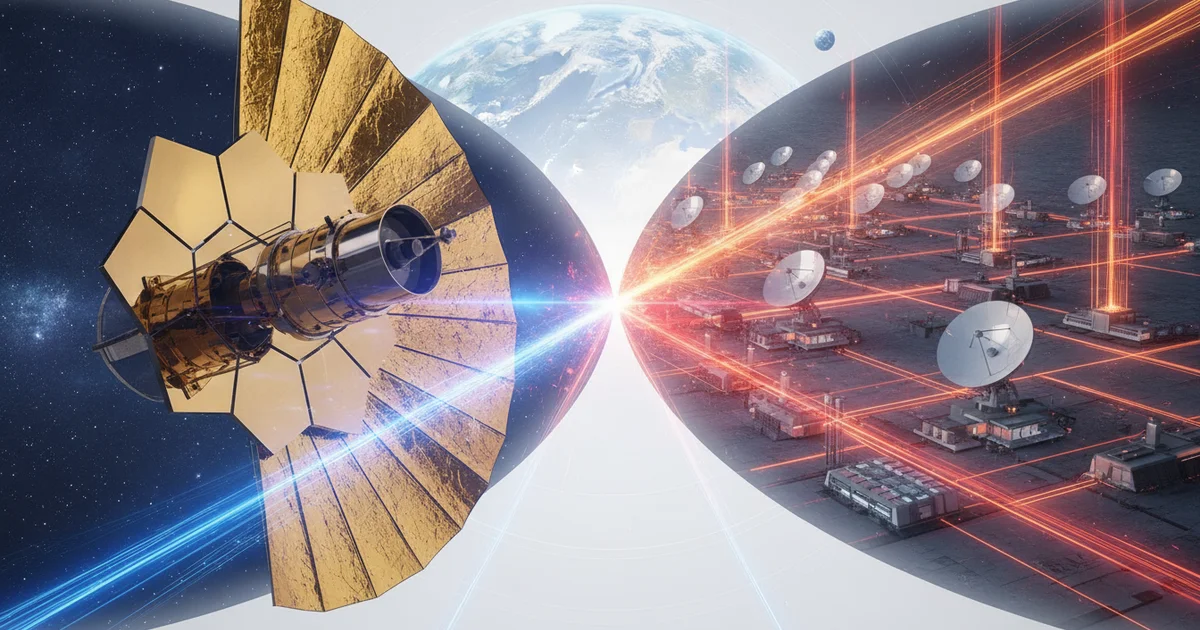
China has aggressively expanded its space-based sensing infrastructure over the past decade, operating reconnaissance satellites, Earth-observation arrays, and positioning systems that feed both civilian science and military intelligence pipelines. The US, through agencies including NASA and the National Reconnaissance Office, has countered by accelerating its own orbital programs. Roman enters this environment as a wide-field infrared survey telescope with capabilities that extend well beyond cosmology.
Planetary scientists have confirmed that Roman can systematically catalogue near-Earth objects, including asteroids large enough to cause regional or civilisation-scale destruction. Asteroid trajectory data and near-Earth object catalogues are not purely academic products. Defense planners and national security policymakers treat orbital threat assessments as strategic intelligence. A nation that controls the most comprehensive and timely catalogue of near-Earth objects holds an informational advantage that has both civilian emergency-planning and military-coordination dimensions.
Coverage of the Roman telescope has concentrated almost entirely on its dark energy and dark matter research mission. The dual-use nature of its planetary-defence sensing capability has received almost no scrutiny. This gap in analysis reflects a broader pattern: space science journalism treats telescopes as instruments of curiosity rather than assets in a competition over who defines, collects, and controls space-based data at scale.
Roman’s launch coincides with US export controls designed to limit China’s access to advanced semiconductors and satellite components — a deliberate effort to slow Beijing’s ability to build rival sensing infrastructure. The telescope’s arrival at this precise geopolitical inflection point places it inside a contest over space-based supremacy that will shape scientific data governance, planetary-defence coordination, and strategic sensing dominance for decades.
Chinese Tech Import Curbs: The Supply Chain Beneath the Stars
Washington’s latest round of restrictions on Chinese technology imports targets the exact hardware that makes modern space observation possible: advanced semiconductors, high-precision sensors, and the specialized components embedded in every satellite and space telescope flying today. These aren’t abstract trade measures — they’re policy decisions that run directly through the supply chains powering next-generation space infrastructure.
The restrictions represent an escalation in a campaign that began accelerating with the 2022 CHIPS and Science Act and subsequent Commerce Department export controls. The logic is strategic: deny China access to the advanced chips and sensing technology it needs to close the gap with US aerospace and defense capabilities. But the policy creates friction in both directions. US aerospace contractors and satellite manufacturers have spent decades building cost-efficient global supply chains, and Chinese-sourced components have long played a role in keeping production costs competitive.
That dependency is now a liability. Defense and aerospace primes face the dual pressure of stripping Chinese-origin parts from existing programs while qualifying alternative suppliers — a process that takes years and costs significantly more. For smaller satellite manufacturers and commercial space companies, the reconfiguration is even more disruptive.
Most news coverage frames these import curbs as a diplomatic flashpoint or a chapter in the broader US-China trade war. That framing obscures the technical reality. The semiconductors and photonic sensors caught in the crossfire are precisely the components that determine a space telescope’s imaging resolution, a satellite’s signal processing speed, and the reliability of orbital hardware operating years from Earth with no possibility of repair.
China is simultaneously accelerating domestic chip production through state-backed programs targeting self-sufficiency in advanced node semiconductors. The restrictions intended to slow that progress are also forcing Chinese aerospace programs to innovate around foreign dependencies — a long-term consequence that US policymakers are still calculating. What’s clear now is that the boundary between technology trade policy and space power competition has effectively disappeared.
Where Space Science and Geopolitics Collide
NASA’s Nancy Grace Roman Space Telescope launches from Kennedy Space Center in Florida at the same moment Washington is tightening import controls on Chinese semiconductor technology. That timing is not coincidental — it is a snapshot of how completely space science and great-power competition have merged.
Roman carries a 300-megapixel infrared detector array with a field of view 100 times wider than the Hubble Space Telescope. The sensors built to map dark energy and identify near-Earth asteroids produce the same class of high-resolution infrared imaging that feeds satellite reconnaissance systems and missile defense networks. The physics does not change depending on what you point the camera at. Any nation that masters this sensor architecture for astronomy holds a transferable advantage in orbital surveillance.
The new US restrictions on Chinese tech imports tighten control over exactly the advanced chip designs that make instruments like Roman possible. That policy signal tells allied and rival space agencies alike that Washington views semiconductor supply chains and the spacecraft they power as strategic infrastructure, not shared scientific commons.
That framing creates a direct tension around Roman’s data. NASA has historically published space telescope observations openly, allowing researchers worldwide to download raw files and build careers on American-funded discovery. Roman’s asteroid detection work and its dark energy survey data will carry strategic weight that previous open-access missions did not. European Space Agency partners, Japanese researchers working under JAXA, and emerging space powers in India and the Gulf states will watch closely to see whether the US maintains that open-data posture or begins gatekeeping access to Roman’s outputs the way it already restricts exports of the chips that produce them.
Space science diplomacy has always been a proxy for broader national ambitions — the Apollo program made that explicit. What is different now is the granularity of control. Specific sensors, specific datasets, specific fabrication nodes are all simultaneously scientific resources and geopolitical leverage points. Roman does not just observe the universe. It forces a decision about who the United States trusts enough to see what it finds.
What This Means for Everyday Tech Users and Taxpayers
Taxpayers foot the bill for both sides of this equation — and most don’t realize it. The Nancy Grace Roman Space Telescope carries an estimated price tag of around $3.93 billion in development costs alone. That money buys genuine scientific capability: a 288-megapixel infrared camera, a field of view 100 times wider than Hubble’s, and the ability to scan the solar system for near-Earth objects that current ground-based surveys miss. What taxpayers deserve to know is whether the data those instruments collect will be freely accessible or quietly restricted in the name of national security.
Roman’s potential asteroid-detection mission puts this tension in sharp relief. Planetary defense data has direct public safety implications — every person on Earth has a stake in knowing whether a kilometer-wide rock is on an intercept trajectory. If NASA treats that data as sensitive, the agency risks undermining the open-science model that has made US space research a global standard-setter for decades. How the agency handles Roman’s data-sharing policies in the months after launch will signal where that balance lands.
The technology export control side of the ledger hits consumers differently but just as directly. Restrictions on Chinese-manufactured semiconductors, sensors, and electronic components raise production costs for American manufacturers who build everything from commercial satellites to smartphones. Those costs move downstream. A satellite internet subscription, a GPS device, a scientific instrument used in hospitals — all of these depend on global semiconductor supply chains that US-China decoupling actively disrupts. When domestic chip fabrication carries a premium over outsourced production, the price difference doesn’t evaporate; it transfers to the buyer.
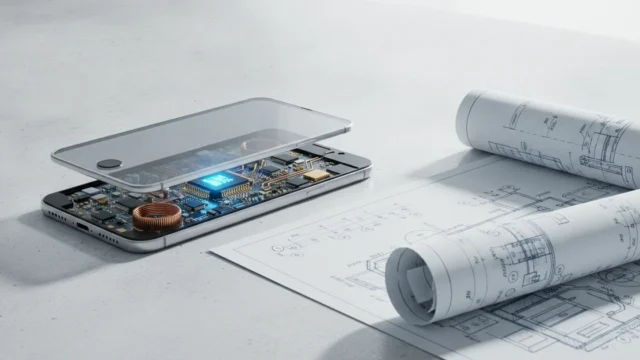
Space technology and consumer electronics share more components than most people recognize. The image sensors in your phone and the detectors aboard a NASA spacecraft trace their lineage to the same engineering advances. Policies designed to protect American leadership in space hardware ripple outward into every product category that relies on precision optics, radiation-hardened chips, and advanced infrared sensors. Citizens paying taxes to fund Roman and simultaneously paying higher prices for electronics affected by import restrictions are, in effect, subsidizing the same geopolitical strategy twice — and they should demand clarity on what they’re getting for both investments.
The Bigger Picture: A New Era of Dual-Use Space Infrastructure
The Nancy Grace Roman Space Telescope represents something beyond a scientific instrument — it is infrastructure. Its 288-megapixel wide-field camera, capable of surveying the sky at a scale 100 times broader than Hubble, produces the kind of high-resolution spatial data that blurs the line between astrophysics and strategic intelligence. Planetary defense, orbital mapping, and deep-sky surveillance all run on the same technical substrate. Roman was designed for dark energy research, but its sensor architecture makes it inherently dual-use — a pattern now standard across the new generation of American space assets.
That dual-use reality lands differently in 2025 than it would have a decade ago. The accelerating decoupling of US and Chinese technology ecosystems is splitting global space infrastructure along geopolitical fault lines. Washington’s expanding export controls on semiconductors, satellite components, and aerospace systems are pushing Beijing to build parallel supply chains and independent observational networks. The result is two distinct technological spheres developing incompatible standards, separate data pipelines, and rival partnerships — a bifurcation that directly threatens the tradition of open, internationally shared scientific data that drove breakthroughs like the Human Genome Project and the Event Horizon Telescope collaboration.
Space science has historically operated as a rare neutral ground, where American and Chinese researchers exchanged datasets and co-authored papers even as their governments clashed over trade and Taiwan. That ground is shrinking. The Chinese Space Station bars NASA participation by law under the Wolf Amendment. American researchers face tightening restrictions on collaboration with Chinese institutions flagged as military-linked. Roman’s data governance framework — who accesses it, under what conditions, and through which international agreements — will establish a template that subsequent US space observatories will follow for decades.
The decisions made inside NASA, the Commerce Department, and the White House in the next twelve months carry consequences far beyond any single telescope. How Roman’s open-access data policy is structured, how deep semiconductor import curbs extend into satellite manufacturing, and whether allied nations in Europe and Asia align with the American or Chinese space ecosystem — these are the variables that will define who controls the scientific and strategic high ground of low Earth orbit and beyond for the rest of the century.