The Sale at a Glance: Dates, Discounts, and Who’s Involved
Prime Day 2026 runs June 23 through June 26, and televisions are among the strongest categories in the sale. Discounts reach up to 43% off across a wide range of screen sizes and price points, making this one of the most substantial TV shopping windows of the year.
Amazon’s own Fire TV lineup anchors the sale, but the brand list extends well beyond Amazon hardware. TCL, Hisense, and Samsung are all participating with meaningful price cuts on current-generation sets — not last year’s clearance stock. That level of third-party manufacturer involvement signals that Prime Day has become a legitimate industry-wide sales event, not a promotional vehicle for Amazon products alone.
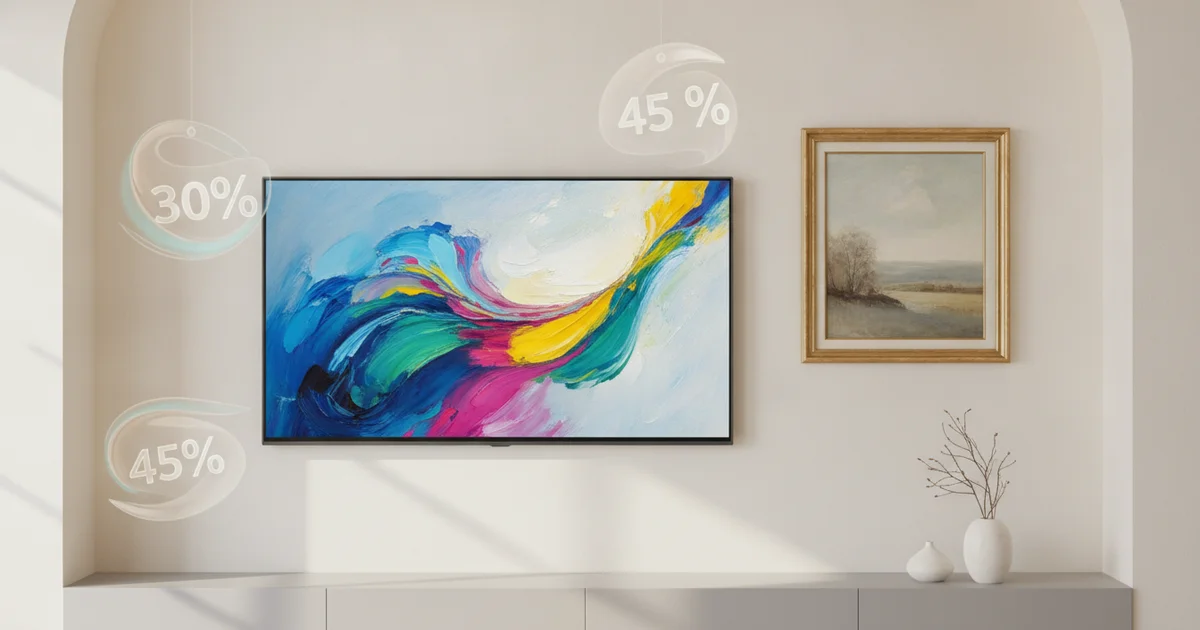
The range of sets on discount covers nearly every buyer type. At the affordable end, entry-level models suit a secondary room or kitchen setup. At the premium end, QLED displays and art-mode televisions — including the Samsung Frame Pro and Amazon’s Ember Artline — are seeing rare discounts that bring aspirational screens within reach of a much larger audience. The presence of art TVs and lifestyle displays in a major sales event like this reflects how quickly that product category has moved from niche luxury to mainstream consideration.
For shoppers comparing TV deals this season, the four-day window creates real urgency. Prices on specific models shift during the event, and popular configurations sell out. Streaming device deals are also bundled into the sale — the Fire TV Stick 4K Plus, for example, was added mid-event on June 25 — so the full scope of available discounts grows as the sale progresses.
Whether the goal is a budget flat-screen for a spare room or a gallery-style display designed to show artwork when not in use, Prime Day 2026 offers a direct path to purchase at prices that typically don’t appear outside of Black Friday.
The Headline Story Most Coverage Is Missing: Art TVs Go on Sale
Most Prime Day TV coverage stops at the discount percentage. The more revealing story is which products are being discounted at all.
Art televisions — screens designed to display curated artwork and disappear into a room’s décor when not in use — have historically been among the most price-stable products in consumer electronics. Samsung built the Frame line on the premise that lifestyle-oriented buyers are less price-sensitive than spec-hunters. That premise held for years. Prime Day 2026 changes the calculation.
Both the Samsung Frame Pro and Amazon’s own Ember Artline are on sale during the June 23–26 event, and that pairing carries more weight than any single discount figure. When a product category starts appearing in promotional sales cycles, it signals that manufacturers and retailers have enough volume to absorb margin compression. The art TV segment has crossed that threshold. These are no longer aspirational objects sold one at a time to design-forward early adopters. They are mainstream consumer electronics products competing on price alongside QLED panels and kitchen TVs from TCL and Hisense.
The competitive dynamic between the two featured products deserves attention. Amazon is simultaneously selling its own ambient display television — the Ember Artline — and actively promoting the Samsung Frame Pro on the same storefront during its flagship retail event. That is not standard marketplace behavior. Amazon typically uses Prime Day to push its own hardware aggressively. Running the Frame Pro alongside the Ember Artline suggests Amazon sees the art TV category itself as the growth story, not just its own entry. Expanding the total market for lifestyle screens — and owning the retail channel through which most of them are purchased — may be worth more than protecting the Ember Artline’s unit share in the short term.
For consumers, the practical takeaway is straightforward: Prime Day 2026 is the first major sales event where decorative television sets, ambient display screens, and gallery-mode TVs are genuinely competitive buys rather than full-price indulgences. The category has matured. The pricing finally reflects that.
Amazon’s Ember Artline: A New Entrant Demanding Attention
Amazon spent years dominating the budget TV and streaming-device markets with its Fire TV lineup. The Ember Artline changes that playbook entirely. Launched during Prime Day 2026 — running June 23 through June 26 — the Ember Artline is Amazon’s first direct entry into the art-display television segment, a category Samsung has owned largely unchallenged since the Frame debuted nearly a decade ago.
Positioning a brand-new product inside a sale event rather than before one is a deliberate move. Prime Day’s deal psychology — urgency, limited windows, high purchase intent — compresses the consumer awareness cycle from months into days. Shoppers who came to Prime Day hunting for a QLED upgrade or a budget kitchen screen encountered the Ember Artline the same moment they encountered discounts of nearly 40 percent on established brands like TCL, Hisense, and Samsung. That placement forces instant comparison shopping, and instant comparison shopping builds category familiarity fast.
The Ember Artline’s presence alongside the Samsung Frame Pro in Prime Day TV deal roundups is itself a signal. When reviewers and deal editors treat both products as equivalent options within the same art-television category, the Ember Artline inherits the legitimacy that Samsung spent years constructing. Amazon doesn’t need to win the design-forward TV space on day one — it needs enough consumers to trial the concept through its own hardware ecosystem, pulling artwork and ambient display features into the broader Prime and Alexa environment.
What this launch confirms is that Amazon now views the lifestyle TV — the screen-as-home-decor, the wall-mounted canvas — as a standard product line rather than a premium curiosity. Samsung proved there’s a real market for televisions that double as art frames when they’re idle. Amazon is betting that market is large enough to split, and Prime Day was the most efficient arena to make that bet public.
Streaming Devices: The Quieter but Equally Important Half of the Sale
Amazon’s Prime Day 2026 sale runs June 23 through June 26, and the TV deals share the spotlight with discounts on streaming devices — a pairing that is anything but accidental. The Fire TV Stick 4K Plus, added to the sale roster on June 25, anchors this second tier of offers, giving consumers a sub-$100 entry point into Amazon’s Fire OS ecosystem without committing to a full television purchase.
That lower barrier matters strategically. A shopper who passes on a new QLED this year but picks up a Fire TV Stick still lands inside Amazon’s platform. They get Prime Video front and center, Alexa voice control baked in, and a home screen curated entirely by Amazon. The discount on the device is essentially a subsidized onboarding fee — Amazon trades margin on hardware to capture a long-term content and advertising relationship.
The bundling logic deepens when you look at the full sale structure. Amazon discounts its own Fire TV sets while simultaneously cutting prices on streaming sticks. A consumer who buys a discounted TCL or Hisense TV during Prime Day and then adds a Fire TV Stick 4K Plus to the cart has handed Amazon control of the software layer regardless of which screen manufacturer won the hardware sale. The ecosystem follows the viewer, not the television brand.
This dual strategy — screen plus streaming device, hardware plus platform — transforms Prime Day from a clearance event into a large-scale ecosystem expansion campaign. The headline discount figures on 4K panels and OLED displays pull attention, but the streaming device deals do quieter, equally durable work. Every Fire TV Stick activated in a household that was not previously running Fire OS is a new node in Amazon’s advertising and subscription network.
For consumers evaluating these deals, the discount is real. A 40 percent reduction on a streaming dongle or a mid-range smart TV represents genuine savings. The trade is platform dependency — search results, content recommendations, and the default streaming experience all run through Amazon’s priorities from that point forward.
How to Actually Shop This Sale: What Type of Buyer Should Prioritize What
Different buyers should approach this sale with different priorities, and knowing which category you fall into saves both time and money.
Budget buyers and secondary-room shoppers should focus entirely on TCL and Hisense. These brands are carrying the steepest percentage discounts this Prime Day — some models are reduced by nearly 40 percent — and they deliver reliable everyday performance for bedrooms, kitchens, and guest spaces where picture-perfect art display modes are irrelevant. If the goal is a functional 4K screen at the lowest possible price, this is where to start and stop looking.
Home décor buyers and living room upgraders face a genuinely rare window. The Samsung Frame Pro and Amazon’s Ember Artline are both discounted during this sale, and that combination almost never happens. Art televisions — the category of ambient display TVs designed to blend into a room as framed artwork rather than announce themselves as electronics — hold their prices stubbornly outside of major sale events. A meaningful price cut on the Frame Pro or Ember Artline during Prime Day 2026 is not something to wait out hoping for a better deal in August. These discounts are time-sensitive, and the sale runs only through June 26.
Premium QLED buyers have Samsung options available at reduced prices, but should do one extra step before purchasing: verify whether the discounted model is a current-generation panel or older inventory being cleared. Retailers routinely discount last year’s QLED lineup during major sales events while the newest panels stay near full price. Check the model number against Samsung’s current lineup before completing any QLED purchase. A 30 percent discount on a two-year-old processor is a worse deal than a 15 percent discount on this year’s panel.
The sale window closes June 26. Budget TV shoppers have flexibility — TCL and Hisense deals surface regularly throughout the year. Buyers targeting an art TV or ambient display television for a living room do not have that flexibility. Move on those first.
The Bigger Picture: What Prime Day TV Deals Reveal About Where the Industry Is Heading
Prime Day 2026 is not just a discount event — it’s a referendum on what consumers now expect a television to be. The prominence of art TVs like the Samsung Frame Pro and Amazon’s Ember Artline in a mass-market sale signals that the dual-purpose screen — part entertainment display, part wall décor — has crossed from premium niche into mainstream product category. Manufacturers are no longer treating ambient display mode as a differentiating feature; they’re treating it as a baseline expectation.
Amazon’s hardware strategy at this sale reveals something equally telling. The company promoted its own Ember Artline while simultaneously discounting Samsung sets running Fire TV OS. That’s not a contradiction — it’s a platform play. Amazon collects data, serves ads, and controls the content experience whether the hardware carries its name or Samsung’s. The retailer wins the living room regardless of which brand sits on your wall mount.
The discount structure itself deserves scrutiny. Deals across the four-day window — June 23 through June 26 — topped out at roughly 43 percent off, with most TV reductions landing closer to 40 percent. Those numbers sound significant, but “original” list prices on consumer electronics are frequently inflated well above typical street prices. Shoppers who didn’t track pricing on a specific QLED or lifestyle TV for several weeks before Prime Day have no reliable way to confirm whether the sale price represents a genuine markdown or a manufactured bargain.
The takeaway for anyone evaluating a display panel purchase: use price-tracking tools to benchmark before the sale window opens, compare art TV and lifestyle screen options across retailers rather than treating Amazon’s catalog as exhaustive, and recognize that the urgency baked into a four-day flash sale is a sales mechanism — not a consumer service. The shift toward decorative televisions as standard home technology is real. The savings claimed during any single sale event require independent verification.