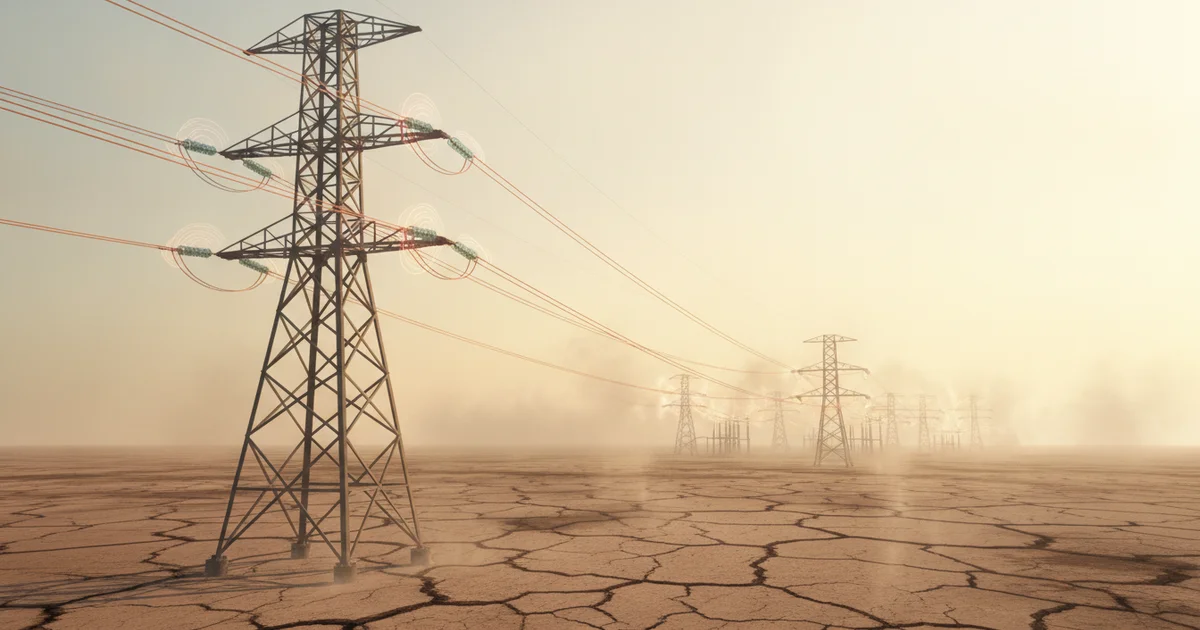
The Record Heat Hitting Europe Right Now
Europe is not experiencing a mild warm spell. On June 23, France recorded its hottest day since national temperature records began in 1947, with thermometers climbing past 44°C (111°F) in multiple locations. Overnight temperatures stayed abnormally high, giving people no relief and giving overheated infrastructure no chance to recover.
The timing exposes a brutal paradox at the heart of modern power systems. The same extreme temperatures that drive millions of households to switch on fans and air conditioners simultaneously are the temperatures that make electricity hardest to generate and deliver reliably. Demand for cooling spikes at the exact moment generation capacity starts to crack under thermal stress.
France is not alone. The heat wave is blanket-covering multiple European countries at once, meaning grid operators across the continent face surging electricity demand at the same time. There is no easy neighborly borrowing of surplus power when every country is running hot simultaneously. Cross-border electricity trading — a standard buffer against regional shortfalls — loses its effectiveness when the stress is systemic rather than localized.
The scale matters. A single country hitting record temperatures is a regional emergency. A continent-wide heat event stretching electricity grids from the Iberian Peninsula to Central Europe is a structural stress test that the system was not designed to handle at this intensity or frequency. Europe’s power grid operators are now managing peak summer load conditions while some of their largest generating assets — nuclear reactors, natural gas plants — are being throttled back or taken offline entirely because the heat itself is making them impossible to run at full capacity.
That feedback loop — heat drives demand up while simultaneously pushing supply down — is exactly what makes extreme heat events so dangerous for grid stability.
The Vicious Cycle: More Heat Means Less Power
When temperatures soar, millions of people simultaneously switch on air conditioners and fans. Electricity demand spikes. That is the half of the story most people know. The other half is darker: the same heat wave that drives demand through the roof is actively destroying the grid’s ability to meet it.
France made this brutally clear during a record-breaking heat event when temperatures exceeded 44°C (111°F) on June 23 — the hottest day the country had recorded since 1947. While residents cranked up cooling systems, nuclear reactors along major rivers began shutting down or ramping back output. The culprit was warm river water. Nuclear plants pull water from rivers to cool their reactors, and when that water gets too hot, the cooling process fails. Regulations also prohibit plants from discharging dangerously heated water back into ecosystems, so operators have no choice but to cut generation.
Nuclear power was not the only casualty. Natural gas power plants face the same physics problem: high ambient temperatures reduce the efficiency of gas turbines, cutting their output at precisely the moment grid operators need maximum capacity.
This is the vicious cycle. Heat increases electricity demand while simultaneously shrinking electricity supply. The gap between the two does not open gradually — it opens fast, during the same hours, on the same days. Grid operators are left managing a collapsing margin with almost no buffer.
Most people assume power plants operate as sealed, weather-independent machines. They do not. The entire thermal generation system — nuclear, gas, coal — depends on the environment around it. River temperatures, air temperatures, and cooling water availability are not peripheral concerns; they are operational constraints that can force reactors offline within hours.
As heat waves grow longer and more intense, this supply-demand collision will happen more frequently. The power grid’s worst enemy during an extreme heat emergency is not just the people running their air conditioners. It is the weather those same people are trying to escape.
Why Power Plants Shut Down in the Heat
France hit 44°C on June 23, 2019 — the hottest temperature recorded in the country since measurements began in 1947. While millions of people cranked up fans and air conditioning, the nuclear reactors meant to power those devices started going offline. The reason sits at the heart of how baseload power infrastructure was designed: plants need cold water to operate, and heatwaves make cold water scarce.
Nuclear and natural-gas power plants pull water from rivers and lakes to absorb the enormous heat their generation process produces. That water gets discharged back into the same waterways, warmer than it arrived. Regulators cap how hot that discharged water can be, because releasing superheated water kills aquatic ecosystems. When river temperatures rise during a prolonged heat event, plants hit those legal thresholds faster. At that point, operators face a binary choice — reduce output or shut down entirely. During the 2019 European heatwave, France curtailed multiple reactors for exactly this reason.
This is a design flaw, not a freak accident. The thermal power infrastructure across Europe and North America was engineered against 20th-century climate baselines — river temperatures that no longer reliably occur during summer months. Engineers built systems that assume the environment will do part of the cooling work. As average temperatures climb and extreme heat events grow longer and more frequent, that assumption collapses with increasing regularity.
The grid stress compounds fast. Electricity demand spikes because people need cooling. Simultaneously, the thermal power plants built to meet that peak demand lose generation capacity because the waterways they depend on are too warm. Grid operators cannot flip a switch to replace gigawatts of curtailed nuclear or gas output overnight. The structural vulnerability isn’t a bug that crept into one facility — it runs through the foundational logic of how power generation and water systems were integrated decades ago, long before climate projections made the current reality foreseeable.
What Most Coverage Is Missing: This Will Keep Getting Worse
Every heatwave that knocks out power in Europe gets reported as a crisis, then forgotten as an anomaly. That framing is wrong, and it is getting people killed.
Climate projections are unambiguous: extreme heat events that once occurred once per decade will strike multiple times per decade by mid-century. Europe’s power infrastructure was engineered for a temperate climate that no longer reliably exists. There is no fast fix for that mismatch. Upgrading transmission lines, reinforcing substations, and redesigning cooling systems for power generation facilities takes years and billions of euros — and the political will to fund it at scale has not materialized.
France is the clearest example of a hidden structural problem. The country generates roughly 70 percent of its electricity from nuclear power, a model widely praised for low carbon emissions. What that praise consistently omits is the climate vulnerability baked into nuclear generation: reactors depend on river water to cool their cores, and when ambient temperatures climb, river temperatures climb with them. On June 23, 2019, France recorded its hottest day since measurements began in 1947, with temperatures exceeding 44°C. River water warmed past regulatory thermal limits, forcing one reactor offline and throttling output at others — precisely when summer electricity demand was peaking. France was not an outlier. It was a preview.
The thermal discharge problem is not theoretical or distant. When a nuclear plant pumps heated cooling water back into a river that is already warm, it risks breaching environmental limits designed to protect aquatic ecosystems. Regulators then face a choice between ecological damage and reduced power output. Either way, grid capacity shrinks during a heatwave.
Mainstream energy reporting treats each summer blackout risk as a discrete emergency. The accurate story is a compounding one: aging infrastructure, rising baseline temperatures, surging air-conditioning load, and thermally stressed power plants are not separate issues converging by coincidence. They are a self-reinforcing cycle, and without a structural response, the grid will keep failing the moment people need it most.
Who Is Most at Risk When the Grid Strains
The people least able to protect themselves face the worst consequences when summer heat overwhelms the power grid. Elderly residents living alone in top-floor apartments become trapped in rooms that act as ovens once air conditioning fails. Low-income households that never had air conditioning in the first place rely on electric fans as their only defense — and those stop working the moment supply cuts out. When France recorded its hottest day since 1947 on June 23, 2019, with temperatures surpassing 44°C, the grid was already straining while nuclear reactors were being throttled back because river water used for cooling had grown too warm to use. That simultaneous collapse of supply and surge in demand left the most vulnerable with no buffer.
Medical dependency turns a power outage into a life-threatening event. Home oxygen concentrators, dialysis machines, insulin refrigeration, and powered ventilators all require uninterrupted electricity. For those patients, a rolling blackout during a heat emergency is not a temporary inconvenience — it is a countdown.
Hospitals and emergency rooms absorb the surge when heat-related illness spikes, but they depend on the same grid that is buckling under residential and industrial load. Backup generators buy time, but they are not infinite. Data centres managing hospital records, emergency dispatch systems, and financial infrastructure face the same exposure. A managed outage during peak thermal stress doesn’t just dim lights — it degrades the entire network of systems cities depend on to function.
Public health authorities classify extreme heat as the deadliest weather phenomenon in most developed countries, killing more people annually than hurricanes or floods. When grid instability compounds a heatwave, mortality risk concentrates sharply among the elderly, the chronically ill, and anyone without the financial means to escape rising indoor temperatures. The grid strain that forces utilities to implement controlled load shedding does not affect all neighborhoods equally — lower-income areas historically face longer and more frequent outages during high-demand periods, deepening an already stark vulnerability gap.
What Needs to Change — and How Far Behind We Are
Europe’s energy planners built grid resilience models around historical climate data — temperature ranges, river flow rates, cooling capacity assumptions — that no longer reflect reality. When France recorded its hottest day since 1947 on June 23, with temperatures exceeding 44°C, those models broke down in real time. Nuclear reactors on the Loire and Rhône rivers throttled output or shut down entirely because river water had grown too warm to safely cool reactor cores. The infrastructure wasn’t failing because of poor maintenance. It was failing because the climate assumptions baked into its design had expired.
The fix requires rebuilding those assumptions around a hotter baseline — planning for 45°C summers, not 35°C ones, and stress-testing grid capacity against drought conditions that reduce river flows and raise water temperatures simultaneously. That means stricter thermal discharge limits, closed-loop cooling retrofits for existing plants, and transmission infrastructure designed to reroute power across regions when local generation drops.
Faster renewable deployment addresses part of the problem structurally. Solar panels and wind turbines don’t depend on water cooling at all, and solar generation actually peaks during the high-pressure, clear-sky conditions that drive the worst heatwaves. A grid with deeper solar penetration produces more electricity precisely when demand from air conditioning surges. Germany and Spain have expanded solar capacity significantly, but Europe-wide renewable buildout remains too slow to close the vulnerability gap within the next decade.
The honest picture is that Europe sits in a dangerous middle ground. Legacy thermal plants — nuclear, gas, coal — still supply the majority of baseload power, yet those plants carry growing climate exposure every summer. The renewable transition has begun but will take years to reach the scale needed to compensate. In the meantime, each successive heatwave tests infrastructure that was never designed for the temperatures it now routinely faces. Without accelerated grid modernization and a hard shift in planning assumptions, the vicious cycle — more heat, more demand, less generation capacity — will repeat and intensify.