Why Prime Day Is Both the Best and Worst Time to Buy Headphones
Prime Day reliably delivers real audio discounts. Sony, Bose, Jabra, and Sennheiser all see meaningful price cuts during Amazon’s annual sales event, and deal trackers consistently confirm that some of the year’s lowest prices on noise-canceling headphones and wireless earbuds land during this window. That part is true.
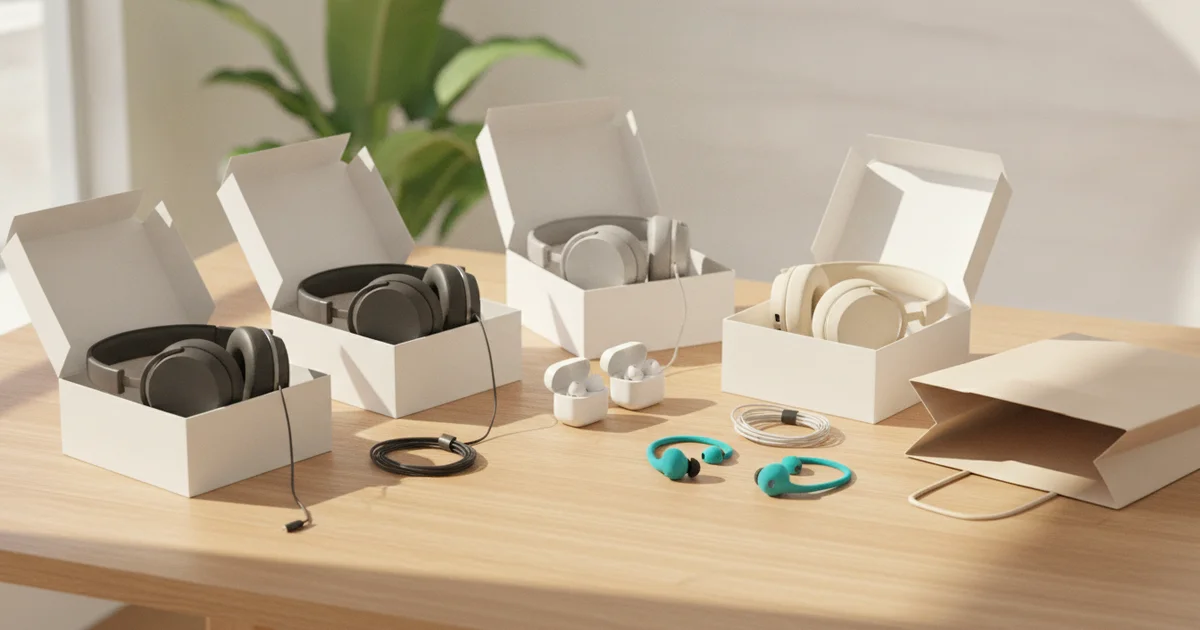
The problem is volume. Hundreds of headphone deals go live simultaneously, spanning over-ear cans, in-ear monitors, open-back studio headphones, sport earbuds, and bone-conduction clips. Shoppers who walked in needing compact gym earbuds walk out with a pair of plush over-ear headphones because the discount looked dramatic and the countdown timer was running. That is not a deal — that is a mismatch with a receipt attached.
Not every discount is genuine. Retailers have a documented history of inflating “original” list prices before sale events to manufacture the appearance of savings. A pair of wireless headphones listed at $249 and “marked down” to $129 may have sold at $129 for three consecutive months before Prime Day. Tools like CamelCamelCamel track Amazon price histories on specific ASINs, and a 30-second check separates real price drops from manufactured urgency.
The limited-time structure of Prime Day is intentional. Flash deals, lightning offers, and countdown clocks trigger decision fatigue — a documented cognitive pattern where repeated choices erode the quality of judgment. Amazon engineers the event to move product fast. Knowing that, the correct response is to build your shortlist before the event opens, set a firm budget, and define your use case in writing: commute, travel, gym, open-plan office, or home listening. Each scenario favors a different form factor and feature set.
Prime Day is a legitimate opportunity to buy the right headphones at a lower price. It is also a highly optimized system for selling you the wrong ones quickly.
Match the Headphone to the Moment: Use-Case First, Brand Second
Prime Day surfaces hundreds of headphone deals simultaneously, and the discount percentage becomes the loudest signal in the room. That’s exactly when buyers make the wrong call.
Start with where you actually use them, not what brand is trending.
Noise-canceling over-ear headphones — the Sony WH-1000XM series, the Bose QuietComfort Ultra, the Apple AirPods Max — are engineered for one environment: sustained, seated listening on planes, trains, and long commutes. Their ANC processors, large acoustic chambers, and 20-plus-hour battery life solve problems that travel and remote work create. They do not solve problems that a 45-minute gym session creates. Wearing a 250-gram over-ear headphone during a HIIT workout is a form mismatch, not a bargain.
Gym and workout listeners need a short checklist: secure fit, IPX4 or higher water resistance rating, and a stable wireless connection during movement. Audio fidelity ranks last. Earbuds like the JLab Sport+ and the Soundcore AeroClip — both flagged during Prime Day 2026 — exist specifically for this use case. They stay in place, handle sweat, and cost a fraction of premium ANC models. A $30 sport earbud that survives a five-mile run outperforms a $350 Sony during that same run every time.
Commuters and remote workers get the clearest return on investment from strong active noise cancellation and long battery life. In 2026, mid-range wireless headphones have closed the performance gap on flagship models to the point where paying a luxury-brand premium requires an honest justification. The core ANC and battery specs that once separated a $350 Sony from a $150 competitor are now much tighter. Brand name still carries weight in industrial design and app ecosystem, but not in the fundamental functionality most commuters actually need.
The buying framework is simple: identify the primary environment, match the form factor to that environment, then compare options within the appropriate category. Chasing a 40-percent-off badge on the wrong type of headphone is still a bad purchase — just a cheaper bad purchase.
The ‘Expert-Tested’ Claim: What It Actually Means for Your Purchase Decision
Seeing “expert-tested” on a Prime Day headphone deal list carries real weight — but only if you read past the badge. Curated roundups that restrict recommendations to hands-on reviewed products do eliminate a massive chunk of noise. When a publication confirms its editors physically wore the Sony WH-1000XM5 or the Bose QuietComfort 45 before recommending them, you’re at least not buying blind on spec sheets alone.
The catch is testing context. Most audio reviewers evaluate headphones in controlled, relatively quiet office or lab settings. That environment has nothing in common with a sweaty 45-minute gym session, a subway platform running at 90 decibels, or a six-hour flight with cabin pressure fluctuations. A pair of noise-canceling headphones that impresses in a silent room may deliver mediocre ANC performance against the specific frequency profile of a city bus. A reviewer who commutes by car will never stress-test wind noise the way a cyclist needs to.
“Expert-tested” also doesn’t mean “tested for your use case.” A roundup framed around summer vacation listening prioritizes noise cancellation and comfort over long haul flights — not stability during a sprint interval or sweat resistance during a HIIT class. The gym-focused earbuds section of the same list may have received 30 minutes of wear on a treadmill, not two hours of CrossFit. Neither test is dishonest; both are incomplete for different buyers.
The filter that makes expert endorsements genuinely useful is disclosed methodology. Look for reviews that specify how long the tester wore the headphones, in what environments, and against which competing models. A roundup that states a reviewer used the Jabra Evolve2 55 across three weeks of video calls tells you something actionable. A roundup that simply lists a product as “staff pick” tells you almost nothing.
Before treating any “best headphones” list as your buying guide during Prime Day, match the reviewer’s stated testing conditions to your actual daily environment. The expert endorsement narrows the field — your use case makes the final call.
The Deals Worth Your Attention in 2026: Tiers That Actually Make Sense
Prime Day 2026 splits the headphone market into three distinct tiers, and knowing which one matches your actual habits saves you from a purchase you’ll regret by August.
Under $50: Options like JLab Sport+ earbuds land in this range during Prime Day, and they deliver exactly what budget listeners need — basic wireless audio, acceptable passive isolation, and enough durability for light gym sessions or occasional podcast listening. What they don’t deliver is reliable active noise cancellation. The ANC circuits in sub-$50 headphones reduce ambient noise by a modest amount at best. For someone who commutes daily on a subway or open-plan office environment, that gap becomes a daily frustration. Buy here if you lose earbuds regularly or want a backup pair.
$50–$150: This is where Prime Day headphone deals generate the most genuine value in 2026. Noise-canceling earbuds from brands like Soundcore have matured significantly in this price band. The ANC performance, call quality, and battery life you get at $100 today would have cost $200 three years ago. If you commute, travel several times a year, or work in noisy environments, a discounted mid-range pair of wireless noise-canceling earbuds in this tier is a smart buy — not a compromise.
$150 and above: Premium over-ear headphones like Sony’s WH-1000XM series or Bose QuietComfort Ultra regularly see Prime Day discounts of $50–$100 off retail. Those discounts are real and worth acting on — but only if sound quality is your primary reason for buying. Audiophiles who want expansive soundstage, rich low-end response, and high-resolution audio codec support get strong value here. Casual listeners who mostly want hands-free calls and convenient Bluetooth connectivity do not need to spend in this tier, regardless of how compelling the markdown looks. The premium audio performance in luxury over-ear headphones is only meaningful if you’ll actually listen critically and consistently enough to notice it.
Match the tier to your use case first. Then check the price.
What Most Prime Day Coverage Gets Wrong
Prime Day headphone coverage follows a predictable formula: sort by discount percentage, add a brief hands-on blurb, publish before competitors. The result is roundups that treat a 40% price cut as evidence of value rather than a starting point for evaluation. A mediocre pair of wireless earbuds discounted from $120 to $72 is still a mediocre pair of wireless earbuds. The discount does not upgrade the drivers, improve the noise-canceling algorithm, or fix a muddy midrange.
The ecosystem angle gets almost no coverage, and it should. Buying Sony’s WH-1000XM series locks you into the Sony Headphones Connect app for EQ customization, speak-to-chat settings, and firmware updates. Apple’s AirPods Pro deliver their best spatial audio and Adaptive Transparency performance exclusively within the Apple ecosystem — Android users get a stripped-down experience. Bose’s CustomTune calibration and immersive audio modes live inside the Bose Music app. None of that matters when you are scanning a deal page at 2 a.m., but it matters enormously when you switch from an iPhone to a Pixel two years later and discover that half the features you paid for no longer function properly.
Longevity is the conversation Prime Day coverage skips entirely. Most deal roundups do not tell you whether replacement ear cushions are available for purchase, whether a manufacturer offers a repair program, or how long a product realistically receives firmware support. Jabra discontinued its consumer headphone line in 2023, leaving owners of the Evolve and Elite series uncertain about future updates. Repairability scores, warranty length, and the availability of spare parts are purchasing factors that outlast any sale price — and they never appear in a deals roundup ranked by how much money you save at checkout.
Shopping for over-ear headphones or true wireless earbuds during a Prime Day sale requires a different checklist than the one most coverage provides. The right question is not “what is the biggest discount?” It is “will this product still serve my specific listening habits and device setup in three years?”
How to Shop Prime Day Headphone Deals Without Getting Burned
Prime Day headphone deals move fast, and that speed is exactly what gets shoppers into trouble. Before Amazon flips the switch on its annual sales bonanza, write down the one job your next pair of headphones needs to do — block engine noise on a transatlantic flight, survive a sweaty HIIT session, or fill a home listening room with clean audio. That single criterion becomes your veto. A 50% discount on studio-style over-ears means nothing if you need waterproof wireless earbuds for the gym.
Price-tracking tools remove the guesswork entirely. CamelCamelCamel and Honey log historical pricing on Amazon products and show you exactly what a pair sold for over the past 90 days. Run both tools on your target headphones two to three weeks before Prime Day. If the Sony WH-1000XM5 normally sits at $279 and Prime Day drops it to $229, that’s a real deal. If the “sale” price is $299 on a product that spent most of the spring at $289, you’re paying a premium with a discount sticker on it.
Sold-out alerts trigger panic, and panic kills budgets. Resist the urge to grab a different model just because your first choice disappeared. Amazon’s sales event now forces Best Buy, Walmart, and Target to respond fast — rival retailers typically match or beat Prime Day audio deals within 24 to 48 hours. The same noise-canceling headphones, the same wireless earbuds, the same price or lower, without the countdown timer manufacturing urgency.
The curated deal roundups published by audio-focused outlets do useful triage work — their experts test headphones before recommending them, so a listed deal carries more weight than a random algorithm-surfaced markdown. Cross-reference those lists against your pre-set use-case criteria and your price-history data. Two filters. Every pair that doesn’t clear both gets ignored, regardless of the discount percentage. That discipline is the only strategy that reliably turns Prime Day from an impulse-buying event into a genuinely smart place to buy headphones.