What Residential Proxies Actually Are (And Why They’re Different From VPNs)
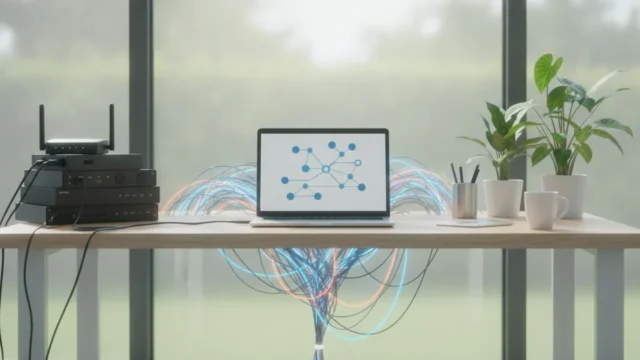
Residential proxies are not VPNs, and the distinction carries serious consequences for internet security. A VPN masks your IP address by routing your traffic through a server operated by a commercial provider — that server sits in a datacenter, and its IP address is registered to that datacenter. A residential proxy routes traffic through a real consumer device at a real home address, borrowing the IP address assigned to that household by its internet service provider.
That difference is everything. Security teams spent the better part of a decade building defenses calibrated to flag datacenter IP ranges. Automated traffic, credential stuffing attacks, and large-scale scraping operations coming from AWS, Google Cloud, or known hosting providers trigger alerts and get blocked. The industry essentially trained its threat detection systems to treat datacenter IPs as suspicious by default. Residential IP addresses never got that treatment, because historically, traffic from a home ISP address meant a real person.
Residential proxy networks exploit that inherited trust directly. When an attacker routes a credential stuffing campaign through a pool of residential IPs, each request to the target website looks identical to a request from a regular subscriber in Cincinnati or Manchester. The fraud detection systems see genuine ISP-assigned addresses with normal usage histories attached to them. The attack passes through defenses that would have stopped the same traffic originating from a datacenter.
The “residential” label is the mechanism of deception, not a technical footnote. These networks function as IP reputation laundries: malicious intent enters one end, and clean residential trust exits the other.
Most coverage of proxy abuse conflates residential proxies with datacenter proxies and VPN abuse under a generic “proxy problem” umbrella. That framing obscures the specific threat. Datacenter proxy abuse is a solved problem at scale — major platforms block those ranges automatically. Residential proxy abuse is not solved, because solving it requires treating ordinary home users as potential attack vectors, which carries its own significant costs for legitimate traffic and user experience.
Ivan Ristić, writing in Feisty Duck’s Cryptography and Security Newsletter, identified residential proxies as a phenomenon requiring urgent attention from security professionals — one that remains niche in mainstream discussion despite its direct impact on web authentication, anti-fraud systems, and access control infrastructure across the internet.
How Ordinary Devices Get Conscripted Into These Networks
Residential proxy networks don’t recruit devices through dramatic hacks. They recruit them through Tuesday afternoon software installs.
The primary delivery mechanism is legitimate-looking consumer software: free VPN apps, browser extensions, and bundled utilities that bury proxy participation clauses in terms-of-service agreements nobody reads. A user downloads a free VPN to watch geo-blocked content, clicks through the installation prompts, and unknowingly licenses their home IP address to a proxy network’s paying customers. The device isn’t compromised in any traditional sense — the enrollment is technically consensual, covered by a legal agreement written specifically to obscure what’s actually being sold.
This supply-chain approach separates residential proxy networks from conventional botnets. There’s no malware signature to detect, no exploit to patch. The software functions exactly as advertised. It just also routes strangers’ traffic through your internet connection while you sleep.
The scale this creates is staggering. Residential proxy providers routinely advertise pools of 30 to 100 million IP addresses spanning virtually every country on earth. Networks like Bright Data, Oxylabs, and Smartproxy have built commercial empires on top of this model, selling bandwidth by the gigabyte to customers who range from legitimate market researchers to credential-stuffing operations.
The explosion of IoT devices has made the recruitment pool nearly limitless. Smart TVs, home routers, connected cameras, and always-on streaming sticks maintain persistent internet connections with essentially no security monitoring. Five years ago, enrolling enough residential endpoints to build a credible proxy network required substantial infrastructure. Today, a single firmware agreement covering a budget Android TV box can conscript millions of devices simultaneously.
The result is a shadow internet layer built on endpoints that their owners don’t know are working. Every time a residential IP address routes proxy traffic, the integrity signal attached to that address — the “this looks like a real human household” signal that websites use to make trust decisions — gets quietly borrowed and sold. The device owner bears the bandwidth cost and any reputational consequence. The proxy operator collects the revenue.
The Business Model Hiding in Plain Sight
Residential proxy networks don’t operate in the shadows. Companies like Bright Data, Oxylabs, and Smartproxy advertise their services openly on LinkedIn, sponsor industry conferences, and publish case studies featuring recognizable brand logos. Their sales pages list price comparison, ad verification, brand protection, and market research as primary use cases — all activities that Fortune 500 legal teams can sign off on without breaking a sweat.
That commercial legitimacy is the architecture of the problem, not a coincidence sitting beside it.
When a retailer pays for rotating residential IP addresses to monitor competitor pricing, that subscription revenue funds the same peer-to-peer proxy infrastructure a credential-stuffing operation rents by the gigabyte two hours later. The commercial providers don’t — and largely can’t — distinguish between the two customers at the network layer. Both receive authentic residential IP addresses sourced from real consumer devices. Both bypass the IP-reputation filters that security teams depend on. The use case diverges; the traffic looks identical.
This dual-use economy has produced a revenue base large enough to sustain industrial-scale abuse. The residential proxy market was valued at over $4 billion in 2024 and is projected to grow at a double-digit annual rate through the decade. That capital funds expanded node networks, faster connection speeds, and — critically — more sophisticated evasion of bot detection systems. Every legitimate enterprise scraping job cross-subsidizes the attack surface it creates.
Prosecution stays difficult precisely because of this structure. Providers operate across multiple jurisdictions, maintain terms of service prohibiting illegal activity, and point to enterprise customer lists when regulators come asking. The legal cover is genuine, not fabricated. Ad verification is a real industry need. Price intelligence is a real competitive function. The same infrastructure that serves those needs routes account takeover attempts through a grandmother’s broadband connection in Ohio, and no law currently written makes that straightforwardly criminal for the provider.
What most security reporting frames as a spam or fraud problem is actually a market structure problem. The commercial legitimacy of rotating residential proxies doesn’t exist despite the abuse — it funds it.
Why Traditional Security Defenses Are Structurally Blind to This Threat
IP reputation systems work by flagging addresses associated with data centers, known botnets, and previously abusive behavior. Residential proxy networks shatter this model at the foundation. When a credential-stuffing campaign or scraping operation routes its traffic through tens of thousands of genuine consumer IP addresses registered to ISPs like Comcast, BT, or Telstra, those addresses carry no negative history. They belong to real households. Every reputation database in existence treats them as clean, trustworthy sources of traffic — because, technically, they are.
Rate-limiting fails by the same logic. A defender who caps requests per IP to 10 per minute provides zero friction to an operator running traffic across 50,000 rotating residential nodes. The per-IP volume stays invisible. Geo-blocking is equally useless when residential proxy providers specifically market regional IP pools — selling access to addresses physically located in the United States, Germany, or Japan, matched to whatever target market an attacker needs to impersonate.
The security industry has spent enormous resources on TLS analysis and encrypted traffic inspection, treating protocol-layer signals as a way to distinguish bots from browsers. Residential proxies operate below that layer entirely. The traffic arrives over legitimate connections, from legitimate IP ranges, often through legitimate browsers or browser-emulating tooling. There is no malformed handshake, no suspicious cipher suite, no datacenter ASN to catch. The encrypted traffic looks identical to a real user session because the routing infrastructure behind it is real.
What defenders are left with are behavioral signals — session timing, interaction patterns, mouse movement entropy, device fingerprint consistency — and these require significant investment in device intelligence and real-time analytics to operationalize. Most organizations running standard web application firewalls or CDN-level bot protection are not equipped to detect threats at this layer. Their tools were built to filter noise from known-bad sources. Residential proxy abuse generates noise from known-good sources, and that distinction exposes a structural gap in how internet trust has been architected for the past two decades.
The Broader Stakes: What This Means for Internet Trust
The internet was built on a foundational assumption: that an IP address tells you something meaningful about who is connecting. Residential proxy networks have turned that assumption into a liability. When a credential-stuffing attack arrives from a Comcast or BT residential address, every layer of fraud detection built on IP reputation, geolocation, and behavioral heuristics fails simultaneously. The signal that defenders have relied on for three decades is gone.
The damage extends well past e-commerce fraud and account takeovers. Election integrity researchers have documented coordinated influence operations that use rotating residential IP pools to make synthetic social media activity appear geographically authentic. Platform manipulation campaigns — fake reviews, astroturfed political sentiment, artificially amplified content — depend on the same infrastructure that scraping services sell openly by the gigabyte. Residential proxy abuse is not a spam problem with a technical fix; it is a structural attack on the mechanisms platforms use to distinguish real human behavior from automated manipulation.
AI-driven automation makes the timeline urgent. Large language models now generate convincing form submissions, bypass CAPTCHA challenges, and simulate natural browsing sessions at a cost that was unthinkable in 2020. Paired with a residential proxy network spanning millions of exit nodes, a single operator can execute attacks at a volume and authenticity that overwhelms conventional bot-detection systems. The window for effective countermeasures is closing as the cost of high-fidelity automation continues to drop.
Regulators have not caught up. The legal frameworks governing ISPs were written to address wiretapping and unauthorized access, not the commercial sale of bandwidth harvested from unwitting device owners through buried software consent flows. The Computer Fraud and Abuse Act, the EU’s ePrivacy Directive, and equivalent national statutes were not drafted with the proxy economy in mind. No major regulator has yet brought a significant enforcement action targeting a residential proxy provider specifically for operating a distributed traffic-laundering network.
That gap matters. Until legislators treat the unauthorized monetization of residential IP addresses as a distinct legal harm — separate from the downstream fraud it enables — the infrastructure will keep expanding, and the internet’s ability to make any meaningful inference from connection metadata will continue to erode.
What Could Actually Help — And What Won’t
Three categories of fixes get discussed whenever residential proxy networks come up: technical infrastructure reforms, consumer awareness campaigns, and regulatory or commercial pressure on proxy providers. Only one of them has real near-term teeth.
Device-level attestation — cryptographic systems that verify whether traffic originates from a legitimate human-operated device — could fundamentally change the equation. Network-level transparency initiatives, where ISPs flag or disclose proxy traffic patterns, point in a similar direction. Both approaches would make it structurally harder for residential IP proxy networks to launder bot traffic as human browsing. The obstacle is coordination. Browser vendors, ISPs, device manufacturers, and platform operators would all need to align on shared standards. That kind of industry-wide agreement has failed repeatedly across two decades of internet governance attempts. Don’t hold your breath.
Consumer education faces a different problem. The consent flows that proxy recruiters use — buried SDK disclosures inside free VPN apps, rewards programs, game clients — are engineered specifically to prevent informed decision-making. Users who technically agreed to share their bandwidth almost never understood they were enlisting their home IP address into a commercial proxy pool available to anonymous paying customers. Telling people to “read the terms” ignores that the terms are deliberately unreadable. Better awareness helps at the margins; it doesn’t dismantle a system designed to exploit inattention.
The most actionable pressure point is the commercial residential proxy industry itself. Companies like Bright Data, Oxylabs, and Smartproxy operate openly, maintain marketing sites, publish pricing, and accept credit cards. Their legitimacy provides cover for the entire ecosystem — criminal actors access the same residential IP proxy infrastructure under the same business terms. Payment processors, cloud infrastructure providers, and app stores all have existing policies against facilitating traffic fraud and unauthorized device access. Applying those policies consistently to proxy providers whose networks demonstrably include unknowing participants would be immediately disruptive. It wouldn’t eliminate peer-to-peer residential proxy networks, but removing the commercial layer strips away the infrastructure that makes large-scale anonymous traffic routing cheap, easy, and deniable.