Cybersecurity

Is Local TTS Safe? How CPU Speech Keeps Your Data Private

The Privacy Problem Cloud TTS Has Always Had When you convert text to speech using Google Cloud Text-to-Speech, Amazon Polly, or ElevenLabs, your text travels across the internet to a remote server, gets processed by hardware you don’t control, and returns as audio. That transmission creates a data exposure window that exists regardless of how ... Read more

Is Local TTS Safe? How CPU Speech Keeps Your Data Private
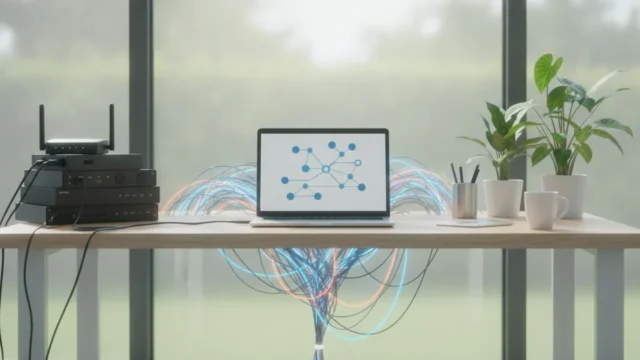
Illustration · Newzlet

The Privacy Problem Cloud TTS Has Always Had

When you convert text to speech using Google Cloud Text-to-Speech, Amazon Polly, or ElevenLabs, your text travels across the internet to a remote server, gets processed by hardware you don’t control, and returns as audio. That transmission creates a data exposure window that exists regardless of how reputable the provider is. The text you submitted left your machine. Full stop.

For most casual users converting recipe instructions or podcast scripts, that risk feels abstract. For journalists protecting source communications, lawyers handling privileged client documents, or healthcare workers processing patient notes, it is a concrete compliance problem. HIPAA restricts how protected health information travels and where it gets processed. Attorney-client privilege depends on maintaining confidentiality over communications. A cloud TTS request containing a patient’s diagnosis or a confidential legal memo is not a hypothetical liability — it is a direct violation waiting to happen.

The attack surface cloud TTS creates is not limited to the provider itself. Every network hop between your device and the remote server is a potential interception point. Providers store logs. APIs get breached. Terms of service change. Any organization that audits its data handling practices and then routes sensitive documents through a third-party speech synthesis API has a gap in its security posture it may not have fully examined.

Local text-to-speech inference eliminates this entirely. When speech synthesis runs on your own CPU — processing text into audio without any network request — the data never leaves the machine. There is no transmission to intercept, no server log to subpoena, no third-party storage to breach. The audio file and the text that generated it remain under your physical and administrative control from start to finish.

This is the privacy case for local TTS that cloud-focused AI coverage consistently skips past. The conversation tends to center on voice quality and latency. Privacy, specifically the structural data exposure built into any cloud-based speech API, rarely gets the direct treatment it deserves.

What Kokoro Actually Is — and Why the ‘No GPU Required’ Part Is the Real Story

Kokoro is a text-to-speech model with 82 million parameters that generates realistic, natural-sounding speech across multiple languages — including English, Mandarin, and Hindi — with roughly 50 distinct voices, most of them optimized for English. Those numbers matter because they tell you what the model isn’t: a bloated, resource-hungry system that demands specialized hardware to function.

The AI audio space has a GPU dependency problem that almost nobody talks about. High-quality speech synthesis tools are routinely built around the assumption that users own discrete graphics cards with significant VRAM headroom. That assumption quietly locks out the vast majority of personal computing setups. Consumer GPU ownership is already a minority position; owning hardware capable of running demanding neural audio inference is a smaller minority still.

Kokoro breaks that assumption at the foundation level. The benchmark machine used to demonstrate Kokoro’s capabilities runs a GTX 1080 Ti — a capable GPU by older standards — but that card is fully committed to local LLM inference. Kokoro receives no GPU resources at all. Every second of speech it produces runs entirely on CPU. The audio output isn’t degraded, throttled, or noticeably slower because of that constraint. The CPU-only speech generation simply works.

That’s the real story. Local TTS without a GPU isn’t a compromise mode or a fallback — it’s the default operating condition for Kokoro, and the quality holds up under it. Just a few years ago, realistic offline speech synthesis at this level required either cloud infrastructure or serious local hardware investment. A privacy-respecting, on-device voice generation tool that runs on a standard processor — no cloud calls, no data leaving the machine, no subscription — represents a genuine shift in what local AI audio can deliver to ordinary hardware.

For anyone running a home server, a modest workstation, or a machine where GPU cycles are already spoken for, Kokoro’s CPU-native performance isn’t a footnote. It’s the entire value proposition.

The Broader Shift: Local AI Is No Longer a Hobbyist Compromise

Three years ago, running realistic speech synthesis on a personal machine meant either tolerating robotic output or owning server-grade hardware. That constraint is gone. Models like Kokoro — a text-to-speech system with just 82 million parameters — now generate natural, expressive audio entirely on consumer CPUs, with no GPU required and no internet connection involved. The assumption that local voice synthesis was a hobbyist compromise, full of artifacts and latency, no longer holds.

The quality gap that once justified routing sensitive audio through cloud APIs has closed. Kokoro produces speech across multiple languages, including English, Mandarin, and Hindi, with approximately 50 available voices, and does so on the same class of machine most professionals already own. When offline speech generation reaches this level, the privacy calculus changes completely. There is no longer a performance trade-off to weigh against the risk of transmitting voice data to third-party servers — the local option simply works.

This shift mirrors what has already happened with large language models. Local LLM deployment, once limited to researchers with high-end workstations, now runs on mid-range consumer hardware. Kokoro fits directly into that pattern: capable AI moving off the cloud and onto personal devices, where users retain full control over their data. On machines running both local LLMs and CPU-based TTS simultaneously, the GPU handles language model inference while the processor manages speech synthesis independently — two powerful AI functions running in parallel, entirely offline.

The broader implication is structural. Cloud dependency in AI was never purely a technical necessity — it was partly a lag between model capability and hardware efficiency. As that gap closes for both language models and on-device speech synthesis, the default assumption that AI requires a cloud connection becomes harder to defend. Private, local AI audio generation is not an edge case anymore. It is becoming the rational default for anyone who treats data privacy as a genuine requirement rather than a preference.

Who Benefits Most — and What Use Cases Open Up

Three groups stand to gain the most from CPU-based local text-to-speech, and the advantages for each are immediate and measurable.

Writers and researchers producing long-form content can now generate audiobook narration, podcast voiceovers, and accessible reading aids without paying per-character API fees or handing manuscript drafts to a cloud provider. Models like Kokoro — a compact 82-million-parameter neural TTS engine — run entirely on commodity hardware using only CPU resources, delivering roughly 50 distinct voice options across English, Mandarin, and Hindi. An author narrating a 100,000-word novel keeps every sentence on their own machine.

Enterprises in regulated industries face a harder version of the same problem. Legal firms handling privileged client communications, medical practices processing patient records, and financial institutions managing nonpublic transaction data all operate under compliance frameworks — HIPAA, attorney-client privilege, SEC data-handling rules — that create friction when routing sensitive text through third-party cloud speech APIs. Local speech synthesis running on-premises eliminates the need to renegotiate data-processing agreements or obtain new vendor certifications. The audio generation pipeline never touches an external server.

Developers building offline-first applications have historically treated high-quality speech synthesis as a cloud dependency they couldn’t avoid. That constraint is gone. Edge devices, air-gapped enterprise tools, assistive technology for low-connectivity environments, and embedded accessibility features in desktop software can all integrate on-device voice synthesis without requiring an internet connection at runtime. Because models like Kokoro run on CPU alone, GPU resources remain available for other inference tasks — a practical architectural advantage when building systems that combine local large language model inference with real-time speech output.

The unifying factor across all three groups is control. Local TTS execution means no usage logs, no vendor data retention policies, no per-request latency dependent on network conditions, and no subscription costs that scale with volume. The privacy benefit isn’t incidental — for these users, it’s the primary reason to adopt offline speech generation over cloud alternatives.

What Most Coverage Is Missing: The Hardware Accessibility Angle

Tech media has a GPU bias problem. Benchmarks, demos, and breathless coverage of AI audio tools almost universally assume the reader owns an NVIDIA RTX card or has access to cloud compute. That framing excludes the majority of actual computer users — people running mid-range laptops, older workstations, or institutional machines locked down by IT policy. The audience most likely to benefit from private, offline speech synthesis is precisely the audience that AI coverage ignores.

Kokoro exposes how narrow that coverage has been. The model runs on CPU alone, producing high-quality synthesized speech with 82 million parameters — a fraction of the weight of models that demand dedicated graphics hardware. A machine without any discrete GPU can generate realistic-sounding audio across English, Mandarin, Hindi, and other languages, choosing from roughly 50 available voices. That is not a compromise build. That is the full product.

The accessibility implications are significant and underreported. In lower-income households, developing regions, and educational or government institutions, GPU hardware is either unavailable or prohibited. Cloud-based text-to-speech services exist for these users, but they carry subscription costs, require internet connectivity, and route voice data through external servers. Kokoro eliminates all three constraints simultaneously — no payment, no connection, no data leaving the device.

That specific combination — zero cost, zero cloud dependency, zero GPU requirement — does not exist elsewhere in the text-to-speech landscape at this quality level. Offline TTS engines like eSpeak have run on modest hardware for years, but their robotic output made them impractical for anything beyond basic accessibility functions. Neural TTS models capable of natural-sounding prosody have historically demanded GPU acceleration or paid API access. Kokoro occupies a position that was, until recently, technically impossible.

Local speech generation on consumer CPUs is not a niche workaround. It is a meaningful shift in who gets access to privacy-preserving AI audio tools — and most coverage of the TTS space has not caught up to that reality.

How to Think About Local TTS Going Forward

The direction local text-to-speech is heading is not ambiguous. Model efficiency is improving faster than consumer hardware requirements are growing, which means the gap between “runs on a server farm” and “runs on your laptop” keeps narrowing. Kokoro demonstrated this concretely: an 82-million-parameter model producing high-quality speech synthesis across English, Mandarin, and Hindi, running on CPU alone while a dedicated GPU handles a separate LLM workload simultaneously. That is not a lab result. That is a reproducible setup on a single consumer machine.

Kokoro is not a hobbyist experiment to be filed under “interesting but impractical.” It is an early marker of where both enterprise speech generation and consumer voice AI are heading — toward on-device inference, zero cloud dependency, and freedom from per-character API pricing. Organizations handling sensitive audio — legal transcription, medical documentation, financial communications — have immediate, concrete reasons to run private TTS locally rather than route voice data through a third-party endpoint. The technology now supports that choice without a meaningful quality penalty.

The open questions are specific. Voice variety beyond the current roughly 50 options remains limited for non-English use cases. Language coverage, while expanding, still underserves many regional and low-resource languages. Fine-tuning flexibility — the ability to adapt a base TTS model to a custom voice or domain-specific pronunciation — is an area where open-source development is accelerating but has not yet matched what commercial speech synthesis APIs offer out of the box.

Those gaps are closing through the same open-source momentum that produced Kokoro in the first place. Local speech generation, offline text-to-speech, and private voice synthesis are no longer theoretical alternatives to cloud services. They are functional, deployable, and improving on a timeline that commercial TTS vendors should treat as a direct competitive signal rather than background noise.

AI-Assisted Content — This article was produced with AI assistance. Sources are cited below. Factual claims are verified automatically; uncertain claims are flagged for human review. Found an error? Contact us or read our AI Disclosure.

More in Cybersecurity

See all →