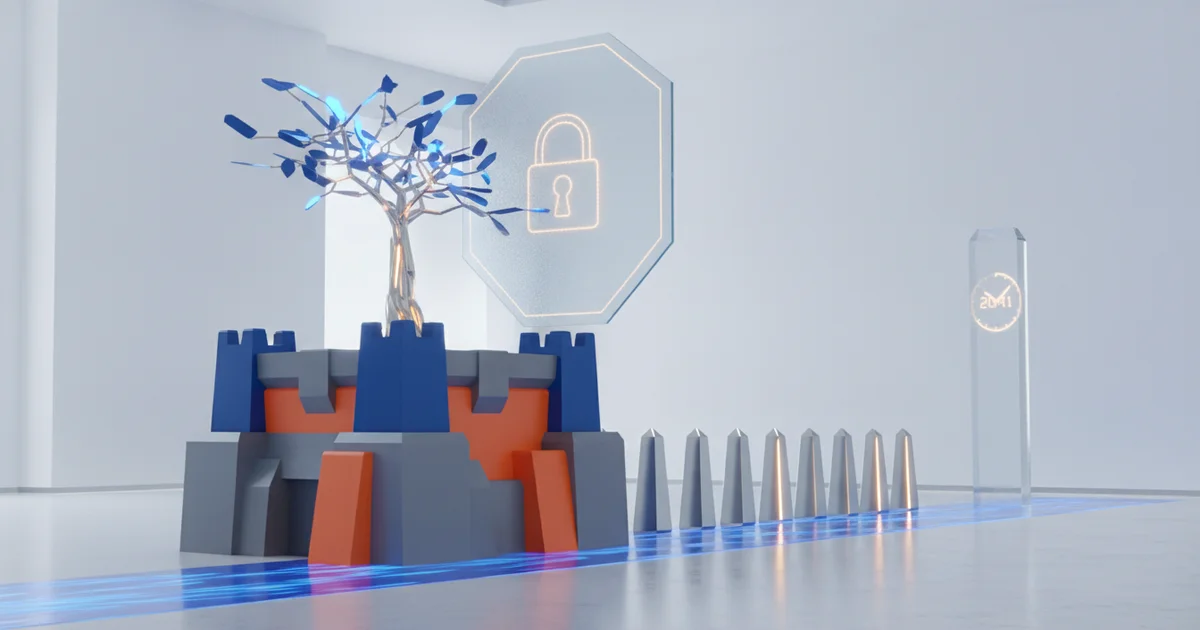
The 2041 Guarantee: What a 15-Year Support Window Actually Means
Canonical’s support commitment for Ubuntu Core 26 runs through 2041 — fifteen years from release. That date isn’t a marketing estimate. It’s a contractual obligation tied to Canonical’s Long-Term Support program, the same framework that has kept Ubuntu 16.04 and 18.04 receiving security patches years after their mainstream end-of-life dates through Extended Security Maintenance.
The number gets repeated in every headline, but the operational consequence is what matters. A typical enterprise Linux distribution ships with a five-year support window. For a server refresh cycle, that’s manageable. For an IoT deployment — a fleet of medical monitors, industrial sensors, or smart meters installed across a facility and expected to run untouched for a decade — five years creates a hard deadline problem. Operators must either re-platform the hardware, re-certify the software stack under applicable safety or compliance standards, or run unsupported systems and accept the security liability. Each option is expensive. Re-certification alone can cost manufacturers six figures and months of engineering time for regulated industries.
A 2041 end-of-support date eliminates that forced choice for devices deployed today. A manufacturer shipping a product in 2025 can reasonably align a full hardware lifecycle to the support window without a mid-deployment software crisis.
What “support” actually covers deserves scrutiny. Canonical’s LTS commitment includes security patches for the kernel, base OS packages, and the snap infrastructure Ubuntu Core depends on. It does not guarantee application-layer updates, hardware driver support for new silicon, or compatibility with third-party software stacks that may evolve independently. Operators building on Ubuntu Core still own those dependencies.
Canonical’s track record on LTS commitments is real. Ubuntu 14.04 reached end-of-standard-support in 2019 and continued receiving patches through Extended Security Maintenance into 2024. That precedent gives the 2041 date credibility that a comparable promise from a newer or smaller vendor would lack. The question for device manufacturers isn’t whether 15 years sounds impressive — it’s whether the specific vulnerabilities their devices face will fall within the scope of what Canonical has actually committed to patch.
Immutability Isn’t Just a Buzzword — It’s a Security Architecture Choice
Ubuntu Core 26 builds its entire security model around a single architectural decision: the core operating system files cannot be modified while the system is running. No process, no user, no attacker who gains a foothold can write to the base system partition. Persistent malware — the kind that survives reboots by embedding itself in system directories — loses its primary vector entirely.
This isn’t a novel concept. ChromeOS has used a read-only root partition since its launch, and container runtimes like Docker treat image layers as immutable by design. What Canonical has done with Ubuntu Core 26 is apply that same logic to a general-purpose Linux distribution running on edge hardware and IoT devices — categories where the security baseline has historically been embarrassingly low.
The practical attack surface reduction is real. When system binaries can’t be overwritten, a compromised application stays contained to its own snap package. The blast radius shrinks. Forensic analysis becomes simpler because any deviation from the known-good system state is immediately detectable.
But immutability carries a trade-off that most coverage ignores entirely: it transfers security responsibility from the device operator to the vendor. On a traditional mutable Linux system, a competent operator can patch a zero-day within hours by replacing a single binary. On an immutable system, that operator waits for Canonical to issue an updated snap or OS image. For enterprises with dedicated security teams, that dependency is a constraint. For the overwhelmingly larger population of IoT deployments — industrial sensors, medical monitors, retail kiosks — where nobody is actively managing the device at all, that same dependency is a feature. The vendor becomes the de facto security team by default.
This distinction matters enormously as regulators in the EU finalize requirements under the Cyber Resilience Act, which mandates ongoing security support for connected products throughout their commercial lifetime. An immutable OS with a defined 15-year support window from a single accountable vendor maps cleanly onto that regulatory model. A mutable system administered inconsistently by thousands of individual operators does not.
The EU Angle: Regulation Is Driving This Release More Than Technology Is
Canonical didn’t bury the EU angle in a footnote. The company explicitly positions Ubuntu Core 26 as a strong fit for IoT and edge devices operating in the European Union — and that framing is deliberate. The EU Cyber Resilience Act is coming into force, and it changes the compliance math for every manufacturer selling connected devices in Europe.
The CRA mandates that manufacturers provide security updates for the expected lifetime of a product. For industrial sensors, smart meters, medical monitors, and edge computing hardware, that lifetime routinely stretches a decade or more. A Linux distribution with a 15-year support window — carrying Ubuntu Core 26 through to 2041 — stops being a technical convenience and becomes a compliance instrument. Procurement teams and legal departments will read that 2041 date differently than engineers do.
Most coverage of Ubuntu Core 26 focuses on immutability, snap packaging, and kernel lockdown features. Those matter. But they miss the strategic logic underneath the release. Canonical is selling regulatory certainty as much as it is selling software. A manufacturer shipping a connected device into the EU market today needs to demonstrate ongoing patch coverage for the product’s entire commercial life. Ubuntu Core 26’s support timeline is a direct answer to that requirement — documented, named, and contractually defensible.
The CRA represents the most significant shift in IoT security obligations in the EU’s history. It moves liability upstream, toward manufacturers and developers, rather than leaving end users to absorb the consequences of unpatched firmware. Ubuntu Core 26 lands at exactly the moment manufacturers are scrambling to audit their software supply chains and lock down their update infrastructure. The 15-year LTS commitment is Canonical’s pitch to be the default answer to that audit.
This is the context most tech coverage skips. Ubuntu Core 26 is not just a software release with an impressive support horizon. It is Canonical positioning itself as the infrastructure layer for CRA compliance across the EU’s connected device market.
Who Actually Deploys This — and Who Doesn’t
Ubuntu Core 26 is not a general-purpose Linux distribution. Canonical built it for developers and companies shipping embedded systems — think retail kiosks, industrial controllers, smart meters, and edge computing nodes that run unattended for years. A developer looking to replace the OS on their laptop will find nothing useful here. An engineering team deploying 10,000 connected sensors across a manufacturing floor will find exactly what they need.
The architecture centers on Snap packages, Canonical’s containerized application format, where each app runs in strict confinement with explicitly declared interfaces to the rest of the system. That confinement model is the source of Ubuntu Core’s security guarantees — and its most persistent adoption headache. Developers working with specialized hardware drivers or legacy software stacks have repeatedly run into compatibility walls when trying to package applications as Snaps. Performance overhead from the confinement layer is a real cost on resource-constrained hardware, not a theoretical footnote. Most coverage of Ubuntu Core 26 skips past this friction entirely.
Enterprise buyers evaluating Ubuntu Core 26 are not choosing between it and standard Ubuntu Server. They are choosing between it and Yocto Project builds, Wind River Linux, or custom Buildroot configurations. Yocto gives hardware teams granular control over every component in the image, producing a minimal system tailored to a specific silicon target — no Snap store, no Canonical tooling, no opinions about how software should be packaged. Wind River Linux, backed by a company with deep roots in aerospace and defense, carries certifications and support structures that matter in regulated industries. Ubuntu Core counters with a faster time-to-market argument and a software update infrastructure that Yocto projects typically have to build themselves.
The 15-year support window running to 2041 changes the competitive calculus in a specific way: it matches the actual deployment lifecycle of industrial and infrastructure hardware. A Yocto build is highly customizable at launch but requires the deploying organization to maintain it. Ubuntu Core 26 shifts that maintenance burden to Canonical. For companies without large embedded Linux teams, that trade-off is worth the reduced control.
Stronger Security Than Ever — But What Changed Specifically?
Canonical’s launch materials for Ubuntu Core 26 carry a confident claim: this release offers “stronger security than ever.” That phrase appears in ZDNET’s coverage as a top-line takeaway. What the available sources do not provide is the substance behind it — no specific kernel version cited, no named cryptographic standards, no enumerated hardening flags, no comparison against Ubuntu Core 24’s security baseline.
That silence deserves scrutiny. A platform positioned as the foundation for IoT and edge deployments running through 2041 will sit inside medical devices, industrial controllers, and critical infrastructure. The engineers and procurement teams making those commitments need more than comparative superlatives. They need kernel hardening specifics. They need to know which secure boot chain is enforced, which cryptographic primitives are considered acceptable across the full 15-year window, and how Canonical’s CVE response SLAs are structured for a release this long-lived.
The gap between marketing language and technical disclosure is a known pattern in enterprise Linux releases, but the stakes here amplify it. Fifteen years is long enough for today’s recommended cipher suites to become deprecated, for hardware security modules to be superseded, and for entire vulnerability classes to emerge that current documentation cannot anticipate. A security claim without a versioned whitepaper attached to it is, functionally, a promise without a contract.
Canonical will almost certainly publish detailed security documentation — hardening guides, CVE commitment frameworks, and compliance mappings relevant to the EU Cyber Resilience Act — in the weeks following launch. Those documents are the actual measure of Ubuntu Core 26’s security posture, not the launch headline. Readers evaluating this platform for long-term deployments should treat the whitepapers and CVE response commitments as mandatory reading before any procurement decision, and should ask Canonical directly for the cryptographic roadmap covering the release’s full support window.
The Bigger Trend: Long-Term OS Support as Competitive Moat
Canonical is not the only company selling longevity as a feature. Microsoft’s Windows IoT Long-Term Servicing Channel follows the same logic — extended support windows that let manufacturers freeze a platform and ship hardware without worrying about forced upgrades. Ubuntu Core 26’s 15-year commitment through 2041 mirrors that strategy directly, and the competition is increasingly less about which OS has the better kernel and more about which vendor will still answer the phone in 2035.
For Canonical, the business case is straightforward. Device manufacturers signing onto a 15-year roadmap are not just buying software — they are buying commercial support contracts that generate recurring revenue for the full duration of that window. A smart meter deployed in 2025 that runs Ubuntu Core 26 until 2041 represents 16 years of potential billable relationship. Multiply that across thousands of industrial deployments and the long-tail economics become Canonical’s actual product, not the OS itself.
The harder question is one the industry has not answered honestly: a software architecture designed in 2025 will face security threats in 2038 that nobody can fully anticipate today. Quantum computing advances, new classes of hardware vulnerabilities, and attack vectors tied to AI-assisted exploitation will all arrive within that 15-year window. Canonical’s immutable, snap-based design gives Ubuntu Core 26 structural advantages — atomic updates and strict application confinement reduce the attack surface — but no architecture is threat-proof across a decade and a half.
Buyers evaluating long-support platforms need to ask vendors a specific question: what is the contractual obligation when a security threat emerges that the original architecture cannot patch without a fundamental redesign? The support window is only valuable if the vendor can actually deliver meaningful security fixes at year 12, not just acknowledge the vulnerability. That distinction — between a support commitment and a security guarantee — is what device manufacturers should be pressing Canonical, Microsoft, and every other long-term support vendor to define in writing before they ship a single unit.