The Great Reversal: How AI Ambitions Pushed Hyperscalers Away From Green Energy
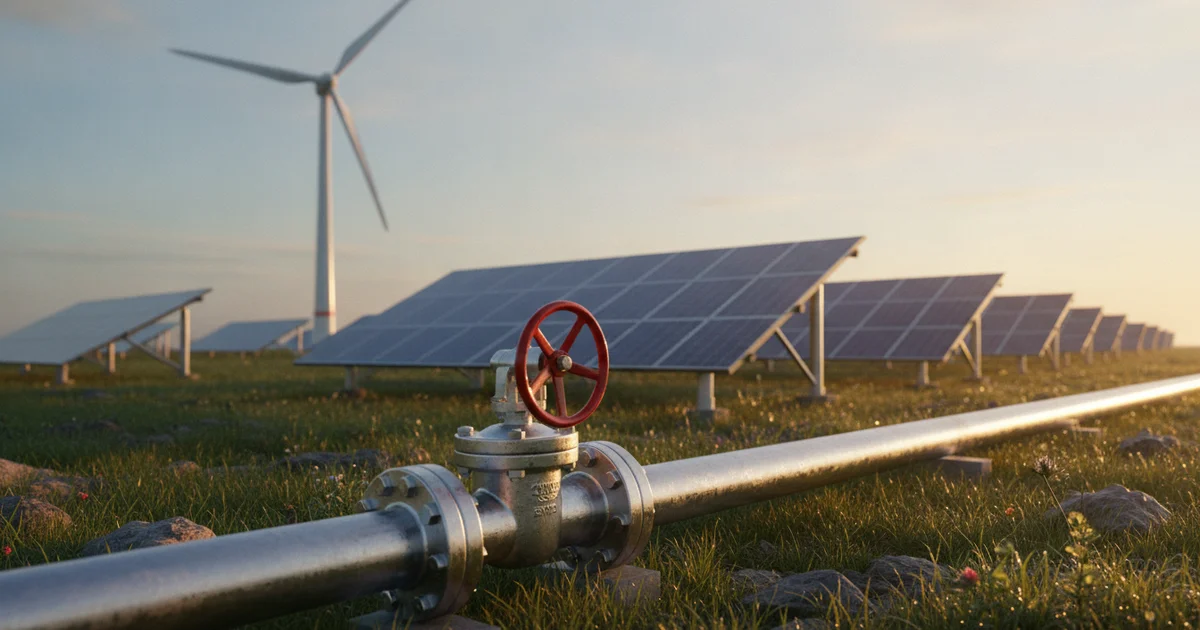
Amazon, Google, Meta, and Microsoft spent the better part of a decade positioning themselves as clean energy champions. They signed corporate power purchase agreements for wind farms, funded utility-scale solar installations, and published annual sustainability reports tracking their progress toward carbon-neutral operations. That chapter is effectively over.
The explosion in AI data center demand has forced hyperscalers into a sharp reversal. Training large language models and running inference workloads at scale requires enormous, uninterrupted electricity supply — the kind that solar panels and wind turbines, dependent on weather conditions and grid interconnection queues, cannot guarantee on the timelines these companies now demand. Natural gas plants can be contracted quickly, dispatched on demand, and scaled to match the raw gigawatts that AI infrastructure requires. So that is where the money is going.
This is not a quiet adjustment at the margins. It represents a fundamental reordering of priorities, where speed and power reliability have displaced sustainability commitments that took years to build. The hyperscalers are not abandoning green energy rhetoric — they are outpacing their own ability to source it cleanly, and fossil fuels are filling the gap.
The deeper problem is structural. Clean energy infrastructure, despite billions in procurement and years of development, cannot scale fast enough to absorb a demand surge this sudden and this large. Grid interconnection backlogs stretch for years. Battery storage at the required capacity remains expensive and limited. Nuclear restarts move slowly. Natural gas was the path of least resistance, and the hyperscalers took it.
Energy research firm Noreva projects that natural gas prices could triple in parts of the United States as data center electricity consumption collides with declining domestic supply growth and rising liquefied natural gas exports. Peter Gardett, Noreva’s CEO, put it plainly: the energy markets have been lulled into believing gas prices cannot rise sharply. Basic supply-and-demand arithmetic suggests otherwise. The companies now betting their AI infrastructure buildout on affordable, stable gas prices may be walking into a market they have fundamentally misjudged.
The Forecast They Should Be Worried About: Noreva’s Price Triple Warning
Energy research firm Noreva has issued a forecast that should be keeping data center CFOs awake at night: natural gas prices could triple in certain U.S. regions within the coming years. For Amazon, Google, Meta, and Microsoft — all of which have been aggressively locking in gas-dependent infrastructure to power their AI ambitions — that single projection reshapes the entire economic logic of their energy strategy.
The mechanism driving the forecast is straightforward. Three forces are converging simultaneously: hyperscaler demand is surging as AI workloads multiply, domestic natural gas supply growth is slowing, and liquefied natural gas exports are pulling increasing volumes of American production toward overseas markets. Each pressure alone would strain pricing. Together, they create the conditions for a severe supply crunch.
Peter Gardett, CEO of Noreva, put it plainly: “I think everyone in the energy markets has been lulled into a sense that gas prices can’t go up. You just need simple arithmetic to get to a much tighter gas market.” That arithmetic — demand rising, supply plateauing, exports accelerating — leaves little room for the kind of price stability that makes long-term gas commitments financially sensible.
What makes this forecast particularly significant is how it reframes the AI energy crisis debate. Most analysts focus on grid capacity — whether there is physically enough electricity to run the next generation of data centers. Noreva’s analysis shifts the central question to affordability. A data center that secures power but faces tripling fuel costs hasn’t solved its problem; it has deferred it while building in structural vulnerability.
Hyperscalers spent years diversifying toward wind and solar precisely to avoid fossil fuel price exposure. That exposure is now returning through the back door, embedded in long-term infrastructure decisions made during a period of historically low and stable natural gas prices. If Noreva’s forecast proves accurate, those decisions will look far less like pragmatic pivots and far more like expensive miscalculations made at exactly the wrong moment.
The Supply Squeeze Nobody Is Talking About: LNG Exports as a Hidden Wildcard
U.S. natural gas has quietly become a global commodity, and most AI energy coverage completely misses what that means for hyperscaler operating costs.
LNG export capacity has expanded dramatically over the past decade, with the U.S. now ranking among the world’s top liquefied natural gas exporters. That infrastructure connects domestic gas prices to European energy crises, Asian demand surges, and geopolitical disruptions that Amazon, Google, Microsoft, and Meta have zero leverage over. When a cold snap hits Japan or a pipeline conflict flares in Europe, American gas prices move — and data center electricity bills move with them.
Energy research firm Noreva projects that natural gas prices could triple in certain U.S. regions as hyperscaler electricity demand compounds two converging pressures: slowing domestic supply growth and accelerating LNG export volumes. Noreva CEO Peter Gardett puts it plainly — the market has been lulled into treating low gas prices as a permanent condition, when basic supply-and-demand arithmetic points toward a significantly tighter market ahead.
This is the wildcard hiding in plain sight. The same geopolitical and trade dynamics reshaping global fossil fuel markets now have a direct line to the cost of training a foundation model or processing a ChatGPT query. A trade dispute, a conflict in a major LNG-consuming region, or a brutal European winter can reprice the energy underpinning AI infrastructure overnight.
Hyperscalers are currently locking into long-term natural gas commitments — power purchase agreements, dedicated pipeline capacity, on-site generation — under the assumption that today’s price environment reflects tomorrow’s reality. It does not. If gas prices spike and utility-scale solar, wind, and battery storage continue their cost decline trajectory, those infrastructure commitments become stranded costs sitting on balance sheets for decades. The companies that dismissed renewable energy timelines as too slow may find themselves anchored to expensive fossil fuel infrastructure precisely when clean power becomes the cheaper option.
Regional Fragility: Why Location Makes This Risk Uneven
The risk Noreva identifies is not spread evenly across the country. Specific regions face dramatically steeper exposure depending on where they sit within the natural gas pipeline network. Areas with constrained infrastructure, limited storage capacity, or heavy dependence on spot pricing will absorb price shocks far more severely than markets with robust grid interconnection or proximity to major production basins.
That geographic unevenness matters because hyperscalers have not built uniformly. Amazon, Google, Meta, and Microsoft have concentrated massive new data center campuses in specific corridors — Northern Virginia, the Arizona desert, Texas, and the Pacific Northwest among them. Northern Virginia alone hosts the largest concentration of data center capacity on the planet. If Noreva’s forecast of tripling natural gas prices materializes in the regions overlapping with these buildouts, the companies with the heaviest physical footprint in those areas absorb the worst of the cost escalation.
The pipeline economics compound the problem. Regional natural gas markets do not move in lockstep with national benchmarks like the Henry Hub spot price. Basis differentials — the spread between a regional price and Henry Hub — can widen sharply when local demand surges and pipeline capacity hits limits. A data center cluster drawing continuous, large-scale power load from gas-fired generation in a constrained regional market applies sustained upward pressure on those differentials in ways that episodic industrial demand never did.
Regulators and grid operators in the highest-risk regions have not publicly addressed what happens when gigawatts of AI infrastructure begin competing directly with residential heating and commercial energy users for the same constrained gas supply. State utility commissions and regional transmission organizations have focused their data center discussions on electricity grid capacity, largely sidestepping the upstream fuel supply question. That regulatory blind spot leaves both the hyperscalers and ordinary ratepayers exposed to a scenario that Noreva’s arithmetic already flags as foreseeable.
The Irony of the Pivot: Sustainability Commitments Now on a Collision Course With Cost Reality
Amazon, Google, Meta, and Microsoft have each staked their public reputations on net-zero and carbon-neutral pledges. Those commitments now sit in direct tension with the infrastructure decisions each company is actively making. Every new gas-powered data center these hyperscalers commission is a structural liability attached to a decarbonization timeline they publicly promised to meet.
The financial logic that made natural gas attractive — low spot prices, grid reliability, rapid deployment — rests on an assumption Noreva’s energy research team argues is dangerously wrong. Peter Gardett, Noreva’s CEO, put it plainly: the energy market has been lulled into believing gas prices cannot rise sharply. Simple supply-and-demand arithmetic says otherwise. Hyperscaler electricity demand is accelerating, domestic supply growth is plateauing, and liquefied natural gas exports are pulling more supply away from U.S. markets. Noreva’s forecast: prices could triple in parts of the country within the coming years.
If that forecast holds, the financial pressure to pivot back toward wind and solar will accomplish what years of internal sustainability targets and ESG reporting obligations failed to do. Renewables, with their fixed-cost structure and zero fuel exposure, suddenly look far more attractive when gas goes from cheap to punishing. The irony is sharp — carbon reduction may arrive not because of climate conviction but because fossil fuel volatility made it economically unavoidable.
The deeper risk sits in the balance sheets these companies haven’t yet written. Gas-dependent data center infrastructure carries a useful life measured in decades. If gas prices spike mid-decade and regulatory pressure on carbon emissions tightens in parallel, these hyperscalers face a scenario where they must either absorb dramatically higher operating costs or write down and retrofit assets built for a fuel they need to abandon. Analysts and institutional investors have largely treated this as a secondary risk. That assessment looks increasingly difficult to defend. The companies building AI infrastructure today may be constructing the stranded assets of the 2030s.
What Hyperscalers Should — But Probably Won’t — Do Differently
The playbook exists. Hyperscalers could execute diversified energy procurement strategies right now — pairing long-term renewable power purchase agreements with gas contracts rather than replacing one with the other. Geographic diversification of new data center builds toward regions with abundant, cheaper renewable capacity would reduce concentration risk in gas-dependent grids. None of this is speculative; these are standard risk management tools that Amazon, Google, Microsoft, and Meta have all used before.
The Noreva forecast is an early warning, not a postmortem. The energy research firm’s projection that natural gas prices could triple in parts of the U.S. gives hyperscalers a window to restructure their energy procurement before infrastructure commitments become impossible to unwind. That window is closing. Every gas-backed data center that breaks ground narrows the options. Every 20-year pipeline contract signed locks in exposure to exactly the price shock Noreva describes — a collision between surging AI-driven electricity demand, slowing domestic supply growth, and accelerating LNG export volumes pulling gas toward international markets.
The reason course-correction is unlikely is the same reason the risk built up in the first place. As Noreva CEO Peter Gardett told TechCrunch, the entire energy market has been conditioned to treat cheap natural gas as a permanent condition. That assumption has shaped capital allocation decisions worth hundreds of billions of dollars across hyperscaler infrastructure spending.
For investors and analysts tracking this sector, the critical metric is not total data center capacity under construction. The metric that matters is what fuel source underpins that capacity and how long the associated energy contracts run. A hyperscaler announcing 500 megawatts of new AI compute capacity tied to a 15-year gas supply agreement is a fundamentally different risk profile than 500 megawatts backed by fixed-price renewable PPAs. The disclosures often exist in regulatory filings and utility interconnection agreements — they are just rarely the headline.
The companies that hedge now, rebalancing their power procurement portfolios toward longer-duration renewables while gas prices remain below Noreva’s projected ceiling, will carry a structural cost advantage into the second half of the decade. The ones that don’t will be paying spot-adjacent gas prices to run infrastructure built on the assumption those prices couldn’t move.