What the Galaxy Watch 9 Actually Does (Beyond the Marketing)
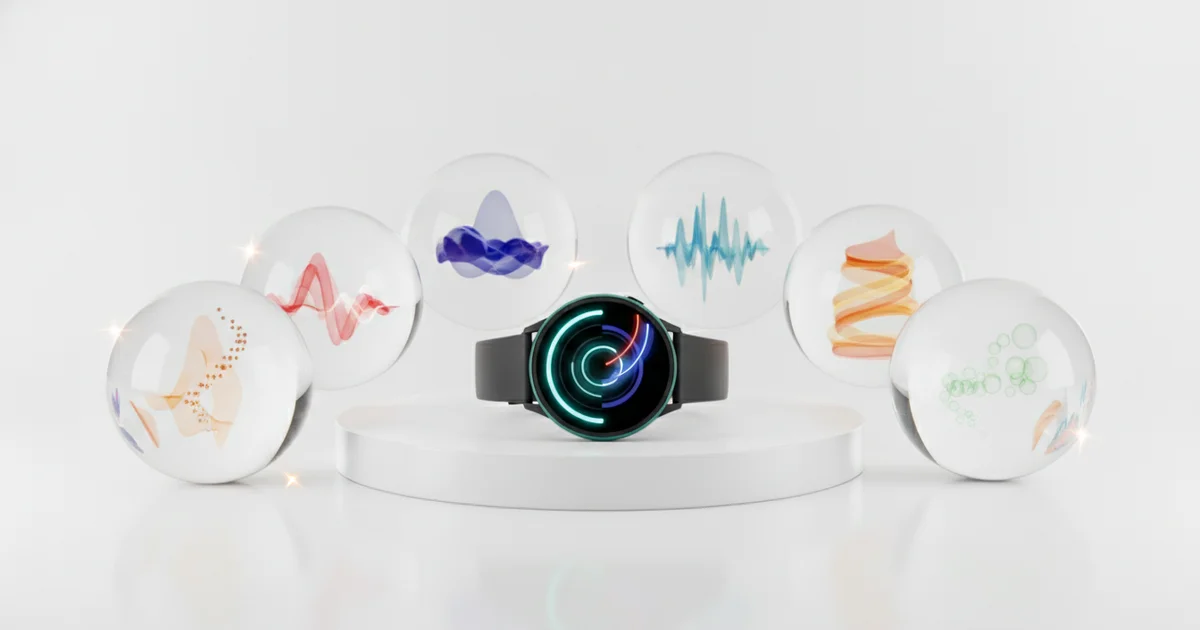
The Samsung Galaxy Watch 9 tracks an impressive range of biometrics simultaneously — heart rate, blood oxygen saturation, skin temperature, electrocardiogram readings, body composition, and sleep stages among them. The BioActive sensor, carried over and refined from previous generations, handles much of this work by combining optical heart rate monitoring, electrical heart signals, and bioelectrical impedance analysis into a single hardware module sitting against your wrist. The result is one of the most sensor-dense consumer smartwatches available right now.
Samsung layers its Galaxy AI platform over that raw data collection, attempting to translate numbers into actionable patterns. The Energy Score feature synthesizes sleep quality, heart rate variability, and physical activity into a single daily readiness metric. Sleep Coaching offers personalized recommendations based on multi-night tracking patterns rather than single-night snapshots. In practice, these AI-driven insights land unevenly — the summaries are readable, but the recommendations often stay vague where users need specificity.
The hardware jump from the Galaxy Watch 6 is incremental. Samsung upgraded the Exynos W1000 processor, which delivers real performance gains in app load times and on-device AI processing. The display gets marginally brighter. The durability ratings hold steady. Nothing about the Watch 9’s physical design signals a generational leap — it looks and feels like a thoughtful revision rather than a rethinking.
That gap between marketing language and measurable advancement matters because Samsung’s upgrade cycle now runs faster than the underlying technology can justify. Buyers moving from the Watch 6 to the Watch 9 are largely paying for processing headroom and software refinements rather than fundamentally new health monitoring capabilities. The watch’s value proposition rests almost entirely on what Samsung’s software does with the data it collects — and right now, the software hasn’t fully caught up with the sensor hardware’s potential. That mismatch sits at the center of what the Galaxy Watch 9 reveals about where consumer wearables currently stand.
The Data Overload Problem Nobody Wants to Talk About
The Samsung Galaxy Watch 9 tracks over 100 health data points — heart rate variability, skin temperature, blood oxygen, sleep stages, energy scores, cycle tracking, and more. Tech reviewers consistently celebrate this as progress. Few ask whether the person wearing the watch can actually do anything useful with all of it.
That question matters more than the spec sheet suggests. Cognitive overload isn’t a hypothetical concern in health technology — it’s a documented behavioral pattern. When wearable devices surface too many simultaneous alerts, readiness scores, trend graphs, and metric comparisons, users don’t become more health-conscious. They disengage. The watch ends up as a notification machine strapped to the wrist, not a health management tool.
Samsung’s Galaxy Watch series has leaned aggressively into data density with each generation. The Watch 9 pushes that further with its dual-frequency GPS, advanced BioActive sensor, and AI-driven Health Snapshot feature that captures six metrics in 30 seconds. The hardware engineering is genuinely impressive. The user experience design around that data is where the product shows its limits.
The gap between data collection and behavioral change is the problem the smartwatch industry hasn’t solved. Knowing your HRV dropped overnight doesn’t tell you what to change. A low Energy Score with no clear remediation path becomes ambient anxiety, not actionable intelligence. Samsung Health presents the numbers; it rarely closes the loop on what a person should actually do differently tomorrow morning.
Most Galaxy Watch 9 reviews treat this as a feature-set inventory exercise — listing capabilities rather than interrogating their real-world utility for average users who aren’t athletes or biohackers. The ZDNET review of the Watch 9 signals the tension directly in its headline, describing the device as built for the future while acknowledging the health data overload problem. That framing is honest. It also reveals an industry-wide assumption: that more metrics equal more value, and that context and guidance can come later.
For the wearable health tracking market to mature, later needs to become now.
Samsung’s AI Bet: Galaxy AI as the Potential Bridge
Samsung isn’t selling the Galaxy Watch 9 purely as a health tracker — it’s selling a platform. Galaxy AI sits at the center of that strategy, designed to function as the translation layer between the raw biometric data the watch collects and the personalized, actionable guidance users actually need. The ambition is clear: rather than dumping sleep scores, body composition percentages, and stress readouts onto a screen, Galaxy AI should eventually tell you what to do with that information.
The current implementation gives a genuine preview of that direction. Samsung’s AI-powered Energy Score consolidates overnight heart rate, sleep quality, and physical activity data into a single daily readiness number. The Natural Language feature inside Samsung Health lets users query their own health history conversationally, asking questions like “how did my sleep affect my recovery this week” and receiving synthesized responses instead of raw graphs. These aren’t gimmicks — they represent a structural shift in how the watch surfaces information.
The honest assessment, though, is that these features are early-stage. The Energy Score works, but the reasoning behind it often lacks the granularity to drive real behavior change. The conversational health queries are useful for retrieval but stop short of proactive coaching. Galaxy AI on the Watch 9 is infrastructure that has arrived slightly ahead of the software maturity needed to fully exploit it.
That gap matters less than it might seem, because Samsung is explicitly architecting for iteration. The Galaxy Watch 9 runs on the Exynos W1000 chip, built with a 3nm process — the processing headroom to run more sophisticated on-device AI models as they develop. Software updates, not hardware replacements, will close the distance between what Galaxy AI promises and what it currently delivers.
This is why the health data overload problem the Watch 9 creates may be self-correcting. The watch generates more biometric data than most users can meaningfully process today. Samsung’s bet is that Galaxy AI, as it matures, turns that data abundance from a usability burden into a competitive advantage — making the Galaxy Watch ecosystem progressively smarter the longer users stay inside it.
Who This Watch Is Actually Built For Right Now
The Galaxy Watch 9 has a clear primary audience: people who train regularly, track recovery, and already know the difference between HRV and resting heart rate. For that group, the watch delivers. Continuous body composition analysis, advanced sleep staging, irregular heart rhythm detection, and real-time workout metrics give serious fitness users a genuinely useful data stream they can act on. These aren’t novelty features — they’re tools that reward informed interpretation.
For everyone else, the value proposition gets complicated fast. The Samsung Galaxy Watch 9 ships with more sensor capability than the average buyer will ever meaningfully engage with. Casual wearable users who want step counts, notifications, and the occasional heart rate check are paying a premium for infrastructure they will largely ignore. The Galaxy AI health features and the Energy Score system require consistent engagement to return useful insights — passive wearers won’t get much from either. The smartwatch interface, despite improvements in One UI 6 Watch, still requires navigating multiple apps and menus to surface data that should be two taps away.
Android loyalty is not optional here — it is a hard requirement for the full experience. The Galaxy Watch 9’s most capable features, including advanced sleep analysis sync, seamless Samsung Health integration, and Galaxy AI functionality, are locked to Samsung Galaxy smartphones. Pixel owners and other Android users get a degraded experience. iPhone users are locked out entirely. That ecosystem dependency is a deliberate competitive strategy, but it meaningfully narrows who this wearable device actually serves at its highest level.
The Galaxy Watch 9 is built for a specific user: health-motivated, Android-committed, and willing to develop literacy around biometric data. That is a real and growing segment, but it is not the mainstream smartwatch buyer. Samsung has built a technically impressive wrist-worn health monitor and wrapped it in a consumer product shell — those two identities have not fully reconciled yet.
The Bigger Picture: What Galaxy Watch 9 Tells Us About Wearables in 2025
The Galaxy Watch 9 arrives at a moment when the wearable industry’s central problem has shifted. Sensors are no longer the bottleneck. Samsung packs the Watch 9 with optical heart rate tracking, ECG, bioelectrical impedance analysis, continuous skin temperature monitoring, and blood oxygen measurement — hardware that would have seemed implausible on a wrist-worn device five years ago. The bottleneck now is interpretation. Collecting a resting heart rate variability score means little if the wearer cannot connect it to sleep quality, stress load, or recovery readiness in a way that drives a real decision.
This hardware-software gap is the defining tension in consumer health wearables in 2025, and Samsung is the sharpest illustration of it.
Regulatory reality adds a layer most reviews skip entirely. The FDA clearance Samsung holds for the Galaxy Watch ECG function and the conditions governing blood oxygen claims are not marketing footnotes — they are hard constraints on what the device can legally tell you. Samsung can flag an irregular rhythm for a user to share with a physician. It cannot diagnose atrial fibrillation. That distinction shapes every piece of copy Samsung writes and every alert the Galaxy Health app surfaces. Apple faces the same ceiling with the Apple Watch Series 9. Fitbit, now under Google, navigates identical boundaries with its Pixel Watch line. The regulatory framework is quietly standardizing the ceiling across the entire premium smartwatch category.
The race that remains is the intelligence race. Garmin has built loyalty through actionable recovery metrics that athletes trust. Apple’s integration with the Health app and third-party clinical research frameworks gives it a software depth Samsung has not yet matched. Samsung’s answer is Galaxy AI and its emerging partnership with Google’s health data infrastructure — a bet that large-scale personalization can close the interpretation gap faster than any single competitor can.
The brand that builds a genuine health companion — one that synthesizes continuous biometric monitoring into clear, personalized guidance — captures a market that goes well beyond fitness tracking. The Galaxy Watch 9 proves Samsung has the hardware to compete for that market. Whether its software can catch up is the question that defines the next generation of smart wearables.